Types of Skirts and Shorts: Fabrics, Fits & Construction Guide
Understanding the different types of skirts and shorts is useful for more than identifying fashion styles. For apparel buyers, product developers and private-label brands, each silhouette creates different requirements for fabric, fit, waistband construction, pockets, hems and overall garment development.
An A-line skirt, fitted pencil skirt, relaxed Bermuda short and knitted pull-on short may all belong to the same women’s bottoms category, but they should not automatically be developed using the same material or construction approach.
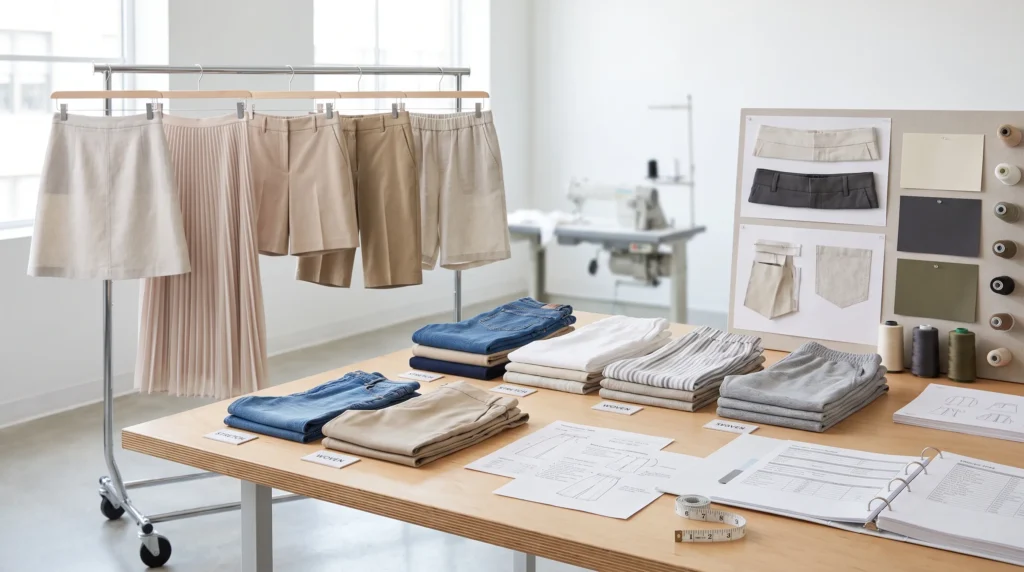
Buyers reviewing commercial product options can also explore Asia Sourcing Limited’s women’s skirts and shorts collection alongside the fabric, fit and construction considerations covered in this guide. The live category currently includes both knitted and For a deeper look at fabric selection, lining, fit and construction, explore our woven shorts and skirts guide.
This guide explains important skirt types, common types of shorts, fabric choices, fit considerations and construction details that buyers should evaluate when developing women’s apparel collections.
Types of Skirts: Main Styles Buyers Should Know
There are many types of skirts, but the most useful classification for product development considers silhouette, length, fabric behaviour and construction.
The same basic skirt shape can also be adapted through different materials, waist treatments, pockets, pleats, closures and finishing.
A-Line Skirts
An A-line skirt is narrower around the waist and gradually becomes wider toward the hem, creating its characteristic silhouette.
It can be developed in fabrics with different levels of structure and drape.
Important development considerations include:
- Waist and hip fit
- Fabric weight
- Drape
- Hem width
- Length
- Waistband construction
- Closure method
- Lining requirements
A more structured fabric can create a defined A-line appearance, while a softer material can produce more movement.
This is why choosing an A-line skirt fabric should depend on the intended silhouette rather than the style name alone.
Pencil and Straight Skirts
Pencil skirts generally create a closer-fitting silhouette through the waist, hip and upper leg.
Straight skirts can follow a similar vertical line while allowing different levels of ease.
Fabric selection should consider:
- Stability
- Stretch where required
- Recovery
- Hip fit
- Walking ease
- Vent or slit construction
- Waistband support
A rigid woven material and a stretch fabric can produce very different versions of the same general skirt shape.
Pleated Skirts
Pleated skirts use folds to create volume, movement or visual structure.
The appropriate pleated skirt fabric depends on how the pleats are intended to behave.
Buyers should evaluate:
- Fabric weight
- Drape
- Thickness
- Pleat definition
- Surface finish
- Waistband bulk
- Hem appearance
A heavier material can create more bulk, while a very fluid fabric may produce a softer pleat effect.
Mini Skirts
Mini skirts are primarily defined by shorter length, but their overall construction can vary considerably.
Examples include:
- Denim mini skirts
- A-line mini skirts
- Fitted mini skirts
- Pleated mini skirts
- Wrap mini skirts
- Knitted mini skirts
For buyers, length is only one part of the specification. Coverage, fabric stability, fit and hem construction also need to be defined.
Midi Skirts
Midi skirts can be developed in several silhouettes, including:
- Straight
- A-line
- Pleated
- Flared
- Wrap
- Knitted
- Woven
A suitable midi skirt fabric should support the required balance between structure and movement.
A fluid midi design, for example, may require different fabric behaviour from a more tailored style.
Maxi Skirts
Maxi skirts use greater fabric length, making weight and drape particularly important.
Buyers may need to consider:
- Overall garment weight
- Movement
- Hem width
- Opacity
- Lining
- Waist stability
- Volume
- Print placement
A fabric that looks suitable as a small swatch can behave differently when used across a full-length garment.
Wrap Skirts
Wrap skirts use overlapping panels to create the garment shape.
Construction may involve:
- Ties
- Buttons
- Internal fastening
- Waistbands
- Partial or full overlap
The amount of overlap should work with the fabric, fit and intended level of coverage.
Flared and Circle Skirts
Flared and circle-style skirts create additional volume toward the hem.
Fabric choice influences how strongly the garment holds its shape.
A softer fabric may create fluid movement, while a material with greater body can produce a more defined silhouette.
Denim and Casual Skirts
Denim skirts often use stronger structure, visible seams, pockets, hardware or wash details.
However, denim fabrics vary in weight, composition and stretch.
Buyers should therefore evaluate the actual material specification rather than treating all denim as identical.
Types of Shorts for Women’s Apparel Collections
Understanding the major types of shorts is equally important because different silhouettes require different fabrics, rises, waistbands and pocket constructions.
Bermuda Shorts
Bermuda shorts generally provide a longer leg length than many casual short styles.
Possible fabric directions include:
- Twill
- Denim
- Cotton blends
- Linen blends
- Stretch woven fabrics
The intended fit can range from tailored to relaxed.
Key specifications include:
- Rise
- Inseam
- Leg opening
- Waistband
- Pocket construction
- Fabric structure
Tailored Shorts
Tailored shorts generally use cleaner pattern shapes and more structured construction.
Depending on the design, they may include:
- Fixed waistbands
- Belt loops
- Front closures
- Side or back pockets
- Pleats
- Darts
- Lining
The selected material should support the intended tailored appearance and construction.
Denim Shorts
Denim shorts may be developed from rigid or stretch denim.
Product-development considerations can include:
- Denim weight
- Stretch
- Recovery
- Pocket construction
- Wash direction
- Hem treatment
- Hardware
- Waist and hip fit
A relaxed rigid-denim short and a fitted stretch-denim style therefore need different specifications.
Drawstring Shorts
Drawstring shorts can be developed in both knitted and woven materials.
The waistband may combine:
- Elastic
- Drawcord
- Drawstring channel
- Eyelets
- Internal or external ties
The construction needs to work with the intended fit and fabric behaviour.
Pull-On and Elastic-Waist Shorts
Pull-on shorts remove the need for a conventional fly or fixed waistband closure.
They can suit products designed around:
- Comfort
- Casual styling
- Stretch
- Ease of dressing
Elastic specification, waistband depth and recovery should still be checked during development.
Casual and Relaxed-Fit Shorts
Relaxed shorts can use many different materials depending on the desired product direction.
Important considerations include:
- Ease through the seat and thigh
- Fabric drape
- Leg opening
- Pocket position
- Waist construction
Athletic and Jersey-Style Shorts
Jersey and knitted shorts often use softer and more flexible fabric constructions.
Development may require attention to:
- Stretch
- Recovery
- GSM
- Elastic waistband construction
- Drawstrings
- Hem stability
- Pocket construction
The future dedicated knitted article should cover knit and jersey development in greater detail, while this guide maintains the broader skirts-and-shorts overview.
Skorts
Skorts combine the visual appearance of a skirt with an internal or integrated shorts component.
Buyers should define:
- Outer skirt panel
- Internal shorts
- Fabric compatibility
- Waist construction
- Length
- Coverage
- Seam bulk
Skirt Length Types: Mini, Midi and Maxi
Different skirt length types influence appearance, fabric consumption, movement and overall fit.
Common categories include:
- Mini
- Knee-length
- Midi
- Maxi
However, a product specification should not rely on those names alone.
Buyers should define actual garment measurements, including:
- Front length
- Back length where different
- Waist position
- Hem shape
- Size grading
- Intended silhouette
Fabric drape should also be considered because two skirts with similar measurements can hang differently depending on their material.
Skirt Fabric Types and How Fabric Changes the Silhouette
Choosing the right skirt fabric can significantly influence the finished garment.
The right skirt material depends on the intended silhouette, fabric weight, drape, stretch, structure and construction requirements.
The same pattern can create noticeably different results when produced from different fabrics.
Cotton and Cotton Blends
Cotton-based fabrics can be used across many casual skirt categories.
Depending on construction and weight, they may provide different levels of:
- Softness
- Structure
- Drape
- Surface texture
- Print suitability
The actual fabric should be assessed rather than selecting solely by fibre name.
Twill
Twill fabrics can provide useful structure for:
- A-line skirts
- Utility skirts
- Casual skirts
- Structured shorts
Final behaviour depends on composition, weight, finishing and any stretch content.
Denim
Denim can create a more structured product direction.
Buyers may need to evaluate:
- Fabric weight
- Stretch
- Recovery
- Wash requirements
- Colour
- Surface character
- Construction details
Linen and Linen Blends
A linen skirt fabric or linen-blend material can suit relaxed or fluid product directions.
During sampling, buyers should still review:
- Drape
- Opacity
- Structure
- Creasing behaviour
- Surface appearance
- Finishing
Jersey and Knit Fabrics
Knitted materials may be suitable for skirts requiring:
- Stretch
- Recovery
- Softness
- Pull-on construction
- Body-following fit
More detailed discussion of jersey, ponte, GSM and recovery should remain with the dedicated knitted supporting article.
Polyester and Blended Fabrics
Polyester and blended fabrics can be produced in a wide variety of constructions.
Suitability should be evaluated according to:
- Weight
- Drape
- Texture
- Stability
- Stretch
- Surface finish
- Intended garment
Structured vs Fluid Fabrics
A useful framework for comparing skirt fabric types is:
Fabric → Weight → Drape → Stretch → Structure → Silhouette
A structured A-line skirt may require more body.
A fluid maxi or softly pleated skirt may require greater drape.
There is no single material that is appropriate for every skirt design.
Best Fabric for Skirts Depends on the Design
People searching for the best fabric for skirts may expect one material recommendation, but apparel development requires a more specific approach.
| Skirt Direction | Fabric Characteristics to Evaluate |
| A-line | Structure, drape and shaping |
| Pencil | Stability or controlled stretch |
| Pleated | Drape, pleat behaviour and manageable bulk |
| Maxi | Movement, weight and drape |
| Denim | Structure, weight and wash requirements |
| Knit skirt | Stretch, recovery and shape retention |
The best material for skirts is therefore the material that supports the intended silhouette, fit and construction rather than simply the most familiar fibre.
Shorts Fabric: What Buyers Should Evaluate
The correct shorts fabric depends on whether the product is tailored, casual, denim, knitted, woven or relaxed.
Cotton and Twill
Cotton and twill constructions can suit casual and structured shorts.
Buyers should evaluate:
- Weight
- Surface appearance
- Structure
- Comfort
- Stretch where required
Denim
Denim shorts may require attention to:
- Weight
- Wash compatibility
- Pocket stability
- Stretch
- Recovery
- Hem treatment
Linen and Linen Blends
Linen-based fabrics can support lighter and more relaxed shorts.
Drape, opacity and garment structure should still be evaluated during development.
Jersey and Knit Fabrics
A knitted fabric for shorts can support:
- Stretch
- Casual fit
- Elastic waistbands
- Drawstring construction
- Flexible movement
Stretch Woven Fabrics
Stretch woven materials may be useful when the design requires a relatively structured appearance with additional flexibility.
When choosing the best fabric for shorts, buyers can assess:
Structure + Weight + Stretch + Recovery + Waistband + Pockets + Intended Fit
Knitted vs Woven Skirts and Shorts
One important early decision is whether a product should use knitted or woven fabric.
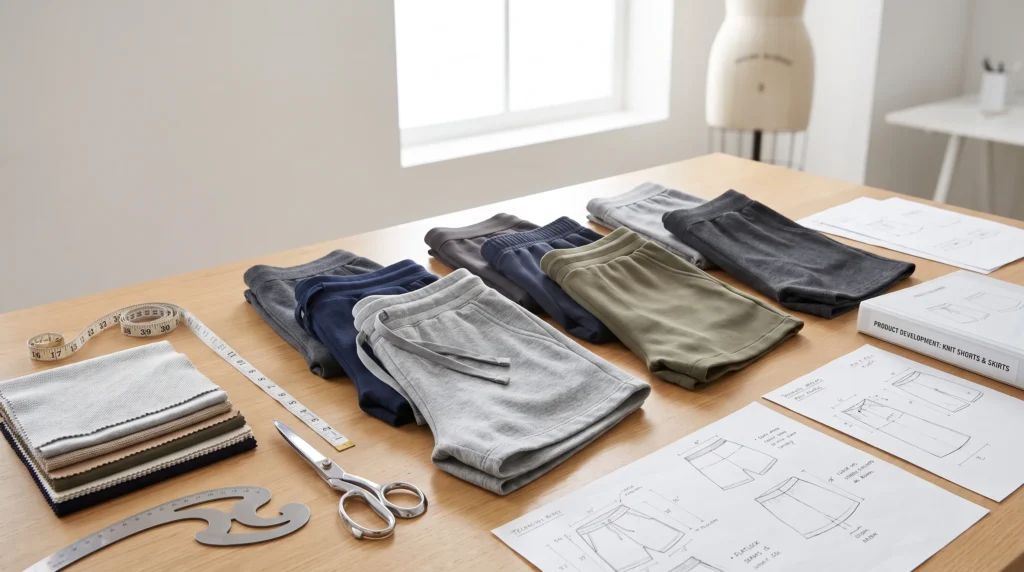
Knitted Skirts and Shorts
Knitted fabrics may support:
- Stretch
- Flexibility
- Softer hand feel
- Body-following silhouettes
- Pull-on construction
- Elastic waistbands
Buyers considering these product directions can review Asia Sourcing Limited’s knitted skirts and shorts collection. The live parent navigation identifies Knitted as a direct Skirts & Shorts child category.
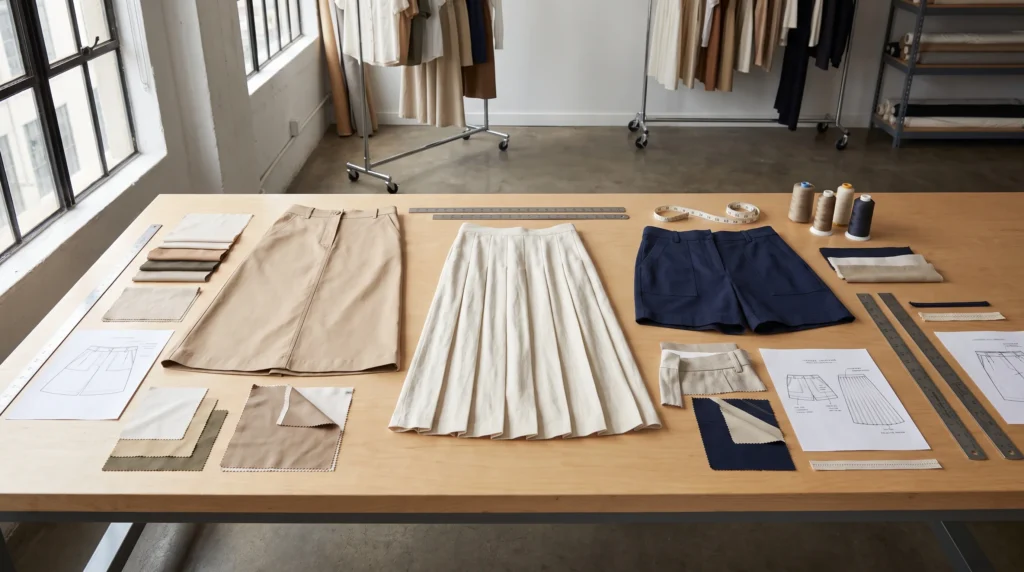
Woven Skirts and Shorts
Woven fabrics can support:
- Tailored silhouettes
- Defined structure
- Pleats
- Fixed waistbands
- Interfacing
- Lining
- Structured pocket construction
For more structured product directions, buyers can explore the woven skirts and shorts collection. The live Woven category currently includes mini and midi skirts, denim skirts, Bermuda shorts and other woven bottom-wear styles.
Neither fabric family is automatically better. The correct direction depends on the product concept, fabric specification and intended fit.
Fit Considerations for Skirts and Shorts
Fit should be evaluated together with fabric behaviour and garment construction.
Waist Fit
Possible waistband directions include:
- Fixed waistband
- Elastic waistband
- Drawstring waistband
- Partially elasticated waistband
The selected method affects fit, ease and construction.
Hip and Seat Fit
Skirts and shorts need appropriate room through the hip and seat according to the intended silhouette.
A fitted product and a relaxed product require different ease.
Rise
For shorts, rise affects how the garment sits between the waist and crotch.
It should be clearly defined in the technical specification.
Length
Length influences both style and overall fit.
Measurements should be specified rather than relying solely on terms such as mini, midi or Bermuda.
Shorts Leg Opening
The leg opening can influence:
- Movement
- Silhouette
- Ease
- Proportion
Stretch and Recovery
Stretch fabrics can affect how garment measurements behave during wear.
For knitted or stretch garments, recovery should therefore be considered alongside stretch.
Construction Details Buyers Should Review
Effective shorts construction and skirt construction depend on more than fabric choice.
Waistbands
Options can include:
- Fixed waistband
- Elastic waistband
- Rib waistband
- Drawstring waistband
- Partially elasticated waistband
Closures
Depending on the design:
- Zippers
- Buttons
- Hooks
- Drawstrings
- Pull-on construction
Pockets
Possible pocket constructions include:
- Side-seam pockets
- Slant pockets
- Patch pockets
- Welt pockets
- Back pockets
- Cargo-style pockets
Pocket placement and size affect both appearance and garment construction.
Seams
Buyers should review:
- Seam placement
- Appearance
- Fabric compatibility
- Stress areas
Hems
Different skirt hem types and shorts hem constructions influence appearance, weight and finishing.
Lining
Lining may be considered when the outer fabric or design requires:
- Additional opacity
- Internal finishing
- Support
- Comfort
- Structure
Interfacing
Interfacing can be used in selected construction areas, particularly where extra support is needed.
How Apparel Buyers Can Choose the Right Skirt or Shorts Direction
For broader women’s collection planning, buyers can also review Asia Sourcing Limited’s fashion sourcing guide for women’s clothing brands.
A practical development framework is:
Customer → Product Type → Silhouette → Fabric → Fit → Construction → Sample → Final Specification
Before development, buyers should answer several questions.
Who Is the Target Customer?
Consider:
- Target market
- Product positioning
- Intended use
- Fit expectation
- Collection direction
What Silhouette Is Required?
Define whether the product should be:
- Fitted
- Straight
- A-line
- Flared
- Relaxed
- Tailored
Knit or Woven?
Decide whether the product requires more stretch, structure, drape or a combination of these characteristics.
What Waistband Is Needed?
Potential directions include:
- Fixed
- Elastic
- Drawstring
- Hybrid construction
Are Pockets Required?
Pocket requirements should be defined early because they can affect pattern construction, fabric usage and garment bulk.
Does the Product Need Lining?
This can depend on:
- Fabric
- Opacity
- Structure
- Design
- Internal finishing
What Fit Measurements Matter?
Depending on the style, key measurements may include:
- Waist
- Hip
- Length
- Rise
- Inseam
- Leg opening
- Hem width
Clear specifications reduce ambiguity during development.
What to Include in a Skirts and Shorts Tech Pack
A useful tech pack should communicate the intended design and measurable construction details.
Depending on the style, this may include:
- Technical sketch
- Fabric reference
- Fabric composition when confirmed
- Colour
- Print or artwork
- Waist measurement
- Hip measurement
- Garment length
- Rise
- Inseam
- Leg opening
- Hem width
- Waistband specification
- Pocket type and placement
- Closure details
- Lining
- Interfacing
- Seam construction
- Hem construction
- Labels
- Trims
- Size range
- Fit comments
General instructions such as “make it fitted” provide less technical clarity than defined measurements and construction notes.
Buyers developing several categories can also explore Asia Sourcing Limited’s broader women’s apparel collection. The live Women’s section covers multiple apparel categories including skirts, shorts, jeans, knitwear, tops and other women’s products.
Sample Review and Quality-Control Considerations
Sampling allows buyers to assess whether fabric, pattern, fit and construction are working together as intended.
A practical review can include:
- Check garment measurements.
- Review waist and hip fit.
- Confirm length.
- Review rise and leg opening for shorts.
- Check waistband construction.
- Inspect closures.
- Check pocket position and symmetry.
- Review seams.
- Check hem appearance.
- Inspect pleats where relevant.
- Review lining.
- Check interfacing where used.
- Evaluate stretch and recovery for knitted products.
- Review overall silhouette.
- Compare the garment with the approved specification.
Quality review should therefore consider not only appearance but also fit, measurements, construction and consistency with the approved product specification.
Final Selection Framework for Skirts and Shorts
The strongest product-development approach connects style, fabric, fit and construction rather than treating each decision separately.
A useful framework is:
Style → Fabric → Fit → Construction → Specification → Sample Review
The many types of skirts and types of shorts available give brands considerable design flexibility, but every silhouette needs appropriate material and construction decisions.
A skirt should not be approved simply because its fabric looks attractive, and shorts should not be developed only from a trend image without defining the relevant technical requirements.
For fashion brands, retailers, wholesalers, importers and private-label buyers, establishing the product concept, skirt fabric, shorts fabric, fit and construction requirements before development can create clearer communication throughout the sourcing process.
Brands and commercial buyers with defined skirt or shorts designs, specifications or sourcing requirements can contact Asia Sourcing Limited to discuss their project. The company’s Contact page is currently live.
Frequently Asked Questions
What are the main types of skirts?
Common skirt types include A-line, pencil, straight, pleated, mini, midi, maxi, wrap, flared, circle and denim skirts. Different styles can require different fabric, drape, fit and construction decisions.
What are the most common types of shorts?
Common women’s shorts include Bermuda shorts, tailored shorts, denim shorts, drawstring shorts, pull-on shorts, relaxed shorts, jersey shorts and skorts. The appropriate option depends on the intended customer, fabric, silhouette and fit.
What is the best fabric for skirts?
There is no single best fabric for every skirt. Buyers should choose according to silhouette, structure, drape, weight, stretch and construction requirements.
What fabric is commonly used for shorts?
Shorts can use cotton, twill, denim, linen blends, jersey, knit fabrics, stretch woven fabrics and other suitable blends. Fabric choice should support the required structure, fit, waistband and intended use.
What is the difference between knitted and woven skirts?
Knitted skirts generally offer more stretch and flexibility, while woven constructions can provide greater structure and tailoring options. Actual behaviour also depends on fabric weight, composition, finishing and garment design.
How should apparel buyers choose skirt length and fit?
Buyers should define actual garment measurements rather than relying only on terms such as mini, midi or maxi. Waist, hip, length, silhouette, fabric behaviour, ease and size grading should all be considered during product development.