Types of Mens Clothing: Categories and Sourcing Guide for Buyers
The types of mens clothing in a commercial apparel range extend far beyond a simple split between shirts and trousers. For fashion brands, importers, wholesalers, retailers and private-label buyers, each menswear category creates different decisions around fabric, fit, construction, trims, sizing, sampling and quality approval.
A useful sourcing process therefore starts by defining the product architecture before comparing suppliers or requesting prices. Asia Sourcing Limited’s men’s clothing categories provide a commercial overview of products across tops, shorts, jeans, jackets, knitwear, trousers, nightwear, sweats, joggers, underwear, socks and workwear. This guide explains how those categories fit into a broader B2B product-development and sourcing framework.
Main Types of Men’s Clothing for Apparel Collections
The exact structure of a menswear range depends on the brand, market, season and customer. For sourcing, it is more useful to group products by development needs than by styling labels alone.
Tops
Men’s tops include knitted T-shirts and polos as well as long- and short-sleeve shirts. Buyers should define knit or woven construction, fabric, neckline or collar, placket where relevant, sleeves, fit and branding. The men’s tops collection provides commercial examples.
Shorts
The men’s shorts category includes product types such as swim, denim, cargo and chino shorts. Their specifications can differ in fabric, lining, waistband, pockets, wash, reinforcement and fit, so “shorts” is not a complete technical brief.
Jeans
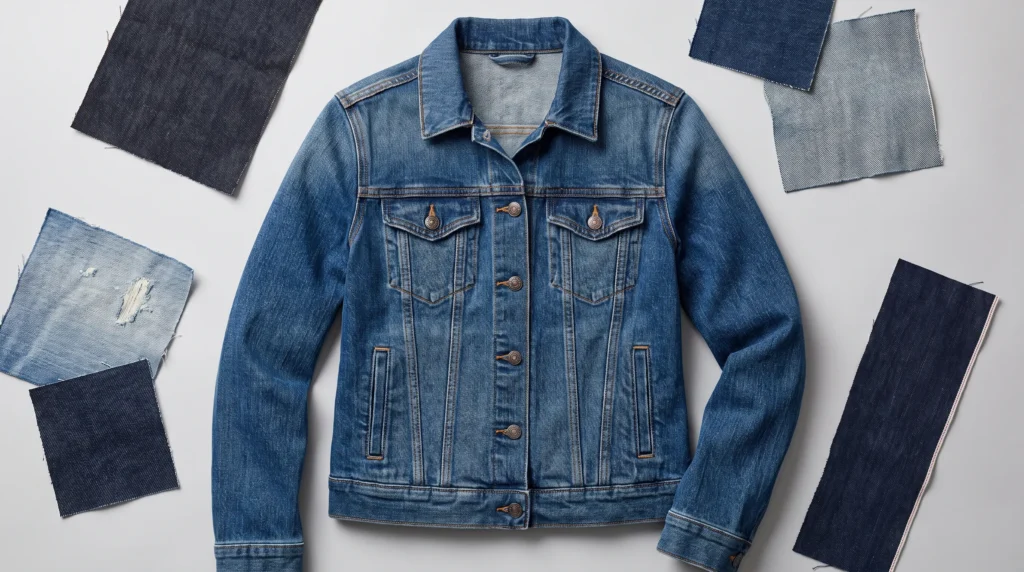
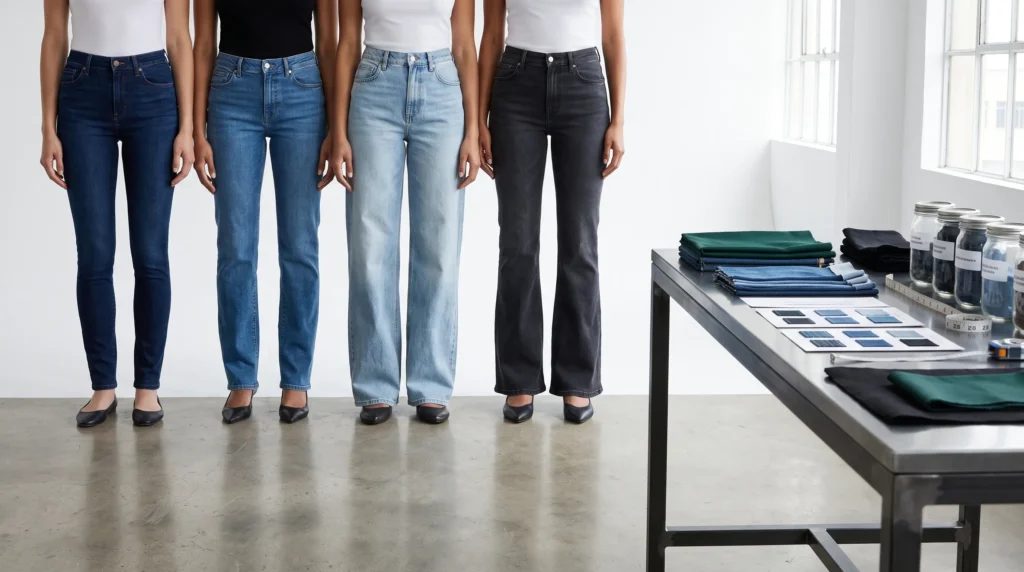
The men’s jeans category covers denim products. Development should define denim direction, weight, stretch where relevant, wash, fit, rise, pockets, trims, stitching and measurements.
Jackets
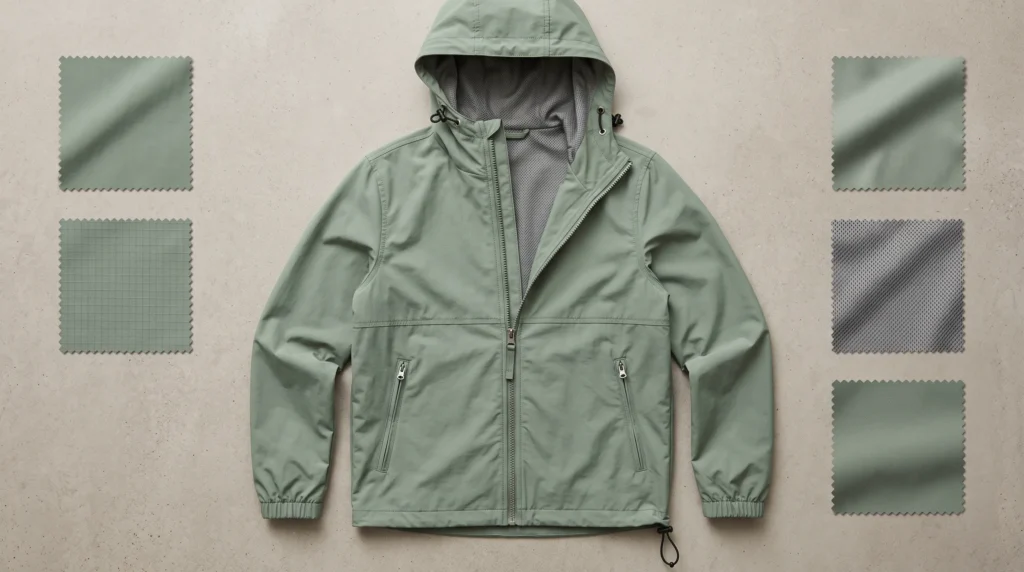
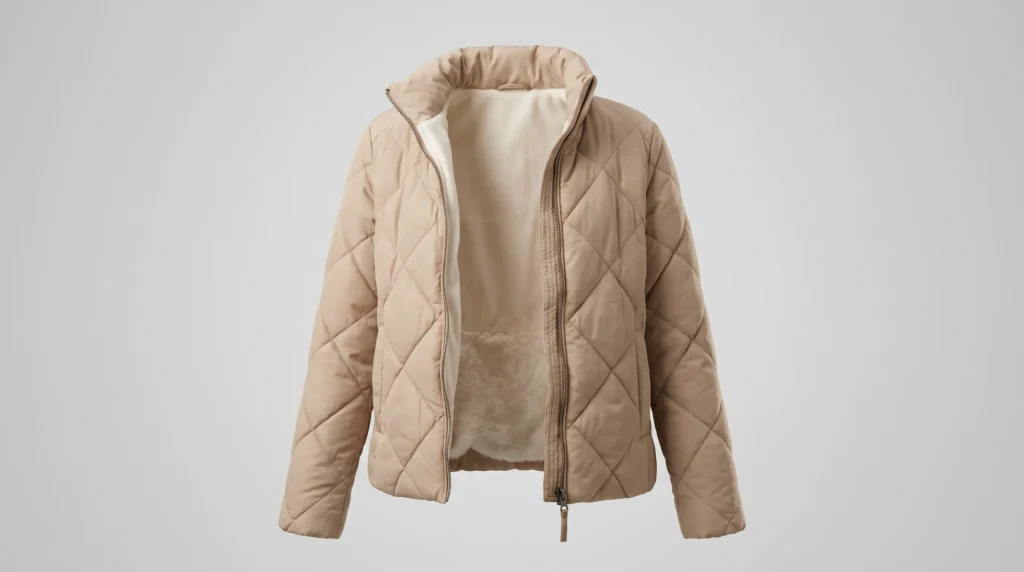
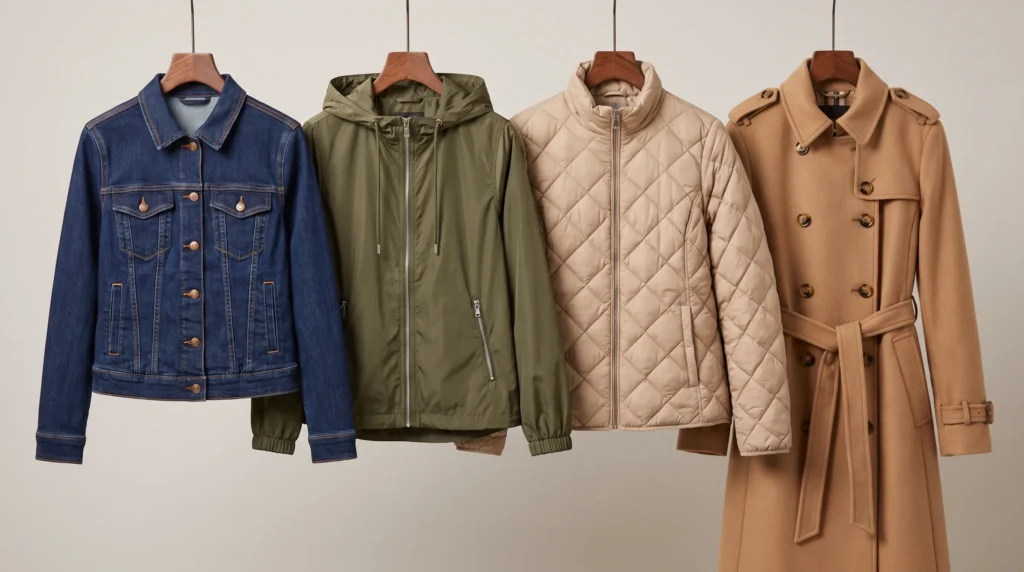
Jackets may be denim, padded or non-padded. The buyer should define shell, lining, insulation where used, closures, pockets, cuffs, hems and internal finishing rather than treat “jacket” as one construction system.
Knitwear
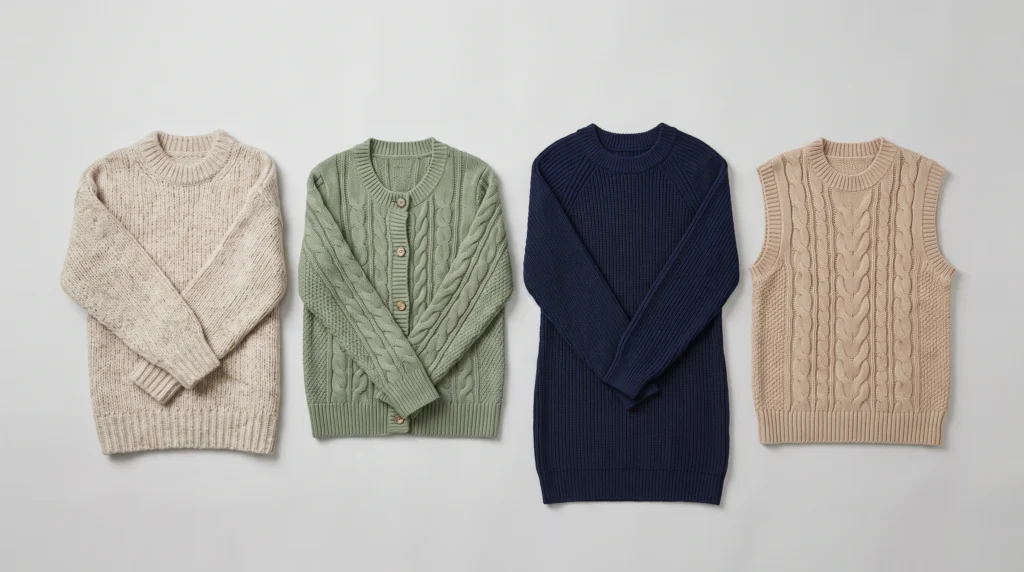
The men’s knitwear category includes styles such as crew-neck, turtle-neck, jersey, cable and rib structures. Knitwear introduces yarn, gauge, stitch structure, shape and finishing decisions that differ from cut-and-sew jersey tops.
Chinos and Trousers
Chinos and trousers require decisions around woven fabric, rise, waistband, pockets, leg shape, fit and finishing. Product names should be supported by measurable specifications.
Nightwear
The men’s nightwear category is relevant to comfort-led products and sets. Buyers should define fabric, coverage, fit, trims, size range and care expectations.
Sweatshirts and Hoodies
The men’s sweatshirts and hoodies category may involve fleece or other knits, rib, hood construction, pockets, branding and fit.
Joggers
Joggers combine fabric behaviour with waistband, elastic or drawcord, rise, pockets, leg shape and cuff or hem decisions.
Underwear and Socks
These products require product-specific material, stretch, elastic, fit, comfort and sizing specifications. Small dimensional or recovery differences can affect the finished product.
Workwear
The men’s workwear category includes functional garments. Buyers should connect end use, material, movement, reinforcement, pockets, closures and any required protective performance with appropriate evidence.
| Menswear category | Typical product-development focus | What the buyer should define first |
| Tops | Knit/woven structure, neckline or collar, fit, sleeves, branding | Product type, fabric direction, fit and construction |
| Shorts | Waistband, pockets, fabric, lining where relevant, fit | End use, fabric, waist, rise and pocket design |
| Jeans | Denim, wash, fit, pockets, trims | Denim direction, fit, wash and measurements |
| Jackets | Shell, lining, insulation, closures, pockets | Layer structure, season/end use and construction |
| Knitwear | Yarn, gauge, stitch structure, shape | Yarn direction, gauge, silhouette and measurements |
| Chinos & trousers | Woven fabric, waistband, rise, pockets, leg shape | Fabric, fit, waist construction and rise |
| Nightwear | Comfort, fabric, fit, coordinated pieces | Product format, coverage, fabric and size range |
| Sweats & joggers | Fleece/GSM, rib, waist/hood details, fit | Fabric, style, fit and trims |
| Underwear & socks | Material, stretch, elastic, comfort, sizing | Product type, fit and measurements |
| Workwear | Function, material, movement, reinforcement | End use, garment design and performance requirements |
The table is a planning framework, not a universal standard. Each style still needs its own approved specification.
How Menswear Categories Affect Product Development
Different menswear categories need different development priorities because fabric structure and garment construction change how a product fits, moves, is assembled and is inspected.
Knitted products such as T-shirts, polos, sweatshirts and some joggers can use looped fabric structures that naturally behave differently from woven fabrics. CottonWorks’ Knit Basics explains the loop structure of knitted fabrics. Woven shirts, chinos and many workwear products use interlaced warp and weft yarns; CottonWorks’ Weaving Basics explains the basic woven structure.
That distinction affects more than fabric terminology. A knitted top may depend on stretch, recovery, neckline stability and rib behaviour. A woven shirt may depend more on pattern ease, collar and placket construction. A jacket may require control of several material layers, while a pair of jeans can combine denim performance with wash and trim decisions.
This is why a brand should not build one generic “menswear tech pack” and apply it to every product. The commercial range can share brand standards, labels and visual direction, but the technical specification must change with the garment.
Apparel Product Development Process for a Men’s Collection
The apparel product development process converts a commercial idea into a product that can be sampled, measured and approved.
Define the Customer and Market
Clarify the intended wearer, market, season, price position, end use and role of the product within the assortment. A recurring basic T-shirt and a padded jacket should not begin from the same assumptions.
Build the Product Range
Map core, seasonal and experimental categories before developing individual styles. This helps the sourcing team understand priority, category balance and which products must work together.
Develop Technical Specifications
Depending on the garment, specify drawings, material direction, colours, measurements, fit, construction, trims, branding, finishing, testing or care requirements and packaging where relevant. The goal is to make the product measurable and reduce ambiguity.
Review and Lock Samples
Evaluate samples against the current specification. Record measurements, fit, materials, colour, construction and workmanship comments clearly. When a stage is approved, keep the approved sample aligned with the current specification; if fabric, construction or measurements change, reassess whether the earlier approval still applies.
How to Plan a Menswear Collection Before Sourcing
Planning a range before contacting suppliers makes the sourcing discussion more focused. A simple menswear collection planning framework can follow this sequence:
- Define the target customer and market.
- List the required product categories.
- Separate core products from seasonal or experimental styles.
- Decide the intended fit direction for each category.
- Establish fabric, yarn or material direction.
- Set the colour and branding framework.
- Define the base size and size range.
- Prioritise the styles that need development first.
- Prepare technical references for those styles.
- Record the commercial inputs needed for supplier discussions.
This does not mean every collection has to be large. A focused assortment with a few clearly differentiated products may be easier to develop than a wide range with overlapping purposes.
The important point is that sourcing should follow a defined product plan. If the buyer changes the customer, product category, fabric and price direction at the same time during sampling, it becomes harder to identify which change solved or created a problem.
A Practical Garment Sourcing Process
A useful garment sourcing process connects the product brief with supplier evaluation, sampling and documented approval.
Step 1: Prepare the Product Brief
Define the garment category, drawings or references, target customer, fabric or yarn direction, measurements, size range, colours, trims, branding, proposed quantity, target schedule and quality expectations. If something is undecided, identify the problem instead of hiding it behind a phrase such as “premium quality.”
Step 2: Identify the Appropriate Supplier Type
A buyer may work with a manufacturer, a supplier that coordinates production, or a sourcing company that helps manage supplier selection and communication. The appropriate model depends on the product and the responsibilities required.
Step 3: Share Specifications for Feasibility Review
Provide enough technical and commercial information for a meaningful discussion. Proposed quantities, timing, packaging, destination and documentation are buyer inputs, not promises until agreed.
Step 4: Review Materials and Samples
Approve the actual proposed material and representative garment, not only a material name. CottonWorks’ Quality Testing explains that fibres, yarns, fabrics and garments should meet product-specific specifications.
Step 5: Document Revisions
Keep comments consolidated and version controlled. When measurements or construction change, update the specification so the next sample is reviewed against the current requirement.
Step 6: Confirm Approval Criteria
Before final approval, define which measurements, workmanship points, material references, trims, branding and relevant evidence must match the agreed standard.
How to Choose a Clothing Manufacturer
The query how to choose a clothing manufacturer reflects a practical buyer problem: supplier selection should match the actual category and specification.
Check Product Relevance
Evaluate experience and capability against the planned product. Familiarity with simple knitted tops does not automatically establish suitability for padded outerwear, denim finishing, knitwear or technical workwear.
Evaluate Specification Understanding
The team should be able to discuss drawings, measurements, material direction, construction, trims, branding and unresolved questions. Clarification is preferable to silent assumptions.
Review Sampling Communication
Look at whether comments are understood, revisions are documented and measurements remain traceable. Speed alone does not create a useful approval reference.
Confirm Materials, Quality and Evidence
Main fabrics, linings, elastic, zippers, buttons, rib, labels and other trims should work together in the finished garment. CottonWorks’ Garment Quality Control identifies fit and seam integrity among garment-quality considerations.
If the programme requires certifications, compliance documents, test reports or restricted-substance requirements, define them and request evidence relevant to the actual product and order.
Discuss Commercial Requirements
Clarify proposed quantities, pricing, payment terms, delivery objectives, packaging, documentation and logistics responsibilities. These points should be agreed for the programme rather than inferred from a website or category description.
Manufacturer vs Supplier vs Sourcing Company
A manufacturer generally participates directly in producing garments. A supplier is a broader commercial term and may manufacture goods, coordinate production, distribute products or combine several roles. A sourcing company may support activities such as supplier identification, communication, product development coordination and order follow-up.
These descriptions are practical distinctions rather than universal legal definitions. Business models vary, so buyers should confirm who is responsible for manufacturing, material sourcing, sampling, quality review, documentation and commercial communication in the actual programme.
This matters because the same phrase can describe different operating models. The buyer should evaluate responsibilities and evidence instead of assuming that “manufacturer,” “supplier” or “sourcing company” guarantees a particular factory relationship.
Sourcing Men’s Clothing from Bangladesh
When men’s clothing sourcing involves Bangladesh, the buyer still needs the same disciplined product-development process: define the garment, prepare specifications, evaluate the sourcing setup, review representative samples and agree commercial and quality requirements.
A country name should not replace product-level due diligence. Different menswear categories can require different fabrics, machinery, technical knowledge, finishing routes and supplier relationships.
For a Bangladesh sourcing discussion, useful buyer inputs include:
- product category and style count;
- fabric, yarn or trim direction;
- tech packs or reference samples;
- size range and measurement requirements;
- printing, embroidery or wash direction;
- intended market;
- quantities;
- packaging;
- target schedule;
- required documentation or testing.
The commercial terms apparel sourcing Bangladesh, manufacturer, supplier, wholesale, OEM and private label should remain primarily assigned to relevant commercial pages rather than becoming the main SEO purpose of this informational guide.
What Buyers Should Include in a Men’s Clothing Sourcing Brief
A sourcing brief should make the intended product clear and separate confirmed requirements from open decisions.
A practical brief may include:
- Product category and style number — identify the garment precisely.
- Technical drawings or references — front, back and important details.
- Target customer and market — intended wearer and selling context.
- Material direction — composition, knit/weave/yarn structure, weight or gauge where relevant, colour and finish.
- Fit direction — base size, silhouette, size range and approved fit reference.
- Measurement chart — with points of measure and methods.
- Construction details — seams, collars, cuffs, waistbands, pockets, closures, hems and reinforcement as required.
- Trims, labels and branding — components, decoration, placement and size.
- Wash, finishing, care or testing requirements — where relevant.
- Packaging and commercial inputs — proposed quantity, destination and target schedule for feasibility discussion.
- Approval responsibilities — who approves materials, fit, colour, branding and final samples.
The brief does not need to solve every development question on day one, but it should make unresolved decisions visible.
Sampling and Approval Checklist for Menswear Buyers
Before treating a sample as approved, review the points that matter for the actual garment.
Fit and Measurements
Confirm measuring methods, key measurements, balance, ease, movement, intended silhouette and size progression where relevant.
Fabric and Colour
Compare the fabric with the approved reference; confirm construction, composition, weight or gauge where applicable, shade, surface and the effect of the intended finish or care process.
Construction and Branding
Review seams, closures, pockets, collars, cuffs, waistbands, hems and reinforcement as applicable. Confirm print or embroidery size, position, colour and compatibility with the intended fabric and care route.
Final Documentation
Keep the current sample linked to the current specification, material references and consolidated revision history. Define any remaining tests or evidence required before bulk approval.
The checklist should be product-specific. A T-shirt, jacket, pair of jeans and workwear garment do not share identical approval priorities.
Common Men’s Apparel Sourcing Mistakes
Choosing a Supplier Before Defining the Product
If the buyer has not decided whether the product is a jersey T-shirt, woven shirt, washed jean or padded jacket, it is difficult to evaluate whether a supplier setup is relevant.
Using Product Names Instead of Specifications
Terms such as “premium polo,” “heavy hoodie” or “smart trouser” are merchandising descriptions, not complete technical instructions.
Translate them into fabric, fit, construction, measurements, trims and finishing requirements.
Treating All Categories as One Development Process
Menswear may sit under one commercial collection, but the technical process changes by category. Knitwear requires different technical decisions from denim, and padded outerwear differs from underwear or a woven shirt.
Approving Samples Without Recorded Measurements
A visually acceptable sample can still differ from the intended measurements. Record the measurements and measuring methods so later samples can be compared consistently.
Changing Materials Without Rechecking Fit
A change in fabric stretch, weight, thickness, drape or finishing can change how the same pattern fits. Review whether the earlier fit approval still represents the revised garment.
Using Subjective Quality Terms
“Best,” “premium” and “export quality” do not define measurable acceptance criteria. Use agreed references, specifications, measurements and relevant test requirements.
Frequently Asked Questions
What Are the Main Types of Men’s Clothing?
Common menswear categories include tops, shorts, jeans, jackets, knitwear, chinos and trousers, nightwear, sweatshirts and hoodies, joggers, underwear, socks and workwear. The exact taxonomy can vary by brand, so buyers should define each product through its fabric, fit, construction, measurements and intended use.
What Are Common Menswear Categories for Apparel Brands?
Brands commonly organise menswear into tops, woven and denim bottoms, outerwear, knitwear, sweats, nightwear, underwear and functional categories such as workwear. A collection does not need every category. The useful structure is the one that matches the target customer, market, season and commercial plan.
How Does Apparel Product Development Begin?
Product development begins by defining the customer, product category, intended use and commercial direction. The buyer then prepares material, fit, measurement, construction, trim, branding and approval requirements so representative samples can be evaluated against a documented brief.
How Do You Choose a Clothing Manufacturer?
Choose a clothing manufacturer or sourcing setup by checking product relevance, specification understanding, sample communication, material and trim coordination, quality requirements, commercial suitability and any evidence required for the target market. Do not rely on broad capability claims without reviewing the actual programme.
What Should a Buyer Include in a Clothing Sourcing Brief?
Include the product type, technical drawings, target customer, fabric or yarn direction, fit, measurements, size range, trims, labels, colours, branding, finishing, care or testing requirements, packaging and commercial inputs such as proposed quantity and delivery objective.
Should Every Menswear Category Use the Same Supplier?
Not necessarily. Different categories can require different fabrics, construction methods, machinery, finishing processes and technical knowledge. Buyers should evaluate supplier suitability at product level rather than assume that success with one category automatically proves suitability for every other menswear product.
Build a Clearer Mens Clothing Sourcing Plan
Understanding the types of men’s clothing gives brands and apparel buyers a framework for organising a range before supplier comparison begins. Define each category, translate the design into measurable specifications, review representative samples and keep approvals aligned with the current product brief.
To discuss a menswear sourcing project, contact Asia Sourcing Limited with your product categories, drawings, fabric direction, measurements, size range, branding requirements, proposed quantities and target market.