Knit Shorts and Skirts: Fabrics, Stretch, Fit & Construction Guide
Knit shorts and knit skirts may look like relatively simple garments, but successful product development depends on more than choosing a soft fabric and adding an elastic waistband. Fabric structure, GSM, stretch, recovery, drape, opacity, waistband construction, fit and finishing all influence how the final garment performs.
For fashion brands, importers and apparel buyers, these decisions become especially important when developing knit shorts, knit skirts, jersey shorts or more structured Ponte styles. A fabric that works well for a relaxed lounge short may not provide enough recovery for a fitted skirt. Likewise, a fabric with excellent stretch may still perform poorly if it bags at the seat, loses shape after wear or creates unstable seams.
For a broader overview of silhouettes, lengths, fabrics and product-development considerations, buyers can also review this guide to types of skirts and shorts.
This guide focuses specifically on the fabric, stretch, fit and construction decisions buyers should consider when developing knitted skirts and shorts.
What Are Knit Shorts and Knit Skirts?
Knit shorts and skirts are made from fabrics created by interlooping yarns rather than weaving yarns over and under one another. This structure generally gives knitted fabrics greater flexibility and stretch than many woven fabrics.
That flexibility makes knits useful for garments where comfort, movement and softer silhouettes are important. However, the same characteristics that make a knit comfortable can also create development challenges.
Stretch, recovery, fabric weight and dimensional stability must therefore be considered together.
Buyers developing this product category can also review Asia Sourcing Limited’s knitted skirts and shorts collection to understand how knitted bottomwear fits within the wider commercial range.
Knit Shorts
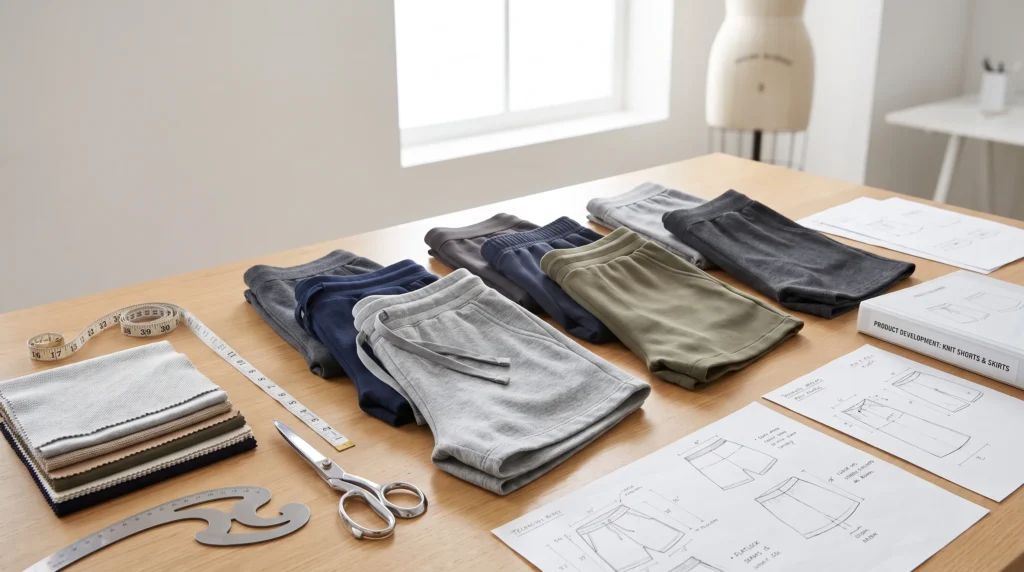
Knit shorts can range from lightweight casual styles to structured fashion bottoms and active-inspired designs. Common features include elasticated waists, drawstrings, side pockets and relaxed or semi-fitted silhouettes.
The fabric selection should match the intended use. A relaxed jersey short may benefit from softness and drape, while a more structured style may require a fabric with greater body and recovery.
Pocket construction is also important because heavy pocket bags can distort lightweight knit fabrics.
Knit Skirts
A knit skirt can be fitted, straight, flared, relaxed or A-line depending on the fabric and pattern.
Stretch and recovery become particularly important in close-fitting styles. If the fabric stretches easily but does not recover properly, the skirt can lose its shape around the waist, hips or seat.
More structured knitted fabrics can also be used to create cleaner silhouettes that resemble woven garments while retaining some of the comfort and flexibility associated with knits.
Best Fabrics for Knit Shorts and Skirts
There is no single best fabric for every knitted bottom. The right choice depends on the garment’s intended silhouette, season, end use, price positioning and performance requirements.
Buyers should evaluate fabric structure first, then consider fiber content, weight, stretch, recovery and finishing.
Single Jersey
Single jersey is widely associated with T-shirts, but suitable versions can also be used for lightweight jersey shorts and skirts.
Its advantages include softness, flexibility and good drape. These characteristics make it useful for relaxed silhouettes and comfort-focused products.
However, lightweight single jersey can lack the stability required for heavily structured bottoms. Buyers should also consider issues such as edge curling, transparency, distortion and recovery.
The fabric should therefore be evaluated as part of the complete garment rather than selected only because it feels soft.
Interlock Knit
Interlock generally provides more body and stability than lightweight single jersey.
Its smoother appearance and more balanced construction can make it suitable for knit bottoms where buyers want better shape retention and a cleaner surface.
For some shorts and skirts, this additional stability can help improve garment structure while maintaining comfort.
The exact performance will still depend on fiber composition, weight, finishing and the required silhouette.
Ponte Knit
Ponte is particularly useful when a buyer wants a knitted fabric with greater structure and recovery.
A Ponte skirt can provide a smoother, more tailored appearance than a lightweight jersey skirt. Ponte fabrics are often selected for garments that require stretch but also need better shape retention and opacity.
When developing a Ponte knit skirt, buyers should evaluate drape, thickness, recovery and surface appearance together. A heavier or more structured fabric can support a fitted silhouette, but the garment still needs appropriate pattern dimensions and seam construction.
Cotton and Cotton-Blend Knits
Cotton-based knits can provide a comfortable hand feel and are frequently considered for casual shorts and skirts.
However, buyers should not evaluate cotton content in isolation. Shrinkage, recovery, fabric stability and finishing can vary significantly depending on yarn, knit construction and blend composition.
Blending cotton with other fibers may change durability, stretch, recovery and moisture behavior. For that reason, the performance specification should be based on the finished fabric rather than the fiber name alone.
Polyester and Performance Blends
Polyester and blended knits may be useful for products where recovery, durability or moisture-management characteristics are important.
These fabrics can suit active-inspired shorts, casual bottoms and other applications where repeated wear and shape retention matter.
Again, the garment’s intended use should drive the fabric decision. A performance-focused knit short and a soft fashion skirt may require very different specifications even when both contain polyester.
Jersey Shorts and Jersey Skirts
Jersey shorts are popular because jersey can create a soft, flexible and comfortable garment. But buyers need to look beyond the word “jersey.”
Different jersey constructions vary in weight, stretch, recovery and stability.
A lightweight jersey may work well for relaxed shorts, while a heavier or more stable jersey may be needed where the garment includes pockets, a structured waistband or a closer fit.
The same principle applies to a jersey skirt.
A flowing jersey skirt may need good drape, while a fitted jersey skirt requires stronger recovery and sufficient opacity. If the fabric stretches too easily or lacks dimensional stability, the skirt may grow during wear.
This is why using the same fabric specification for shorts and skirts without considering the silhouette can create problems during sampling.
Stretch and Recovery in Knitted Bottoms
Stretch is one of the biggest advantages of knitted fabrics, but stretch alone is not enough.
Recovery describes how effectively the fabric returns toward its original dimensions after being stretched. Poor recovery can result in bagging, distortion and loss of shape.
For knit shorts, this problem often becomes visible at the seat, waist or knees. For a knitted skirt, it may appear around the hips or seat after extended wear.
Some fabrics achieve stretch primarily through their knitted structure, while others include elastane or spandex to increase elasticity.
More stretch is not automatically better.
A buyer developing a structured garment may prefer controlled stretch with strong recovery. A relaxed product may tolerate greater flexibility. The correct choice depends on how the garment is expected to fit and move.
Stretch should therefore be reviewed alongside recovery, pattern dimensions and end use.
Choosing the Right Knit Fabric GSM
Knit fabric GSM is an important development consideration because fabric weight affects body, opacity, drape and overall garment feel.
A lightweight fabric can provide softness and fluid movement but may create transparency or insufficient structure.
A medium-weight knit may offer a better balance between comfort and shape for many casual bottoms.
Heavier knitted fabrics can provide more structure, but they may also change drape, warmth and waistband behavior.
There is no universal GSM that is automatically “best” for knit shorts or skirts.
A long flowing skirt, a fitted Ponte skirt and lightweight lounge shorts have different requirements. Buyers should therefore evaluate fabric weight in relation to silhouette, season, pocket construction, stretch and intended use.
Waistband Construction for Knit Shorts and Skirts
The waistband is one of the most important functional areas in knitted bottoms.
A fabric may perform well in the body of the garment but still create problems if the waistband rolls, twists, stretches excessively or does not recover.
Elastic Waistbands
Elasticated waistbands are common in knitted shorts and skirts because they provide flexibility and comfort.
Buyers should evaluate how the elastic interacts with the body fabric. The finished waistband needs enough recovery to maintain fit without creating excessive gathering, twisting or discomfort.
The elastic itself, casing construction and attachment method can all affect performance.
Drawstring Waistbands
A drawstring waistband can provide additional adjustability and can also serve as a design feature.
Drawstrings may be functional or decorative. Functional versions require careful consideration of the casing, exit points and reinforcement.
The waistband should remain stable when the drawstring is tightened. If the surrounding fabric is too lightweight or insufficiently reinforced, the exit area may distort over time.
Rib Waistbands
A rib waistband can provide stretch, recovery and a different visual texture from the garment body.
When used successfully, the rib should complement the body fabric in both appearance and performance.
Buyers should review recovery, thickness and how the rib behaves after repeated stretching. A waistband that looks appropriate on a sample but loses recovery after wear can significantly reduce garment quality.
Waistband Fit and Measurement
Waistband development should consider both relaxed and stretched conditions.
The buyer should review whether the waist feels secure, whether the garment is easy to put on and whether the waistband returns to shape after stretching.
The correct specification depends on the intended fit rather than one universal measurement rule.
Fit Considerations for Knit Shorts
The fit of knitted shorts depends on the relationship between pattern dimensions and fabric stretch.
Important areas include the waist, rise, hip, seat, thigh, inseam and leg opening.
A high-stretch fabric may require different pattern dimensions from a more stable knit. If pattern development does not account for fabric behavior, the garment can become too loose, too tight or poorly balanced.
Pocket design can also affect fit.
Large pocket bags or heavy trims may pull on the body fabric, particularly in lightweight jersey shorts. Pocket placement and reinforcement should therefore be reviewed during sampling.
Buyers should evaluate both static fit and how the shorts behave during movement.
Fit Considerations for Knit Skirts
A knitted skirt requires similar attention to the waist and hip, but additional factors include length, sweep, drape and silhouette.
For a fitted knit skirt, recovery is especially important because the fabric must maintain its shape after sitting and walking.
A more relaxed jersey skirt may rely more heavily on drape and movement.
Longer skirts also place more fabric weight below the waist, which can influence how the garment hangs. This makes waistband stability and dimensional behavior important during product development.
Where lining is required, buyers should also consider how the lining interacts with the stretch and movement of the outer fabric.
Fashion buyers researching both knitted and other constructions can explore the wider women’s skirts and shorts collection for the commercial category structure.
Construction Details Buyers Should Review
Fabric selection cannot compensate for poor garment construction. Buyers should review how seams, hems, waistbands and pockets perform with the chosen knit.
Seam Performance
Seams need enough flexibility to accommodate movement without breaking, puckering or creating excessive bulk.
The construction method should suit both the fabric and the expected stress on the garment.
A highly extensible fabric paired with a seam that cannot accommodate movement can create failure even when the fabric itself performs correctly.
Hem Stability
Hems should remain smooth and stable.
Stretch fabrics can sometimes develop waviness or distortion if construction and handling are not controlled properly.
This becomes especially visible on clean skirt hems and wider short leg openings.
Pocket Construction
Pocket openings should remain stable, especially on lightweight knit shorts.
Buyers should consider:
- Pocket bag weight
- Opening stability
- Reinforcement
- Position
- Sagging
- Distortion after use
The pocket system should work with the body fabric rather than pull against it.
Waistband Attachment
Waistband attachment deserves particular attention because uneven feeding, poor recovery or inconsistent construction can affect both appearance and fit.
The finished sample should be evaluated for twisting, uneven gathering, rolling and distortion.
Common Quality Problems in Knit Shorts and Skirts
Common development problems include:
- Excessive shrinkage
- Poor recovery
- Bagging
- Pilling
- Spirality
- Seam puckering
- Uneven hems
- Waistband rolling
- Elastic performance problems
- Inconsistent measurements
- Fabric distortion
- Insufficient opacity
These issues are often interconnected.
For example, a short may fit correctly when first tried on but lose shape after extended wear because the fabric lacks recovery.
A skirt may have acceptable measurements before washing but become shorter or narrower if dimensional stability was not considered.
Quality review should therefore assess the finished garment over realistic use and care conditions rather than relying only on its initial appearance.
What Should Be Included in a Tech Pack?
Clear technical information helps reduce interpretation during product development.
For knit shorts and skirts, the tech pack should normally define the fabric requirement and the construction details that affect fit and performance.
Important information may include:
- Fabric composition
- Knit structure
- Required fabric weight or GSM
- Stretch and recovery expectations where relevant
- Complete garment measurements
- Measurement tolerances
- Waistband construction
- Elastic specification
- Rib details
- Drawstring construction
- Pocket shape and placement
- Seam and stitch requirements
- Hem construction
- Trims and labels
- Color requirements
- Artwork or branding placement where applicable
- Fit comments and sample revisions
- Relevant testing or performance requirements
Brands developing wider women’s apparel ranges may also find the fashion sourcing guide for women’s clothing brands useful for understanding the broader product-development and sourcing context.
The amount of technical detail required will depend on the product complexity and buyer requirements.
Sample Review Checklist for Apparel Buyers
Sampling is where fabric, fit and construction decisions can be evaluated together.
Buyers should review:
- Overall silhouette
- Waist comfort
- Waistband recovery
- Hip and seat fit
- Rise and thigh fit for shorts
- Skirt length and sweep
- Fabric stretch
- Fabric recovery
- Pocket position
- Seam appearance
- Hem stability
- Fabric hand feel
- Opacity
- Visible distortion
- Garment balance
- Dimensional behavior after relevant testing
For skirts, drape and garment length are especially important.
For shorts, the rise, seat, thigh and leg opening should be evaluated together.
A successful sample is not simply one that matches the measurement chart. It should also perform appropriately for the intended end use.
Knit vs Woven Skirts and Shorts
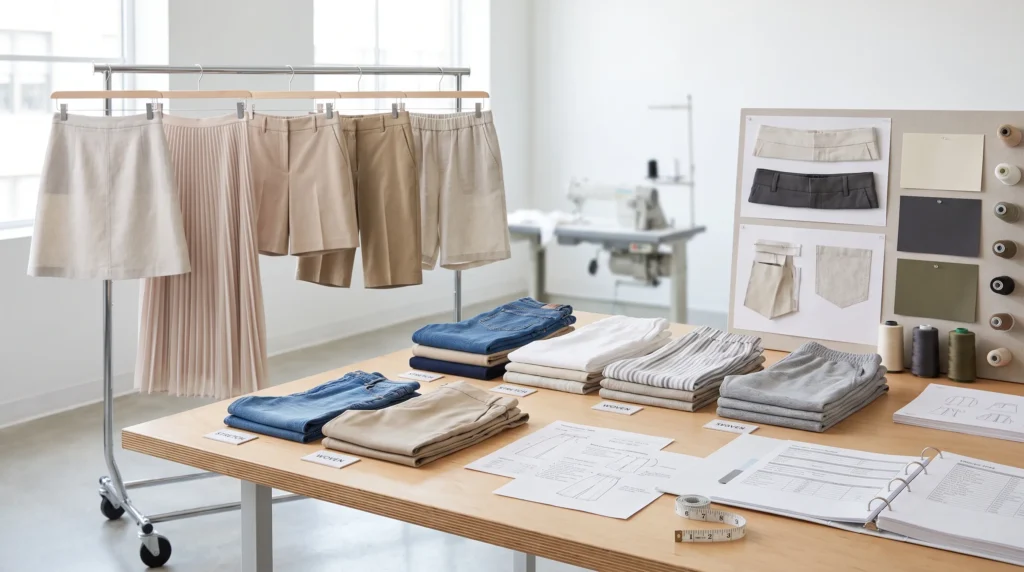
Knitted and woven bottoms require different development thinking.
Knits generally provide greater flexibility and can support softer, more comfort-focused silhouettes. Woven fabrics often offer different forms of structure, stability and tailoring potential.
For buyers, the important question is not whether knit or woven is universally better. It is which construction best supports the intended product.
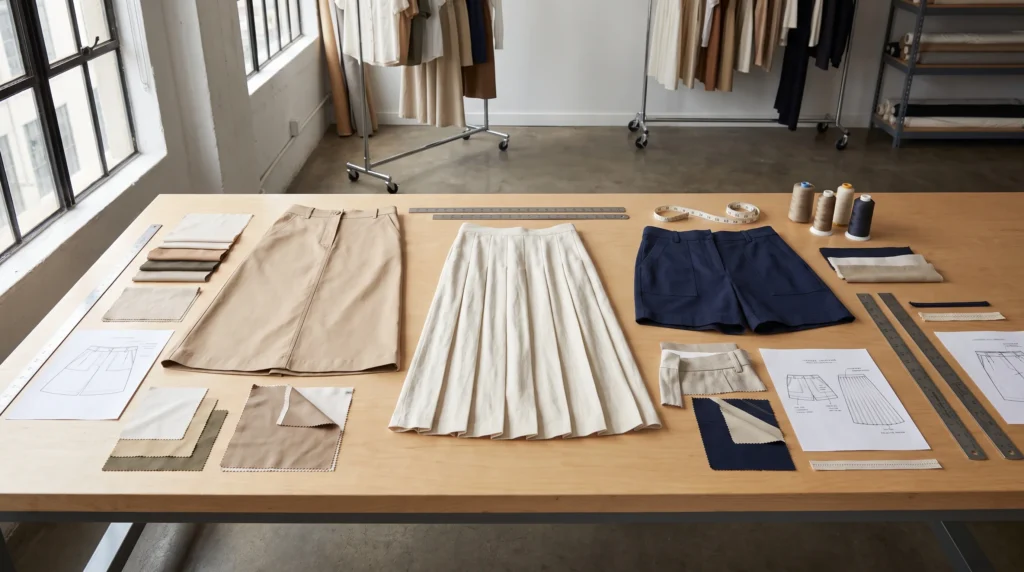
A knit short designed for comfort may prioritize stretch and recovery, while a woven shorts and skirts may prioritize crisp structure and pocket definition.
Similarly, a knit skirt can use drape and stretch as core design characteristics, while woven skirt development may focus more heavily on fabric structure, lining, interfacing and tailored construction.
Keeping these product-development differences clear also helps buyers choose the appropriate material and construction route for each style.
While knit fabrics provide stretch and flexibility, woven shorts and skirts offer more structure and shape through fabrics such as cotton, twill and linen.
Final Considerations for Fashion Brands and Apparel Buyers
Successful knit shorts and skirts begin with the end use.
Before approving a fabric, buyers should consider how the garment is expected to fit, move, recover and maintain its shape. Fabric structure, GSM, stretch, recovery, opacity and drape should all support the intended silhouette.
Waistbands, seams, hems and pockets then need to be engineered around those fabric characteristics.
The strongest development process connects each decision:
Fabric → Stretch & Recovery → Fit → Waistband → Construction → Sample Review → Quality Performance
For brands developing multiple categories beyond bottomwear, Asia Sourcing Limited’s wider women’s apparel collection provides access to the broader women’s product structure.
Fashion brands, retailers, wholesalers and private-label buyers planning knitted skirts, shorts or related apparel can contact Asia Sourcing Limited to discuss product specifications and sourcing requirements.