How to Measure Inseam on Shorts: A Guide for Kidswear Buyers
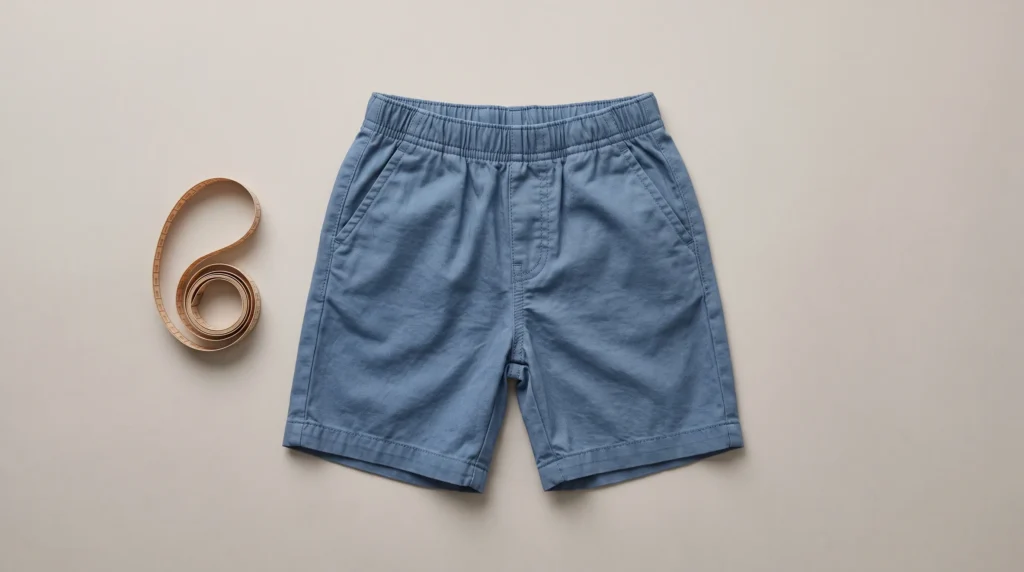
How to measure inseam on shorts, lay the garment flat and expose the inside-leg seam. Place the tape at the crotch junction where the leg seams meet, then follow the inside seam to the finished hem. Keep the fabric relaxed and record the result with its unit and the garment’s measured condition.
Knowing how to measure inseam on shorts helps you compare a reference pair, read product dimensions and give clearer sample feedback. For kidswear, length is only one part of the decision. Waist, rise, leg opening and movement also need attention before a size or sample is approved.
How to Measure Inseam on Shorts, Step by Step
Gather a flexible measuring tape, a clear flat surface and a place to record the result. Choose a reference pair that represents the intended style rather than assuming any comfortable shorts will suit every design.
Prepare the Shorts and Measuring Surface
Empty the pockets and lay the shorts on a table. Smooth wrinkles gently without stretching the material. Arrange one leg so the inside seam is accessible; move the other leg out of the way if necessary.
Check the hem before starting. If it is rolled, decide whether you are measuring the rolled wearing length or the unfolded length. Record that choice. Do not undo a permanently secured cuff merely to create a different measurement.
Identify the Crotch Seam and Finished Hem
Find the junction between the two inside-leg seams. This is the starting point for a conventional inseam measurement, not the top of the waistband or the lower edge of a pocket.
Proper Cloth’s inseam measuring guide illustrates the same crotch-to-leg-opening reference on trousers. Use it to understand the landmarks, not as a children’s size chart. For a gusseted or unusual design, follow the product’s specified measuring diagram rather than guessing a replacement starting point.
Measure Along the Inside-Leg Seam
Position the tape at the starting point and follow the seam to the finished hem. Keep it against the garment without pulling the seam longer. Read the tape at the hem edge, not at a nearby decorative stitch line.
Avoid measuring diagonally across the leg. If the seam curves, follow its path consistently. When working from a buyer’s technical specification, use its stated method and reference points.
Record the Result and Repeat Consistently
Write down the value and unit immediately. Identify which leg you measured, the sample size and whether the garment has been washed. Reposition the shorts and repeat if the tape slipped or the fabric bunched.
For a sample review, check both legs using the same method. Record a difference before deciding what it means; acceptance depends on the agreed specification and tolerances. A photograph can clarify tape placement, but it should accompany the written measurement rather than replace it.
Inseam vs Outseam: What Is the Difference?
Inseam measures the inside-leg length. Outseam describes an outside-leg measurement, commonly following the side from the waistband to the hem. Confirm the exact starting point because a specification may include or exclude the waistband.
Proper Cloth’s garment measurement guide shows a total-length method that includes the waistband and follows the side seam. Use the definition attached to your selected chart or specification.
| Measurement | Typical reference points | What to record |
| Inseam | Crotch junction to hem along the inside-leg seam | Hem condition, unit and specified seam path |
| Outseam | Defined waistband reference to hem along the outside leg | Whether the waistband is included and the exact route |
Do not substitute one for the other. Two shorts can share an inseam while differing in rise and overall proportions. Likewise, a longer outside measurement does not by itself prove that the inside leg is longer. Compare each dimension in its own labeled field.
How to Measure Shorts Beyond the Inseam
A length measurement cannot tell you whether the waistband will fit or the leg opening will allow the intended movement. Use a consistent set of garment dimensions alongside the inseam.
Proper Cloth’s waist-width instructions describe a flat measurement across a closed waistband. That is a garment width, not a measurement around the wearer. Keep those two types of information separate when reading a chart.
| Measurement | What the specification should define |
| Waist | Flat width or circumference; closure position; relaxed or agreed extended condition |
| Front and back rise | Separate front and back paths; crotch reference; waistband inclusion |
| Seat or hip | Exact level below the waistband and whether the result is a flat width |
| Leg opening | Measurement across the finished opening; cuff or hem condition |
Do not copy an adult garment’s hip-measuring distance into a child’s specification without checking it. Mark the required position on a diagram for that style.
For elasticated shorts, record the relaxed measurement separately from any extended measurement. Agree how extension will be applied rather than pulling until the waistband feels sufficiently stretched. For adjustable waists, note the adjustment setting. Comparing two different settings can create an apparent size difference that comes from the setup.
Reading a Kids’ Shorts Size Chart
Before using a kids shorts size chart, identify what its numbers describe. A body chart refers to the wearer. A garment chart describes the finished shorts. Read the accompanying method before comparing either with your notes.
A boys shorts size chart may include age or letter labels, but those labels are not a substitute for dimensions. Use the information for the exact product and market. Do not assume that matching labels across brands produce matching waist, rise or length.
If a chart reports circumference and your record contains flat width, resolve the difference before selecting a size. Follow the chart’s conversion or measurement instructions; do not compare the two numbers directly.
Choose a reference garment with the intended fit, then compare corresponding garment measurements. A pair that has become too short can help identify the problem, but should not automatically define the new target. During a fitting, review sitting, bending and stepping as well as standing appearance. Record where the garment pulls, slips or restricts movement.
Applying Measurements to Different Kids’ Shorts
The same measurement vocabulary helps organize a kids’ shorts collection, but each style needs its own sample record. Keep fabric, waistband, pocket and lining decisions alongside the dimensions.
Swim Shorts
For kids’ swim shorts, measure the outer shorts without confusing their hem with the liner edge. Review the liner fit separately. A suitable outer inseam does not establish whether the interior fits as intended.
To review the interior separately, our explanation of swim-short netting and kids’ liner checks covers liner purpose, mesh and stretch options, seams and attachment points. Use it alongside the outer measurements when recording sample revisions.
Denim Shorts
With kids’ denim shorts, record whether the hem is turned up, fixed or unfinished. If the edge is frayed, agree the endpoint instead of switching between the fabric edge and the longest loose thread.
Cargo Shorts
For kids’ cargo shorts, keep pockets flat and empty during measurement. Review pocket position and bulk separately from length. Moving a pocket is a different revision from changing the inseam.
Chino Shorts
For kids’ chino shorts, record the waist setting and assess rise, seat and leg opening together. A flat-front or pleated design still requires its own measurement specification and fitting review.
What Buyers Should Record Before Sample Approval
Prepare a record that another reviewer can reproduce:
- Sample identity: style code, size, color and version.
- Measuring method: labeled points, units, seam paths and waistband inclusion.
- Garment condition: before or after care, hem arrangement and waist adjustment.
- Results: target and measured values in separate columns, with agreed tolerances.
- Fit comments: observations during movement and the precise revision requested.
- Approval history: reviewer, date and which sample replaces the previous version.
As a hypothetical example, a buyer might approve the waist but request a shorter inseam. Record those as separate decisions and check whether the revised sample still meets the intended proportions. This is a planning example, not an Asia Sourcing order or standard.
CottonWorks’ guidance on shrinkage and skewing explains why dimensional change matters to garment fit. Compare before-and-after results under an agreed care process. Do not assume a universal shrinkage percentage or change every dimension because one measurement changed.
Frequently Asked Questions
Is Shorts Length the Same as Inseam?
Not necessarily. A listing may use “length” for an outside measurement or provide an inseam specifically. Read its measuring instructions before comparing products. Inseam runs along the inside leg; an outside length uses different reference points. If the listing is unclear, ask which dimension the number represents.
Can I Use a Pants Inseam to Choose Shorts?
A full-length pants inseam does not tell you the desired shorts length. Use a well-fitting pair of shorts with the intended coverage as a reference, then check the selected product’s measurements. Waist, rise and leg opening also matter, so avoid choosing from an inseam number alone.
Do Shorts with the Same Inseam Fit the Same?
No. They can differ in waist, rise, seat, leg opening, fabric and construction. The hem may also sit differently when worn. Compare the full measurement information and review movement in the actual garment. Equal inseams establish one shared dimension, not an equivalent size or fit.
Should I Measure Shorts Before or After Washing?
Record the condition relevant to your comparison. For a sample evaluation, keep separate measurements before and after the agreed care process. For a replacement purchase, note that a worn reference may already have changed dimensions. Follow the garment’s care instructions and compare measurements taken under clearly identified conditions.
Prepare Your Kids’ Shorts Measurement Brief
Understanding how to measure inseam on shorts gives you a useful starting point. Combine it with the other garment dimensions, the intended fit and a clearly identified reference sample.
Share photographs, size requirements, measurement points, units and fabric preferences with Asia Sourcing Limited to discuss your kids’ shorts requirements. Identify the decisions still open for sampling so the discussion starts from a record both sides can review.