Sweater with Collared Shirt: Layering, Fit and Outfit Ideas for Men
A sweater with a collared shirt works best when the shirt sits smoothly underneath, the collar suits the neckline, and both garments leave room to move. Start with a shirt that fits comfortably on its own. Add the sweater, then check the collar, sleeves and hem together before choosing trousers and shoes.
Small adjustments often matter more than changing the whole outfit. A trapped collar point, bulky sleeve or long shirt tail can make an otherwise useful combination feel awkward. This guide explains what to check, gives four outfit ideas and shows how menswear buyers can review the same details when planning a collection.
How to Wear a Sweater with Collared Shirt
Choose the setting first. An office that accepts business-casual clothing may call for a tucked shirt and plain trousers, while a weekend outfit allows different proportions. The workplace or invitation takes priority over a general styling rule.
Try this sequence when putting a sweater over a shirt:
- Put on the shirt and fasten the buttons you intend to wear closed.
- Smooth the sleeves and position the shirt hem before adding the sweater.
- Pull on the sweater without dragging the shirt sleeves upward.
- Adjust the collar points and cuffs so they sit evenly.
- Add trousers and footwear, then sit, reach forward and bend your elbows.
Check the side view as well as the front. A combination can look neat around the collar while excess shirt fabric gathers above the waistband. If it needs constant readjustment, identify the source of the bulk before trying a larger sweater.
Choosing the Shirt and Sweater
Shirt Shape and Collar Structure
The shirt needs enough room for normal movement without leaving unwanted folds beneath the sweater. A slim-fit label does not guarantee that balance. Check the chest, upper arms and waist on your own body, especially when seated.
Collar support matters too. A soft collar and a firmer collar may settle differently against the same neckband. Proper Cloth’s collar-selection guidance identifies button-down collars as one option for wearing beneath a sweater without a tie, with buttons holding the points in place. That makes them worth trying when loose points keep shifting.
For fabric choices, our shirt fabric and construction guide compares poplin and Oxford. Judge the actual shirt’s thickness, seams and drape under the sweater rather than assuming either fabric name settles the decision.
Sweater Thickness and Layering Room
A relatively smooth, fine gauge sweater can be a useful starting point, but inspect the finished garment. The chest and sleeves need to accommodate the shirt, and the neck opening should not press its collar uncomfortably against you.
If you are considering a jersey knit sweater, assess its thickness and shape rather than relying on the label. Our men’s knitted jersey styles include crew-neck and high-neck options. Review individual products; the category does not establish that every garment is fine-gauge or suitable over a collared shirt.
A sweatshirt is another possible casual layer, although its construction and appearance may differ. Our explanation of sweater and sweatshirt differences covers that choice in more detail.
Crew Neck, V-Neck or Cardigan?
The neckline changes how much of the shirt you see and where the collar has room to sit. These are styling options, not a ranking of formality or quality.
| Sweater style | How it frames the shirt | Possible outfit direction | Main check |
| Crew neck | A rounded opening frames the collar closely | Simple everyday or smart-casual combinations | Collar points should not become trapped or push against the neckband |
| V-neck | The opening exposes more of the collar and shirt front | A more open neckline, with or without a tie where appropriate | Check the depth of the V against the shirt opening |
| Cardigan | The front opening reveals more of the shirt | A layer that can be worn open or fastened | Check how the fronts hang and whether fastening creates strain |
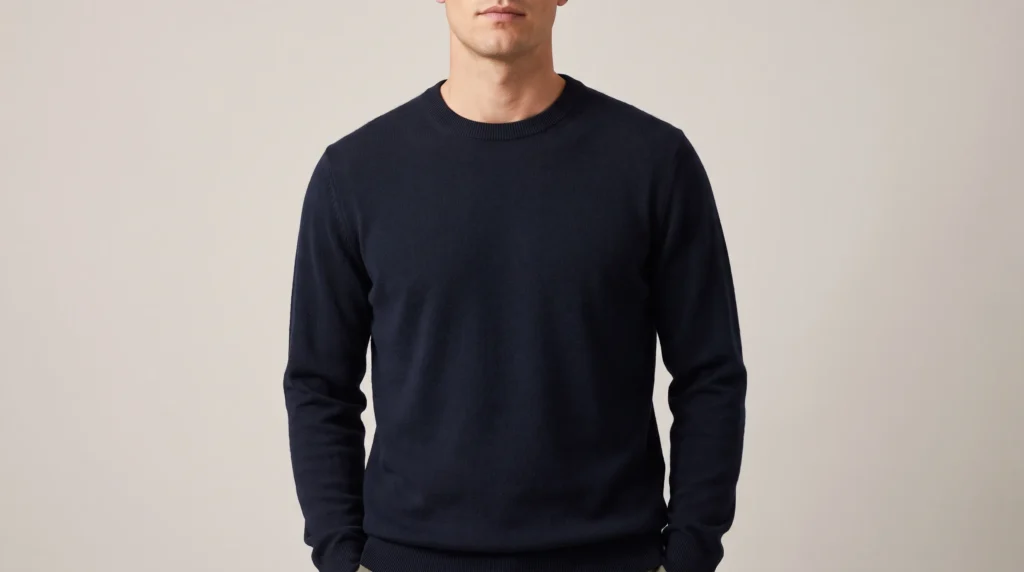
A crew neck sweater with a collared shirt is a practical place to start. Charles Tyrwhitt’s crew-neck layering example describes that pairing for one of its sweaters. Your own collar and neckline still need to work together.
For the terminology behind the rounded opening, see our guide to crew necklines and sweater fit. Here, the priority is how that opening interacts with the shirt underneath.
Getting the Collar, Cuffs and Hem to Sit Well
Shirt Collar Inside or Outside?
There is no single placement rule for every collar and sweater. With a crew neck sweater over a shirt, try keeping the collar points beneath the neckband while the upper collar remains visible. Check that both sides lie comfortably and neither point folds back on itself.
Wearing the points outside can also be a deliberate casual choice when their length and shape suit the opening. Compare both arrangements instead of forcing a small collar across a wide neckband. If one side repeatedly disappears, inspect the fit and collar shape rather than continually pulling it out.
With a V-neck or open cardigan, more of the shirt front is visible. Set the shirt opening as intended, then check whether the collar stays balanced when you turn your head.
How Much Shirt Cuff Should Show?
A little visible cuff can finish the outfit, but there is no universal amount that works with every sleeve. Let both sleeves settle naturally before judging them. The shirt cuff should close comfortably, and the sweater cuff should not crush it into folds.
Reach forward and return your arms to your sides. If the shirt sleeve disappears or gathers inside the sweater, check sleeve length and room through the arm. Rolling a bulky shirt cuff over the sweater may add more volume rather than solve the underlying fit issue.
Tucked or Untucked Shirt Hem?
Tucking the shirt is a useful starting point for a tidier office combination. Smooth it around the waist without pulling so tightly that reaching becomes uncomfortable. Then let the sweater hem sit where its design intends.
An untucked shirt can suit a casual outfit when the visible portion looks intentional. Compare the front, sides and back: a long curved tail beneath a short sweater may create a different proportion from a small, even strip of shirt. Choose the result you want instead of treating every visible hem as a mistake.
Fit Checks with Both Layers On
When deciding how to layer sweaters, check what changes after the second garment goes on. If the shirt fits well alone but feels tight beneath the knit, the sweater’s dimensions or bulk may be the limiting factor.
Start at the shoulders and chest. Look for new pulling across the shirt placket or sweater front. Bend your elbows, reach toward an imaginary steering wheel and sit down. Notice whether the upper sleeves catch, the neckline presses or the sweater hem climbs and stays raised.
Change one item at a time. Compare a less bulky shirt, a different sleeve shape or a sweater with more room in the problem area. This makes it easier to understand what actually improves the pairing.
Sweater and Collared Shirt Outfit Ideas for Men
Use these combinations as starting points. Compare colors in daylight and try the complete outfit, including shoes, before deciding whether it suits the occasion.
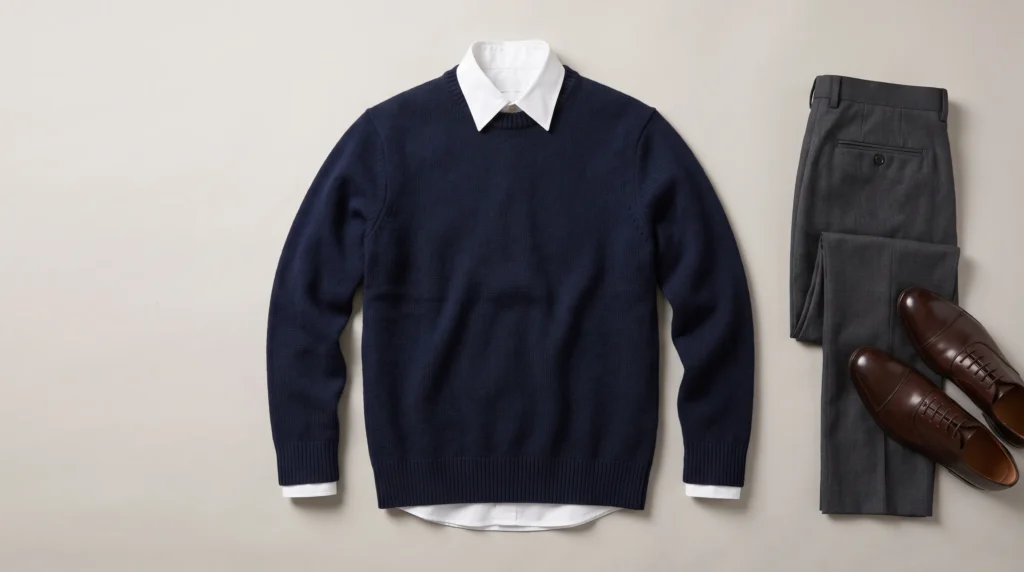
Navy Crew Neck with a White Shirt and Grey Trousers
Pair a navy crew-neck sweater with a white shirt, grey trousers and dark leather shoes. The white collar creates a clear edge against the navy, while the grey trousers keep the lower half understated. For an office that accepts this combination, begin with the shirt tucked in.
Check the collar points and shoulder line after adding the sweater. White fabric makes an uneven collar easy to notice. If the shirt bunches near the armhole, compare sleeve room rather than repeatedly smoothing only the front.
Grey V-Neck with a Pale Blue Shirt and Navy Chinos
A grey V-neck over a pale blue shirt gives the collar more space and shows a larger area of the shirt front. Add navy chinos and simple loafers or lace-up shoes for a restrained smart-casual outfit.
Look at the V-neck depth with the shirt buttons arranged as intended. If the opening exposes more chest or shirt placket than you want, try a shallower V or a different shirt opening. Adding a tie is optional and should suit the setting.
Oatmeal Crew Neck with a Chambray Shirt and Dark Jeans
Try an oatmeal sweater over a chambray shirt with dark jeans and plain boots. The lighter knit separates the upper body from the darker trousers, while the shirt introduces another blue tone without requiring a large pattern.
Check the actual chambray shirt for bulk at the sleeves and front placket. Also compare tucked and untucked hems. If the shirt tail hangs much lower than intended, choose a different shirt length rather than folding excess fabric into a thick band beneath the sweater.
Dark Cardigan with a Subtle Striped Shirt and Plain Trousers
A dark cardigan can frame a fine-striped shirt while plain trousers keep the pattern easy to read. Choose the shirt’s colors before adding shoes and accessories; repeating a quiet tone is often enough to connect the outfit.
Try the cardigan open and fastened as designed. Watch for pulling between buttons or a shirt placket that twists beneath the opening. These checks matter more than following a fixed rule about how many buttons to close.
Common Layering Problems and Adjustments
If the collar disappears, check whether the sweater opening and collar height suit one another. A different collar shape may be more useful than continually lifting the same points.
If the shirt balloons at the waist, remove the sweater and inspect the shirt’s shape first. Smooth a tucked shirt, or compare a cut with less excess cloth in that area. Do not assume tightening the sweater will solve it.
If cuffs gather, compare sleeve lengths and check whether the sweater cuff is trapping the shirt. If a thick placket shows through the knit, try a shirt with less bulk or a sweater that does not cling so closely. Change one element, then repeat the movement check.
Layering Sample Checks for Menswear Buyers
For brands and retailers, men’s sweater layering should be reviewed as a complete outfit. A sweater approved over a T-shirt may behave differently over a collared shirt. Use the intended underlayer during sample review and record which shirt and sweater sizes were paired.
Start with the design direction and current measurement charts. Review shoulder position, chest and upper-arm room, collar presentation, cuff alignment and the two hem lengths. Photograph the front, side and back, then record what changes when the wearer sits or reaches. Comments such as “shirt sleeve gathers above the elbow” are more useful than “fit needs improvement.”
The men’s knitwear collection offers a starting point for discussing different product directions. Confirm the construction and specifications of each proposed style. If the shirt, sweater material or measurements change, reassess the affected pairing before carrying an earlier sample approval forward.
Frequently Asked Questions
Can You Wear a Crew Neck Sweater with a Collared Shirt?
Yes. Choose a neckline that leaves the collar comfortable and a sweater with enough room for the shirt. Adjust the points, then check the shoulders and sleeves while moving. A neat collar alone does not establish that the full combination fits.
Should the Shirt Collar Go Inside or Outside the Sweater?
Either can work depending on the collar, neckline and intended look. Try the points beneath the crew neckband first, then compare an outside placement if the collar shape allows it. Avoid trapped points, uneven sides or pressure around the neck.
Should You Tuck In a Shirt Under a Sweater?
A tucked shirt is a useful starting point for a tidier outfit. An untucked shirt can suit casual clothing when its visible hem works with the sweater length. Check the back and sides, not just the front.
How Much Shirt Cuff Should Show Below a Sweater?
There is no universal measurement. A small amount can look balanced, but both sleeves should settle comfortably and allow movement. Adjust the garment lengths or fit if the cuff repeatedly disappears or gathers.
Is a Sweater Over a Collared Shirt Business Casual?
It can be, particularly with plain trousers and suitable footwear. Acceptance depends on the workplace, event and complete outfit. Check the actual dress expectations rather than assuming that a collar makes every sweater combination appropriate.
How Do You Stop a Shirt Bunching Under a Sweater?
Smooth the shirt before adding the sweater and identify where fabric accumulates. Compare shirt shape, sleeve volume and sweater room. A less bulky shirt or a different sweater cut may help more than simply choosing a larger size.
Discuss a Men’s Knitwear Layering Brief
Wearing a sweater with a collared shirt becomes easier when collar placement, sleeve room and hem proportions work together. Try the whole outfit and use movement to check the result.
For a collection project, discuss your knitwear layering brief with Asia Sourcing Limited. Share outfit references, the intended shirt pairing, preferred silhouette, measurements, yarn or fabric references, size range and proposed quantities to make the discussion specific.