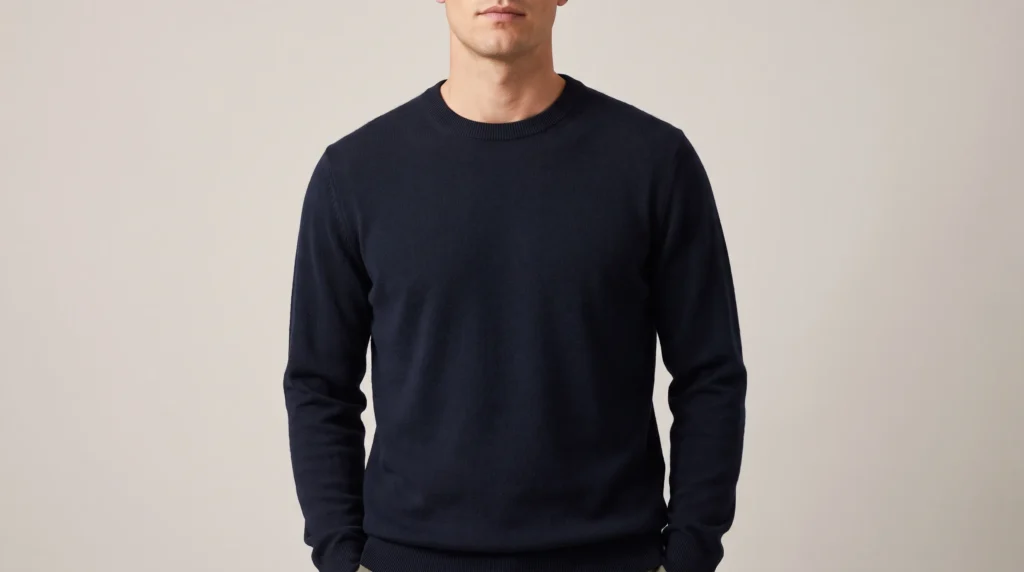
What Is a Crew Neck? Neckline Differences and Sweater Fit
A crew neck is a rounded, collarless neckline that usually sits near the base of the neck. The term describes the neck opening, rather than a particular fabric or garment. Sweaters, sweatshirts and T-shirts can all have crew necklines, so the name alone does not tell you how an item is made.
Understanding that distinction makes product descriptions easier to read. It also helps when choosing a sweater, comparing necklines or checking a menswear sample. This guide explains the terminology, compares crew and V-neck styles, and gives practical fit checks for men’s crew-neck sweaters.
What Is a Crew Neck?
The defining feature is a curved opening without a folded collar or a V-shaped front. A familiar crew neckline frames the lower neck fairly closely, although its width and depth vary between designs.
Merriam-Webster’s crew neck definition identifies the neckline and also recognizes “crewneck” as a name for a sweater with that opening. You will encounter both spellings in product descriptions. Neither spelling establishes fiber composition, thickness or fit.
How to Recognise a Crew Neckline
Look at the opening from the front. It should follow a rounded curve rather than dropping into a point. Then examine where it sits when worn: the neckline should reflect the intended design without pressing uncomfortably against the throat.
Many crew-neck sweaters have a ribbed neckband, but ribbing alone is not the definition. A different edge finish can still surround a crew-shaped opening. Likewise, a wide rib does not automatically make the garment a turtleneck.
What Is a Crewneck Sweater?
A crewneck sweater is a sweater with this rounded neckline. It might have a plain surface, raised cables, colorwork or another knitted texture. Those features describe different parts of the same garment rather than competing product categories.
For examples of the commercial category, explore Asia Sourcing Limited’s men’s crew-neck jumpers. Compare individual product details before drawing conclusions about composition, construction or seasonal use.
Crew Neck Describes the Neckline
Read a description such as “cotton cable-knit crew-neck sweater” in separate parts. Cotton identifies a fiber, cable-knit describes a texture, crew-neck identifies the opening, and sweater names the garment. None of those details supplies a complete specification by itself.
Production methods can vary too. CottonWorks’ sweater manufacturing overview covers cut-and-sew, panel knitting, full fashioning and whole-garment production. A crew neckline does not identify which method was used.
Why a Crewneck Is Not Always a Sweatshirt
Some retailers use “crewneck” as shorthand for a sweatshirt without a hood. That usage does not make every crew-neck garment a sweatshirt. A fine knitted sweater and a cotton T-shirt can have a similar opening while remaining different garments.
Check the full description, surface, interior and construction. Our guide to sweater and sweatshirt differences explains that broader comparison. Here, the neckline and the fit around it are the main focus.
Crew Neck vs Round Neck vs V-Neck
Neckline terms are useful, but retailers do not always apply them consistently. Use photographs and specifications alongside the name, particularly when comparing products from different brands.
| Consideration | Crew neck | Round neck | V-neck |
| Opening shape | Rounded, commonly near the neck base | Broad description of a rounded opening | Front opening forms a V |
| Typical coverage | Usually relatively high at the front | Depends on opening width and depth | Depends on the depth of the V |
| Terminology | A specific familiar neckline description | Often used interchangeably with crew neck | Describes a visibly different front shape |
| Underlayer visibility | A shirt collar or higher underlayer may show | Varies with the opening | Usually exposes more of the central underlayer than a high crew neck |
| Best comparison method | Check the actual shape and dimensions | Confirm what the retailer means | Check the V depth and width |
These are descriptive comparisons, not standardized measurements that every brand follows.
Crew Neck vs Round Neck
A crew neck is rounded, so “crew neck vs round neck” is not always a comparison between separate designs. Round neck can serve as a broader label, and a retailer may use both terms for the same garment.
When two products look different, describe the visible difference precisely. One may have a wider opening, a deeper front curve or a narrower neckband. Those observations are more useful than assuming the labels guarantee different cuts.
Crew Neck vs V-Neck
A V-neck creates a pointed opening at the front. A crew neck keeps a curved outline. This changes how much of an underlayer is visible and how the opening frames the upper chest.
Neither shape is universally better. Choose according to the intended outfit, coverage and personal comfort. Compare necklines over the same underlayer for a clearer assessment.
How Should a Crew Neck Sweater Fit?
A crew-neck sweater should sit and move as its design intends. A close-fitting sweater, a relaxed style and a deliberately oversized garment need different proportions. Start with the intended silhouette, then assess the opening, shoulders, body and sleeves together.
Try the sweater over the clothing you expect to wear underneath. Check it standing, seated and while reaching forward. A photograph in a single pose cannot reveal every fit problem.
Neck Opening and Comfort
The neckband should not press painfully against the throat or make ordinary movement uncomfortable. Check whether the opening sits evenly when you turn your head and whether it allows comfortable dressing without forceful pulling.
A neckline that gaps or stands away from the body may need closer inspection, but do not diagnose the cause from that sign alone. The opening dimensions, trim, construction and overall garment position can all warrant review. Compare the result with the design reference before changing the size.
Shoulder Position and Sleeve Shape
On a conventional set-in sleeve, the shoulder seam can help you assess where the garment sits. Compare its position with the intended shoulder line and look for unwanted pulling across the upper body.
Dropped-shoulder designs deliberately move that seam down the arm. Raglan sleeves use a different seam arrangement. Do not reject either simply because it fails a rule intended for a conventional shoulder. Assess the chosen construction and its intended silhouette.
Chest, Body and Movement
Reach forward, bend your elbows and sit down. Notice whether the sweater pulls across the chest or back, restricts the upper arms or pushes the underlayer into uncomfortable folds.
Extra fabric is not automatically a defect in a relaxed design. The question is whether its placement looks intentional and allows comfortable movement. Sizing up may add unwanted sleeve and body length, so another cut can sometimes solve a problem more effectively.
Sleeve Length, Cuffs and Hem
Check sleeve length with the arms relaxed and then bent. Cuffs should sit where the design intends without uncomfortable pressure or constant adjustment. Compare both sleeves rather than judging one side only.
Assess the hem while standing and seated. A ribbed hem may draw the sweater inward, while a straighter finish may hang more freely. There is no single correct body length for every silhouette. Look for a balanced result with the intended trousers and underlayer.
Choosing a Crew Neck Sweater for Its Intended Use
For a restrained everyday outfit, a plain sweater with trousers or jeans may provide the desired shape. A textured or patterned style changes the visual emphasis even when the neckline remains similar. Consider the whole outfit rather than treating crew neck as a dress-code category.
If the sweater will sit beneath a jacket, try both together. Check the combined sleeve bulk and whether the neck openings compete for space. A sweater that fits comfortably alone may feel different under another layer.
For shirt layering, confirm that the collar and fabric sit comfortably beneath the opening. Keep the shirt’s bulk and sleeve length in mind. Detailed collar styling is a separate decision from whether the sweater itself fits correctly.
Also read the care label before choosing a garment for frequent wear. Woolmark’s wool sweater care guidance makes the individual garment’s permitted care method the starting point. A crew neckline does not establish whether a sweater can be machine washed or tumble dried.
Crew Neck Sample Checks for Menswear Buyers
A useful development brief turns visual preferences into details that another person can assess. Alongside Asia Sourcing Limited’s men’s knitwear collection, review the intended neckline, silhouette and underlayers before comparing samples.
Record the following:
- Neckline reference: front and back shape, opening dimensions and neckband appearance.
- Fit direction: regular, close, relaxed or oversized, supported by clear reference images.
- Measurement method: agreed points, garment condition and tolerances for each size.
- Wear assessment: neck comfort, shoulder position, arm movement, cuff position and hem behavior.
- Care assessment: agreed washing and drying procedure, followed by measurement and appearance checks.
Keep photographs and comments tied to the sample version and size. Replace vague feedback such as “make the neck better” with an observation and a requested revision. If the material or trim changes, reassess the revised sample rather than assuming the previous fit approval still applies.
These checks organize a review; they do not establish laboratory performance or guarantee bulk consistency. Any recovery, shrinkage or durability requirement needs a defined assessment method and acceptance criteria appropriate to the product.
Frequently Asked Questions
Is Crew Neck the Same as Round Neck?
Often, the terms overlap. Crew neck usually refers to a rounded opening near the base of the neck, while round neck is a broader description. Retailers may use either label for the same item. Compare the actual opening rather than assuming the names guarantee different shapes.
Is a Crewneck a Sweater or a Sweatshirt?
It can refer to either in everyday product language. Crew neck primarily identifies the neckline, which also appears on T-shirts. Read the full garment description and inspect its fabric and construction to understand which type of product is being offered.
What Is the Difference Between a Crew Neck and a V-Neck?
A crew neck has a rounded opening, while a V-neck forms a point at the front. The amount of coverage depends on each design’s dimensions. Choose according to the intended appearance, underlayer and comfort rather than expecting one shape to suit every outfit.
Should a Crew Neck Sweater Feel Tight Around the Neck?
It should not feel painfully tight or restrict comfortable movement. A close-looking neckline can still fit comfortably. If it presses against the throat, pulls awkwardly or requires forceful stretching to put on, review the fit and opening rather than relying only on the size label.
Can a Crew Neck Sweater Have Dropped Shoulders?
Yes. Neckline shape and shoulder construction are separate features. A crew-neck sweater may use conventional set-in, dropped-shoulder or raglan sleeves. Judge seam placement against the intended design rather than treating every shoulder seam below the shoulder edge as a sizing error.
Can You Wear a Collared Shirt Under a Crew Neck Sweater?
Yes, when there is enough room and the combination feels comfortable. Try both garments together to check the collar, upper arms, cuffs and body. Avoid forcing a bulky shirt beneath a close-fitting sweater simply because both garments fit separately.
Discuss a Crew Neck Knitwear Brief
Understanding what a crew neck describes gives you a clearer starting point for garment selection. Match the neckline to the intended silhouette, check movement with the right underlayer and record specific sample requirements.
To discuss your crew-neck knitwear brief with Asia Sourcing Limited, share your style references, target market, material preferences, size range and intended fit. Include neckline details and the clothing the sweater is expected to cover.