Sweater Dress Guide: Materials, Knit Structure, Fit & Construction
A sweater dress extends a knitted garment into a dress-length silhouette, but the added length changes more than appearance. Material weight, knit structure, stretch, recovery, opacity, fit, measurements and hanging behaviour all become more important as the body grows longer. A specification that works for a short pullover cannot simply be extended downward and expected to produce a balanced dress.
For fashion brands, importers, retailers, wholesalers and private-label buyers, the product name alone is not a development brief. Buyers can review Asia Sourcing Limited’s women’s jumper dress collection while using this guide to define the intended material, silhouette, length, fit and quality requirements more clearly.
The question is not only, “What is a sweater dress?” Buyers must define the yarn, structure, gauge, construction and measurements required for the result.
What Is a Sweater Dress?
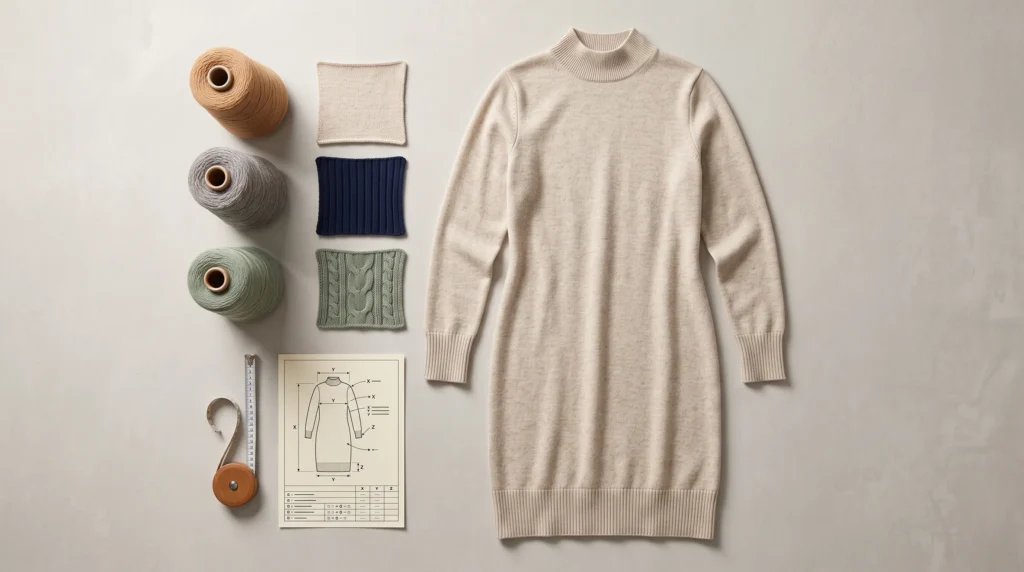
A knit sweater dress combines sweater-like material or construction with a dress-length body. It may be fitted, straight, A-line, relaxed or oversized. Necklines can include crew, V-neck, mock-neck or turtleneck designs, while sleeves may follow different lengths and constructions.
Sweater Dress, Knit Dress and Knitted Dress Terminology
The terms knit dress and knitted dress can describe a wider group of dresses made from knitted structures. Some may be cut and sewn from knitted fabric, while others may be fully fashioned from yarn into shaped panels. Sweater dress often suggests a product with recognisable sweater characteristics such as knitted ribs, yarn-based surfaces, cable textures or seasonal warmth, but usage varies between markets.
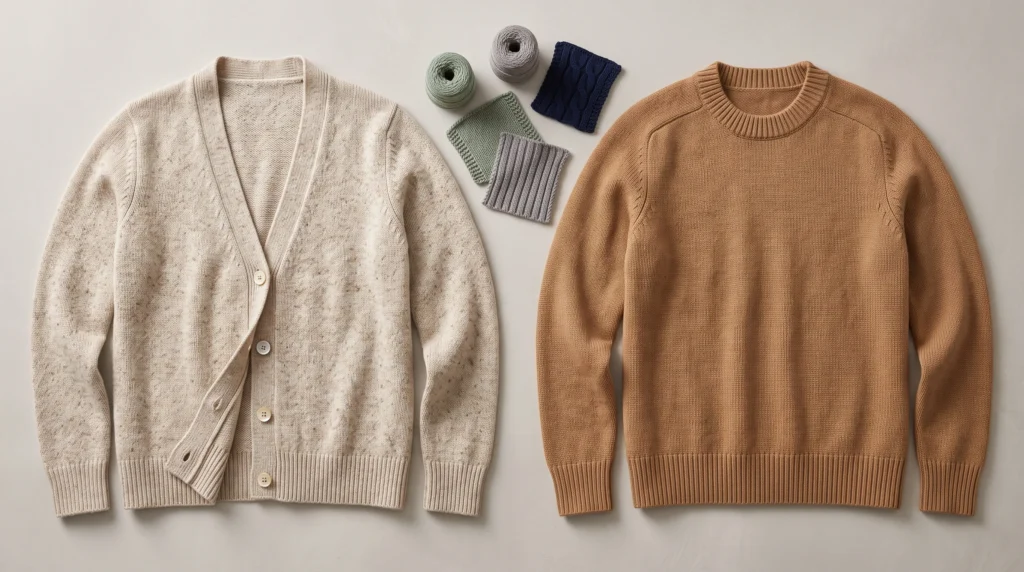
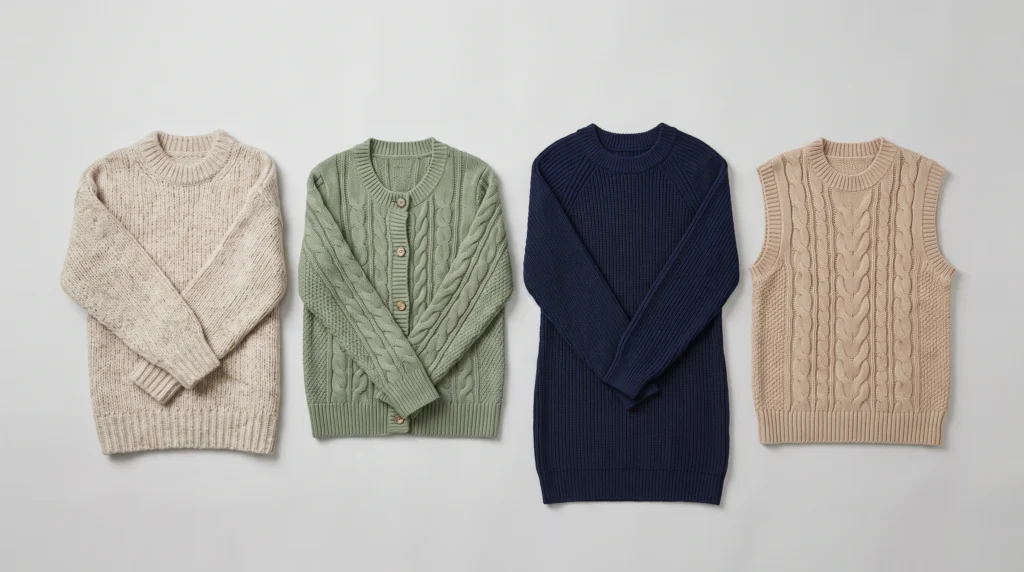
For that reason, buyers should not rely on the product name alone. The types of sweaters guide explains how sweater dresses, jumpers, cardigans and vests sit within a broader knitwear range. A technical specification should still define the exact silhouette, fibre composition, yarn, knit structure, gauge direction, measurements and construction method.
Sweater Dress vs Jumper Dress
Jumper dress is commonly used for a knitted dress in several markets, particularly where jumper refers to a pullover-style knit. In other markets, the phrase can have a different meaning. A drawing, product description and point-of-measure diagram are therefore more reliable than regional terminology.
If the intended product is a long-sleeve, fitted, ribbed knit with a mock neck, the specification should say so. If it is a relaxed, cable-textured dress with a crew neck and side slits, those details should also be documented. Clear product language prevents a general style name from becoming the only development reference.
Sweater Dress Product Decisions at a Glance
The main product decisions should work together. Selecting yarn without considering body length, or choosing a fitted silhouette without checking recovery and opacity, can create avoidable problems during sampling.
| Decision area | Question to resolve | Required development output | Why it matters |
| Target customer | Who will wear the dress, and in what market or climate? | Customer and end-use profile | Directs comfort, weight, care and fit decisions |
| Season | Lightweight, transitional or cold-weather? | Material, yarn and gauge direction | Influences weight, handle and layering |
| Silhouette | Fitted, straight, A-line, relaxed or oversized? | Technical sketch and fit reference | Controls ease, shaping and measurements |
| Length | Mini, knee-length, midi or another approved length? | Defined body-length measurement | Changes garment weight, balance and growth risk |
| Material | Which fibre composition and yarn specification? | Approved yarn and knitted swatch | Affects surface, drape, recovery and care |
| Knit structure | Jersey, rib, cable, jacquard or another structure? | Structure and artwork reference | Changes stretch, thickness and measurement behaviour |
| Opacity | Will the dress be worn alone or over a layer? | Opacity and lining decision | Influences comfort and material approval |
| Construction | Fully fashioned or cut and sewn? | Panel, shaping and seam plan | Affects silhouette, seams and pattern control |
| Fit | What ease and body balance are intended? | Measurement chart and fit sample | Prevents subjective fit comments |
| Performance | What must remain acceptable after wear and care? | Testing and acceptance criteria | Supports measurable approval |
Sweater Dress Materials and Yarn Selection
Sweater dress material should be selected for the complete garment, not from fibre name or hand feel alone. The longer body can increase overall weight and place more load on the shoulders, seams, waist, hips and hem. Yarn, structure, gauge and finishing must therefore be evaluated together.
The sweater fabric and yarn guide explains fibre, yarn, gauge and knit construction in greater detail. The sections below apply those decisions specifically to dress-length knitwear.
Wool and Wool Blends
Wool and wool-blend yarns may support warm, resilient or textured sweater-dress directions. Their suitability depends on the exact fibre specification, blend ratio, yarn construction, gauge and finishing. Buyers should assess softness, surface appearance, pilling expectations, care and dimensional behaviour in the proposed garment.
Cotton and Cotton Blends
Cotton can support clean surfaces, breathable-feeling knitwear and transitional product directions. In a sweater dress, its weight, recovery and dimensional behaviour require careful attention. A dense or long cotton dress may grow vertically or lose its intended shape if yarn, structure and finishing are not coordinated.
Viscose and Other Cellulosic Blends
Viscose and other cellulosic-fibre directions may create smooth surfaces and fluid drape. These qualities can support fitted, refined or softly hanging dresses, but excessive weight or growth can change body length, waist position and hem level.
Acrylic, Polyester, Nylon and Mixed-Fibre Yarns
Acrylic, polyester, nylon and mixed-fibre yarns can support varied bulk, colour, resilience, handle and commercial directions depending on their exact construction. Buyers should assess the finished knitted result for pilling, static, recovery, surface, heat response and care where relevant to the product.
What Is the Best Material for a Sweater Dress?
There is no universal best sweater dress material. The correct option is the one that produces the required silhouette, surface, weight, drape, recovery, opacity and care performance in the approved structure and gauge.
| Product direction | Possible material considerations | Dress-specific buyer checks |
| Fine, fitted sweater dress | Smooth surface, controlled stretch and recovery | Opacity, body contour, seam behaviour and shape after wear |
| Straight everyday knit dress | Balanced weight, drape and dimensional stability | Shoulder balance, hip allowance, length and hem level |
| Relaxed transitional dress | Soft handle with sufficient shape control | Wearing ease, layering, recovery and finished measurements |
| Chunky or cable dress | Stitch definition and controlled garment weight | Vertical growth, seam bulk, pattern scale and shoulder load |
| Ribbed dress | Stretch with reliable recovery | Width measurements, body fit, opacity and hem stability |
| Long or midi knit dress | Drape without uncontrolled growth | Hanging length, side-seam balance, sweep and dimensional change |
Before approving a material, buyers should define the selling season, climate, target customer, silhouette, intended underlayer, garment length, care requirements and target commercial position.
How Knit Structure Changes a Sweater Dress
Knit structure affects surface, stretch, recovery, thickness, opacity, width and the way the dress hangs. The same yarn can produce different results when knitted in jersey, rib, cable or another structure.
Jersey and Plain Knit Structures
Jersey can create a relatively clean face and support fine or medium-weight dresses. Buyers should review edge behaviour, surface evenness, opacity, stretch and recovery. The structure may need controlled ribs, hems, seams or other finishes to retain the intended shape.
Ribbed Sweater Dresses
Rib structures have pronounced vertical columns and can provide significant extensibility. A ribbed sweater dress may appear narrow when relaxed and expand when worn, making recovery and measurement methods especially important.
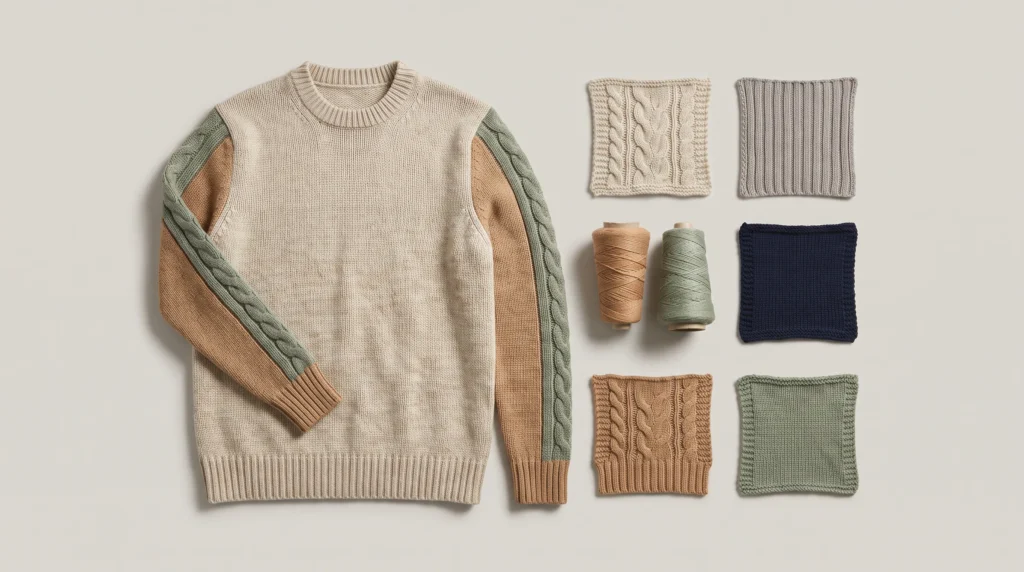
Cable and Textured Knits
Cable, fisherman-inspired and other textured structures add surface depth and may increase thickness and weight. They can also change the garment’s width, stretch and pattern balance. A large cable that works on a short jumper may require a different scale or placement on a long dress.
Jacquard, Patterned and Openwork Structures
Jacquard, colourwork and engineered patterns require decisions about colour combinations, floats, reverse-side appearance, pattern alignment and size progression. The longer body provides a larger design area but also creates more opportunities for visible misalignment.
Gauge, Density and Garment Weight
Gauge works with yarn thickness, knit structure and density to create the finished surface. It should not be treated as an independent grade of quality. A fine gauge does not automatically make a garment better, and a chunkier gauge does not automatically make it warmer or more durable.
Fine-, Medium- and Chunkier-Gauge Directions
A fine-gauge direction may support refined, lightweight-looking sweater dresses. Buyers should review opacity, seam or linking quality, recovery and whether the material provides enough body for the intended silhouette.
Gauge should be approved through a relevant swatch and finished sample. Copying a gauge from an unrelated style does not account for changes in yarn, structure, density, silhouette or length.
Why Dress Length Changes Material Behaviour
A dress places more knitted material below the shoulders than a standard pullover. This can influence vertical growth, waist position, side-seam alignment, hem level and the way the garment moves. The effect depends on yarn, structure, density, finishing and construction.
Buyers should define the approved measuring condition and when the garment is measured after finishing or care. If hanging behaviour is important, the assessment method and acceptance criteria should be agreed rather than described only as “must not stretch.”
Types of Sweater Dresses
Types of sweater dresses can be classified by silhouette, length, neckline, sleeve, structure and surface. A useful product description combines these attributes instead of relying on a single style name.
Fitted and Body-Contoured Dresses
Fitted sweater dresses follow the body more closely. Stretch, recovery, opacity and wearing ease are central to approval. Bust, waist and hip measurements must work together, while side seams and knitted patterns should remain balanced when the garment is worn.
Straight and Column Silhouettes
A straight or column dress may appear simple, but it still needs sufficient allowance through the waist and hip. The relationship between chest, waist, hip and hem sweep determines whether the garment hangs cleanly or catches on the body.
A-Line and Flared Sweater Dresses
A-line and flared silhouettes introduce additional sweep below the waist or hip. Shaping may be created through fully fashioned panels, stitch changes, pattern engineering or cut shape depending on the construction method.
Relaxed and Oversized Sweater Dresses
Relaxed and oversized dresses require deliberate ease rather than uncontrolled size. Shoulder position, armhole depth, sleeve volume, body width and length should work as a coordinated silhouette.
Mini, Knee-Length and Longer Silhouettes
Length terms vary between brands and markets, so they should be translated into an exact point of measurement. The buyer should state where body length begins and where the finished hem is intended to fall on the approved fit reference.
| Silhouette direction | Primary fit focus | Measurement and quality risks | Approval priority |
| Fitted | Bust, waist, hip and recovery | Excess tension, transparency, seam distortion | Fit on body, opacity and recovery |
| Straight or column | Balanced width through body | Catching at hip, twisting, uneven hem | Side view, hip allowance and vertical balance |
| A-line or flared | Controlled volume and sweep | Uneven flare, excessive weight, distorted hem | Flare position, sweep and movement |
| Relaxed | Wearing ease and soft balance | Unwanted growth, dropped shape, excess bulk | Shoulder, body ease and length |
| Oversized | Deliberate proportion | Poor grading, heavy garment, low armhole imbalance | Full silhouette and size progression |
| Long or midi | Length and vertical stability | Hanging growth, side-seam imbalance, hem drop | Finished length after agreed conditioning |
Sweater Dress Fit, Ease and Balance
Women’s sweater dress fit cannot be separated from material. A fluid knitted surface may fall close to the body, while a bulky cable can create volume even when flat measurements are similar. Stretch, recovery and garment weight may also change how the dress sits after wear.
Defining the Intended Fit
Terms such as fitted, regular, relaxed and oversized are design directions, not complete specifications. Buyers should define chest, waist, hip, shoulder, armhole, sleeve, body length and sweep. A reference sample or fit image can support the direction, but measurable points are still required.
Wearing Ease and Layering Allowance
A dress intended to be worn alone may require a different opacity, neckline and body fit from one designed over a shirt, top or base layer. Sleeve and armhole ease should accommodate the intended use without creating unnecessary bulk.
Bust, Waist, Hip and Hem Balance
The bust, waist, hip and sweep form a vertical measurement system. Changing one point can alter the complete silhouette. A narrow hip may cause the dress to ride upward, while excessive sweep or garment weight can pull the lower body out of balance.
Essential Sweater Dress Measurements
A sweater dress tech pack should include product-specific points of measurement. The exact list depends on the design, but common areas may include:
- Body length from an agreed reference point
- Chest width
- Waist width and waist position
- Hip width and hip position
- Bottom opening or hem sweep
- Shoulder width or raglan dimensions
- Armhole depth
- Sleeve length
- Bicep and elbow width where relevant
- Cuff opening and cuff depth
- Neck width and front or back neck depth
- Collar or turtleneck height and opening
- Side-slit length and position
- Belt length, width and placement where applicable
Point-of-Measure Diagrams
Every measurement should have a clear method. Body length measured from the high shoulder point can differ from centre-back length. Hip position needs a defined distance from another reference point. A point-of-measure diagram reduces interpretation during sampling and inspection.
Length, Grading and Tolerance Control
Size grading should preserve the intended silhouette rather than increase every measurement without considering body shape. Chest, waist, hip, length, armhole and sleeve progression may need separate rules.
Tolerances should be realistic for the construction and material while protecting critical fit points. The article should not substitute generic tolerance numbers for an approved buyer specification.
Stretch, Recovery, Opacity and Shape Retention
These performance areas are closely connected in a sweater dress. A material may stretch easily but fail to return to its approved dimensions. A dress may appear opaque when relaxed but become transparent across the hip or seat. A long silhouette may also grow after hanging or care.
Stretch and Recovery
Stretch should support movement and fit without creating permanent distortion. Recovery should be reviewed at relevant areas such as neckline, elbows, waist, hips, cuffs and hem. Ribbed and fitted dresses may need particular attention because their appearance depends on controlled expansion and return.
Opacity and Lining Decisions
Opacity should be checked in the intended colour, material, size and fit. Light colours, fine gauges, open structures and close-fitting areas may behave differently when stretched. A flat swatch placed on a table does not reproduce every wear condition.
Hanging Growth and Dimensional Stability
Garment weight can change body length, waist placement and hem level during hanging or wear. Finishing and care may also alter width and length. Buyers should establish when measurements are taken and which reference sample or approved dimensions apply.
Fully Fashioned vs Cut-and-Sew Sweater Dresses
In fully fashioned knitwear, panels are shaped during knitting through increases, decreases, transfers or other engineered methods. The panels are then linked or joined. A sweater dress may use shaped body panels, engineered necklines, sleeve construction and integrated pattern placement.
In cut-and-sew knitwear, pattern pieces are cut from knitted fabric and assembled with suitable seams. Buyers should consider edge stability, seam type, seam allowance, pattern alignment and the way the fabric behaves during cutting and assembly.
Neither method is automatically better. The appropriate choice depends on yarn, structure, silhouette, artwork, seam appearance, measurements and commercial objectives. Buyers comparing knitwear formats can also review the cardigan and sweater construction guide while keeping dress-length fit and measurement requirements separate.
Necklines, Sleeves, Ribs and Trims
Neckline and sleeve construction influence comfort, appearance and fit. Crew and round necks need suitable width, depth, stretch and recovery. V-necks require a controlled point and symmetrical shape. Mock necks and turtlenecks need defined height, circumference, fold and recovery.
Sleeves may be set-in, raglan, dropped or engineered in another way. Shoulder construction should work with the garment weight. A long, heavy dress can place more load on the shoulder area, making seam or linking quality important.
Cuffs and hems should provide the intended finish without pulling or flaring. Ribs need suitable tension and recovery. Side slits, pockets, belts, ties, zippers, labels and decorative trims should be specified for position, dimensions and attachment. Heavy or incompatible trims can distort the knitted surface.
What to Include in a Sweater Dress Tech Pack
A sweater dress tech pack should turn the design into a clear, measurable product brief. The wider fashion sourcing guide for women’s clothing brands explains why product definition should happen before supplier and quotation comparison.
A practical specification may include:
- Style number and precise product description
- Front, back and detail technical drawings
- Target customer, market, season and end use
- Intended silhouette, fit and garment length
- Size range, base size and grading direction
- Point-of-measure diagram
- Measurement chart and tolerances
- Fibre composition and exact blend ratio
- Yarn count, ply, twist or approved yarn reference where relevant
- Knit structure and gauge direction
- Fully fashioned or cut-and-sew construction
- Panel shaping, seams and linking details
- Neckline, collar and shoulder construction
- Sleeve, cuff and hem details
- Waist treatment, belt, tie, pocket or slit information
- Artwork, stripe, cable or jacquard placement
- Colour standards and yarn-lot expectations
- Labels, branding and decorative trims
- Washing and finishing direction
- Testing and care requirements
- Packaging and presentation requirements
- Approved yarn, swatch and garment references
If material, gauge, structure, measurements or finishing changes after approval, the revised option should be documented and assessed through an appropriate swatch or sample.
Sweater Dress Sample Development and Approval
Product development should move from design direction to documented approval. The exact workflow varies, but buyers commonly need to resolve the following decisions:
- Define the target customer, market, season and intended use.
- Confirm the silhouette, fit, neckline, sleeve and finished length.
- Select a material and develop or approve a relevant knitted swatch.
- Review yarn, structure, gauge, density, opacity and weight together.
- Prepare technical drawings, measurements and construction notes.
- Evaluate the sample on an appropriate wearer or form.
- Check fit, movement, opacity, side-seam balance and hem level.
- Review measurements and appearance after the agreed finishing or care process.
- Record corrections, revised specifications and approval references.
A swatch should not be approved only for colour or softness. The dress sample must show how the material behaves across the full body length and intended fit.
Sweater Dress Quality-Control Checklist
Quality control should compare the finished garment with approved materials, measurements, construction, workmanship and performance requirements.
Yarn, Colour and Knitted Surface
- Fibre composition and yarn reference match the approval
- Colour and yarn lot follow the agreed standard
- Stitch density and surface appearance are consistent
- Ribs, cables, stripes or patterns are correctly positioned
- No unacceptable holes, dropped stitches, pulls or visible repairs are present
- Openwork or fine structures have the approved appearance and opacity
Fit, Measurements and Hanging Balance
- Finished measurements follow the agreed method
- Chest, waist, hip, sweep and length meet approved tolerances
- The waist and hip positions align with the intended fit
- Side seams and vertical patterns hang correctly
- The hem is level unless intentional asymmetry is specified
- The dress retains the approved balance after agreed conditioning
- Size progression preserves the design direction
Seams, Linking, Ribs and Trims
- Linking and seams are secure and suitable for the material
- Shoulders, armholes and side seams avoid unwanted bulk or stretching
- Neckline, cuffs and hem have the approved recovery
- Slits, pockets, belts, zippers and trims are correctly positioned
- Labels and decorative details do not distort or damage the knit
Care and Performance Review
- Appearance remains within agreed requirements after the specified care process
- Dimensional change is evaluated against approved criteria
- Pilling, colour, surface and recovery requirements use relevant agreed methods
- Packaging and storage do not create unacceptable stretching or distortion
Testing methods, tolerances and acceptance criteria should be agreed for the actual product and target market. General phrases such as “high quality” or “export quality” are not measurable approval standards.
Common Sweater Dress Product-Development Mistakes
Selecting Material by Fibre Name Alone
Two yarns with a similar fibre description can create different surfaces, weights and recovery. Buyers should approve the exact yarn in the intended structure and gauge.
Extending Pullover Measurements Into a Dress
A longer body requires dress-specific waist, hip, sweep, length and balance decisions. Adding length to a sweater specification does not create a complete dress measurement chart.
Ignoring Garment Weight and Vertical Growth
The full garment can behave differently from a small swatch. Hanging length, shoulder load and hem balance should be evaluated in the finished sample.
Using Undefined Fit Terms
“Fitted,” “relaxed” and “oversized” cannot replace technical drawings, measurements and an approved fit reference.
Failing to Check Opacity Under Stretch
A material may look opaque when relaxed but change across the bust, hip or seat. Review the intended colour, size and fit under realistic conditions.
Approving the Dress Only When Laid Flat
Flat measurements are necessary, but the garment should also be reviewed on an appropriate wearer or form for drape, balance, movement and vertical alignment.
Changing Yarn or Finishing Without Reassessment
A change in yarn, structure, colour process or finishing can affect measurements and appearance. Revised options should be documented and evaluated.
How Buyers Should Choose a Sweater Dress Specification
The correct specification connects the target customer with measurable product decisions. Buyers should confirm:
- Who will wear the dress and in which market
- Selling season and expected climate
- Whether the dress is worn alone or layered
- Fitted, straight, A-line, relaxed or oversized silhouette
- Exact finished length and size range
- Fibre composition and yarn reference
- Knit structure, gauge direction and surface objective
- Stretch, recovery and opacity requirements
- Fully fashioned or cut-and-sew construction
- Measurement chart, grading and tolerances
- Neckline, sleeve, hem, slit, belt and trim details
- Care, testing and approval requirements
- Labelling, folding and packaging expectations
Brands developing the dress alongside other products can review Asia Sourcing Limited’s women’s clothing categories while maintaining a separate specification for every silhouette.
Questions to Ask a Knitwear Supplier
Before development, buyers can ask:
- Which yarn and knit structures suit the intended silhouette, length and season?
- How will the proposed gauge and density affect weight, opacity and drape?
- Should the dress be fully fashioned or made through a cut-and-sew method?
- Which measurements are most sensitive to the selected material and structure?
- How should stretch, recovery and vertical growth be evaluated?
- Does the intended fit require a lining, underlayer or another opacity solution?
- Which swatches and samples are required before approval?
- How will cables, ribs, stripes or jacquards be positioned across sizes?
- Which seams, linking methods, ribs and trims suit the garment weight?
- Which testing and approval references should be used for production evaluation?
Answers should be confirmed through specifications, samples, test plans and approved standards rather than general assurances.
Frequently Asked Questions
What is a sweater dress?
A sweater dress is a knitted garment that combines sweater-like material or construction with a dress-length silhouette. It may be fine gauge, ribbed, cable knit, fitted, straight, A-line, relaxed or oversized depending on the design.
Is a sweater dress the same as a jumper dress?
The terms often describe a similar knitted dress, but regional usage varies. Buyers should define the exact product with technical drawings, material, structure, fit, length and measurements instead of relying on the name alone.
What is the best material for a sweater dress?
There is no universal best material. Wool, cotton, viscose, acrylic, polyester, nylon and blends can support different directions. The exact yarn should be evaluated in the intended structure and gauge for weight, drape, recovery, opacity, care and price position.
What is the difference between a knit dress and a sweater dress?
Knit dress can describe a broad range of dresses made from knitted structures. Sweater dress commonly describes a knit dress with sweater-like yarn, ribs, textures or seasonal character. Technical specifications should identify the actual material and construction.
How should a sweater dress fit?
Fit depends on the intended silhouette. A fitted dress needs controlled stretch, recovery and opacity, while a relaxed dress needs deliberate ease and balance. Chest, waist, hip, sweep and length should be supported by measurements and a fit reference.
How does gauge affect a sweater dress?
Gauge works with yarn thickness, knit structure and density to influence surface, weight, drape and opacity. It should be approved through a relevant swatch and finished sample rather than used alone as a measure of quality.
Do sweater dresses need lining?
Not every sweater dress needs lining. The decision depends on material, structure, colour, opacity, fit and intended use. If lining is used, its stretch, weight, attachment and care should be compatible with the outer knit.
Why can a sweater dress stretch or grow in length?
Possible factors include garment weight, yarn characteristics, knit structure, density, finishing, care and storage. Buyers should define measuring conditions and evaluate the finished garment against agreed dimensional requirements.
What measurements belong in a sweater dress tech pack?
Important measurements may include body length, chest, waist, hip, sweep, shoulder, armhole, sleeve, cuff and neckline dimensions. Product-specific points such as slits, belts or collar height should also be included with a clear point-of-measure diagram.
What quality problems should buyers check?
Buyers should check yarn and shade consistency, stitch appearance, holes, pulls, measurements, fit, opacity, hanging balance, seam or linking quality, rib recovery, trim attachment and performance after the agreed care and testing procedures.
Develop a Better Sweater Dress Collection
A successful sweater dress specification connects material, yarn, structure, gauge and construction with dress-specific length, fit, opacity, measurements and shape retention. Each decision should be reviewed through relevant swatches, samples and documented approvals.
Fashion brands and apparel buyers can explore Asia Sourcing Limited’s women’s knitwear collection when developing a coordinated range. To discuss a sweater dress sourcing project, buyers may contact Asia Sourcing Limited with their technical drawings, material direction, measurements, size range and quality requirements.