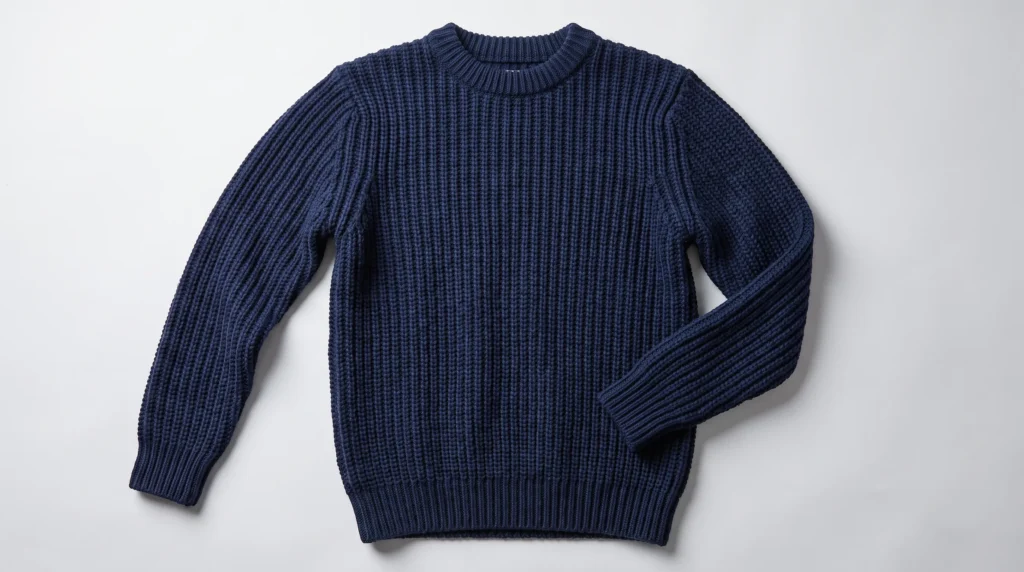
Sweater Fabric Guide: Yarn, Gauge & Women’s Jumper Construction
Choosing sweater fabric for a women’s jumper involves more than selecting wool, cotton or acrylic from a material list. Fibre composition matters, but the finished garment is also shaped by yarn count, ply, twist, knit structure, gauge, density, construction, washing and finishing. A material that performs well in one jumper can create the wrong weight, drape or recovery in another.
For fashion brands, importers, retailers, wholesalers and private-label buyers, the practical objective is to connect the material specification to a clear product result. A fine, fluid office jumper needs a different development direction from a chunky textured winter style. Buyers can review Asia Sourcing Limited’s women’s jumper collection while using this guide to define yarn, gauge, construction and quality requirements more precisely.
The strongest material decision is therefore not based on fibre name alone. It comes from evaluating the proposed yarn in the intended structure and gauge, then confirming the finished jumper through measurable specifications, relevant swatches, approved samples and agreed performance requirements.
What Is Sweater Fabric?
The phrase sweater fabric is commonly used to describe the knitted material that forms a sweater or jumper. In many fully fashioned products, however, development does not begin with a conventional roll of finished fabric. Yarn is knitted into shaped panels, and those panels are linked or joined to create the garment. In a cut-and-sew product, knitted fabric may instead be produced in yardage, cut into pattern pieces and assembled with suitable seams.
This distinction matters because a buyer may use the word “fabric” while the supplier needs a more detailed yarn-and-construction specification. A complete material direction should explain:
- Fibre composition and blend ratio
- Yarn count or thickness
- Ply and twist where relevant
- Knit structure
- Gauge direction
- Density or approved knitted surface
- Intended garment weight
- Colour and surface effect
- Construction method
- Washing and finishing
- Care and performance requirements
The published types of sweaters guide explains the wider relationship between jumpers, cardigans, sweater dresses and vests. This article goes deeper into the material decisions required for a women’s jumper, where a closed front, neck opening, shoulder construction, body fit, cuffs and hem must work as one finished product.
From Fibre to a Finished Women’s Jumper
Fibre, yarn, knitted material and garment are related, but they are not interchangeable terms. Keeping them separate helps a buyer identify where a development problem begins.
| Development level | What it describes | Why it matters to the buyer |
| Fibre | The basic material component, such as wool, cotton, viscose, acrylic, polyester or nylon | Influences possible hand feel, care, warmth, resilience, labelling and commercial position |
| Yarn | Fibres formed into a strand with a defined count, ply, twist, colour and construction | Influences thickness, evenness, stitch definition, strength and surface character |
| Knitted structure | The way the yarn is formed into stitches and arranged | Influences texture, stretch, recovery, stability, openness and appearance |
| Gauge and density | The relationship between the knitting setup, yarn and stitch concentration | Influences fineness, opacity, weight, drape and surface definition |
| Garment construction | The method used to shape and assemble the jumper | Influences seams, silhouette, measurements, pattern placement and finishing |
| Finished product | The complete jumper after washing, pressing, trims and final finishing | Becomes the practical approval reference for fit, appearance and performance |
A yarn that looks soft and even on a cone may behave differently after knitting. A swatch may also change after washing, and a full jumper can behave differently from the swatch because of panel size, seam or linking construction, ribs, trims and garment weight. Approval should move through these stages rather than treating the initial yarn selection as the final material decision.
Common Sweater Materials for Women’s Jumpers
Material categories can provide a starting point, but their properties are not guaranteed by name alone. Fibre quality, yarn engineering, blend ratio, structure, gauge and finishing can change the result substantially. Buyers should use the descriptions below as development directions that must be confirmed in the actual sample.
Wool and Wool Blends
Wool and wool-blend yarns are often considered for warmth, elasticity and a traditional sweater character. They can support fine, medium or textured jumpers depending on the yarn and construction. Important buyer considerations include softness against the skin, fibre specification, pilling performance, care method, dimensional stability and the way the product responds to finishing.
A wool blend may be developed to balance warmth, surface, resilience, care or commercial requirements. The precise blend ratio must be stated rather than described only as “wool blend.” Buyers should also approve the actual hand feel because fibre content alone cannot define whether a jumper will feel soft, dry, lofty, smooth or coarse.
Cotton and Cotton Blends
Cotton can support clean surfaces, familiar hand feel and lightweight or transitional jumper directions. It may suit casual, minimal or warm-weather knitwear, but its performance still depends on yarn construction, stitch structure, density and finishing. Weight, recovery, drying behaviour and dimensional change deserve particular attention.
Cotton-blend yarns may be considered when the product needs a different balance of drape, resilience, softness or care. Buyers should check whether cuffs, neckline and hem recover after stretching and care, especially when the silhouette depends on stable rib openings.
Viscose and Other Cellulosic Fibres
Viscose and related cellulosic-fibre directions may create softness, a smooth surface and fluid drape. These characteristics can support refined or fitted women’s jumpers, but a fluid hand feel must be coordinated with recovery, garment weight and dimensional stability. A long or relaxed garment can place more load on the knitted structure than a short fitted style.
Buyers should review growth, opacity, seam or linking behaviour and appearance after the agreed care process. A soft material that loses shape or grows beyond the approved measurements will not meet the product objective.
Acrylic Yarn
Acrylic yarn can offer colour flexibility, bulk and different commercial surface directions depending on yarn quality. It may be used in lightweight, medium or chunky knitwear, including textured seasonal jumpers. The specification should still address hand feel, pilling, static, recovery, surface appearance and care performance.
It is not useful to treat all acrylic yarns as identical. Yarn count, construction, twist, fibre quality and finishing can produce very different results. The proposed knitted swatch and finished jumper should remain the basis for approval.
Polyester and Nylon
Polyester or nylon may be used alone or as part of a blend to adjust strength, resilience, recovery, abrasion behaviour or surface character. Their effect depends on the percentage, yarn form and intended structure. A small blend component can serve a different purpose from a predominantly synthetic yarn.
Buyers should evaluate heat response, hand feel, pilling, static, colour appearance and care compatibility. Trims, labels and finishing conditions must also suit the complete material package.
Blended Sweater Materials
Blended yarns can combine characteristics that a single fibre may not provide in the desired balance. A blend may be developed around softness, warmth, drape, resilience, easy care, colour or commercial positioning. That does not mean every blend automatically performs better.
The tech pack should state the exact composition, and the buyer should approve the yarn in the intended gauge and structure. Substituting a different ratio, yarn count or supplier reference can change the surface and performance even when the broad fibre names remain the same.
Sweater Material Comparison for Buyers
The following table helps translate material directions into development questions. The possible advantages are not guaranteed and must be evaluated in the proposed jumper.
| Material direction | Possible product character | Key development risks | Useful buyer checks |
| Wool or wool blend | Warm, elastic or traditional sweater character | Coarse hand feel, pilling, dimensional change and demanding care | Fibre specification, softness, surface, care and appearance after testing |
| Cotton or cotton blend | Clean, familiar and transitional knitwear | Weight, growth, slow drying and weak recovery in some constructions | Garment weight, rib recovery, dimensional stability and drying behaviour |
| Viscose or cellulosic blend | Smooth surface and fluid drape | Growth, loss of shape, opacity and seam distortion | Recovery, garment balance, measurements and appearance after care |
| Acrylic | Colour, bulk and varied commercial textures | Pilling, static, artificial hand feel and recovery differences | Yarn quality, surface, hand feel, care and approved comparison sample |
| Polyester or nylon blend | Resilience, strength or recovery adjustment | Heat sensitivity, static or unsuitable surface character | Blend ratio, heat response, hand feel and intended performance |
| Mixed-fibre yarn | Product-specific balance of appearance, care and performance | Unclear specification, inconsistent substitution and labelling errors | Exact composition, yarn reference, testing, labelling and approved swatch |
Material selection should begin with the intended customer and product, not with an isolated claim that one fibre is “premium.” A successful jumper needs the right interaction between material, silhouette, gauge, structure, construction and finishing.
What Is the Best Yarn for Sweaters?
There is no single best yarn for sweaters. The best yarn for one product is the yarn that creates the required appearance and performance when knitted in the approved structure and gauge. A soft fine-gauge office jumper, a dry-hand cotton layer and a lofty cable-knit winter style require different decisions.
Before selecting a yarn, buyers should define:
- Target customer and market
- Selling season and climate
- Jumper silhouette and fit
- Desired warmth and weight
- Surface texture and stitch definition
- Drape and recovery expectations
- Care method
- Performance and testing requirements
- Target commercial position
- Colour and artwork direction
The phrase “best yarn for jumpers” becomes useful only after these requirements are clear. A supplier can then develop relevant swatches instead of presenting unrelated yarn options that happen to match a broad fibre name.
Sweater Yarn Types and Specification Details
A yarn specification should contain enough information to reproduce the approved surface. General descriptions such as “soft cotton yarn” or “premium wool blend” leave important decisions open.
Yarn Count and Thickness
Yarn count or thickness influences the scale of the stitch, surface definition and relationship with machine gauge. A thicker yarn may support a more substantial or textured appearance, while a finer yarn can support smoother surfaces. The final result still depends on structure and density.
Ply
Ply describes how yarn components are combined. Changing the ply can affect thickness, strength, roundness, stitch definition and surface character. A buyer should not approve a substitution merely because the fibre composition and colour appear similar.
Twist and Evenness
Twist can influence firmness, surface and stitch appearance. Yarn evenness can affect consistent knitting and visual quality. Slubs or irregularity may be intentional design features, but unintended variation should be controlled against the approved reference.
Colour and Lot Consistency
Colour must be approved in the actual yarn and knitted surface because texture and light reflection can change its appearance. Yarn-lot variation should be considered when panels, ribs or trims are knitted separately. Buyers should define the colour standard and acceptable shade-control process rather than relying only on a screen image.
Special Surface Effects
Brushed, bouclé, mélange, marled, nep or other effect yarns can add character, but they also introduce questions involving consistency, stitch visibility, pilling, snagging and pattern clarity. The specification should identify whether the effect is an essential approval feature.
How Sweater Gauge Changes the Finished Material
Sweater gauge is part of a system; it is not an independent quality grade. Machine gauge, yarn thickness, stitch structure and density work together to create the finished material. Copying a gauge from an unrelated style can therefore produce the wrong weight, opacity or surface.
Fine-Gauge Jumper Fabric
A fine-gauge direction can create a smoother and lighter-looking surface suitable for refined layers, fitted shapes and transitional products. Buyers should examine opacity, drape, seam or linking quality, edge stability and measurement behaviour. A fine appearance does not automatically mean low weight or high quality.
Medium-Gauge Jumpers
Medium-gauge directions can balance surface definition, weight and versatility. They may support everyday crew-neck, V-neck, roll-neck or relaxed jumpers. The term should still be converted into an approved yarn, swatch, garment weight and sample rather than used as a complete specification.
Chunky and Textured Jumpers
Chunky yarns or structures can create depth and a substantial seasonal appearance. Buyers should assess garment weight, seam or linking bulk, stretching, neckline comfort and shape retention. Heavy sleeves or a long body can place additional load on shoulders and seams.
For fully fashioned products, finished garment weight can be more useful than GSM because the jumper may not be cut from a conventional fabric roll. For cut-and-sew knitted fabric, GSM may be relevant, but it should still be considered alongside structure, density, stretch and the finished garment result.
How Knit Structure Affects Sweater Fabric
The same yarn can behave differently in different knit structures. Buyers should approve the yarn, structure, gauge and finishing together rather than treating the stitch name as a guaranteed result.
Jersey or Plain Knit
Jersey can produce a relatively clean face and versatile surface. It may support simple fine- or medium-gauge jumpers, but buyers should check edge behaviour, opacity, stitch evenness, recovery and surface consistency.
Rib Knit
Rib structures are extensible and commonly used for necklines, cuffs and hems as well as full garments. Recovery is important because an opening may stretch easily without returning to the approved size. Rib depth, tension and attachment should be specified.
Cable and Textured Knits
Cable, fisherman-inspired and related textures create surface depth. They can also change thickness, width, stretch and measurement behaviour. Pattern scale and placement should be reviewed on the actual panel and across the complete size range.
Jacquard and Engineered Patterns
Jacquard, colourwork, stripes and engineered motifs require control of pattern placement, colour combination, floats, matching and size progression. A design that looks balanced in one size may need careful planning to remain balanced in another.
Pointelle and Openwork
Pointelle and open structures may create a light decorative surface. Buyers should evaluate transparency, snag risk, stability and how the structure behaves when stretched and worn. Openness should be reviewed in the approved colour because visual transparency can change.
Fully Fashioned Sweater vs Cut-and-Sew Construction
Sweater construction affects seams, silhouette, measurement control and material use. Two jumpers that look similar in a sketch may require different technical specifications.
| Construction area | Fully fashioned sweater | Cut-and-sew knitted garment |
| Panel formation | Panels are shaped during knitting | Pattern pieces are cut from knitted fabric |
| Assembly | Panels are commonly linked or joined | Pieces are assembled with suitable seams |
| Shaping | Increases, decreases or transfers may form the shape | Shape comes primarily from the cut pattern |
| Buyer focus | Fashioning points, panel measurements, linking and symmetry | Edge stability, seam type, seam allowance and matching |
| Pattern control | Engineered designs may be integrated into panels | Pattern matching and cutting placement require control |
| Approval need | Approved panel, linking and finished garment | Approved fabric, cut pattern, seams and finished garment |
A fully fashioned sweater is not automatically better than a cut-and-sew product. The correct construction depends on silhouette, material, artwork, seam appearance, measurements, development method and commercial requirements.
Buyers comparing closed-front and open-front knitwear can use our cardigan vs sweater construction guide to review how panels, plackets, closures and fit affect the finished specification.
How Sweater Fabric Influences Women’s Jumper Fit
Fit cannot be separated from material. A fluid knitted surface may fall close to the body, while a bulky cable construction can create volume even when basic chest measurements are similar. Stretch, recovery and garment weight can also change how the jumper sits after wear.
Important fit points include:
- Neck opening width and stretch
- Shoulder shape
- Armhole depth
- Chest and waist dimensions
- Body and sleeve length
- Sleeve width
- Cuff opening and recovery
- Hem sweep and stability
- Wearing ease
- Intended layering allowance
The jumper should be fitted over the intended underlayer and on an appropriate wearer or form. Terms such as slim, regular, relaxed, boxy and oversized need measurement support. Buyers working across sleeved and sleeveless knitted products can also consult the women’s sweater vest guide for vest-specific armhole, shoulder and layering considerations without applying those measurements directly to a jumper.
Longer knitted silhouettes introduce additional weight, opacity and dimensional-control considerations; our sweater dress material and fit guide explains how these factors affect dress-length product specifications.
Washing and Finishing Considerations
Washing and finishing can influence hand feel, dimensions, surface, colour and overall balance. A raw knitted panel may feel and measure differently after the intended finishing process. Any material or process change after approval can therefore require reassessment.
Buyers should define:
- Intended washing or finishing direction
- Target hand feel supported by an approved reference
- Measurement method and tolerances after finishing
- Surface and pilling expectations
- Pressing and presentation requirements
- Care procedure used for evaluation
- Shade and appearance standard
Subjective descriptions such as “very soft,” “luxury touch” or “washed look” should be supported by an approved sample. Finishing should not be used to hide inconsistent yarn, poor knitting or unstable construction.
Sweater Fabric Quality-Control Checklist
Quality control begins with a measurable product specification. The finished jumper should be evaluated against agreed materials, measurements, workmanship and performance requirements rather than a general label such as “export quality.”
Yarn and Colour
- Fibre composition and yarn reference match the approval
- Yarn count, ply and surface agree with the specification
- Colour matches the approved standard
- Lot or panel variation is controlled
- Unwanted knots, contamination or irregularity are assessed
Knitted Surface
- Stitch structure and density are consistent
- No unacceptable holes, dropped stitches, pulls or visible repairs are present
- Cables, ribs, stripes and patterns are positioned correctly
- Panels are symmetrical where the design requires symmetry
- Surface appearance agrees with the approved sample
Measurements and Fit
- Finished measurements use the agreed method
- Neck, shoulder, body, sleeve, cuff and hem meet tolerances
- The garment hangs and balances as intended
- Stretch and recovery support the approved fit
- Size progression preserves the design direction
Linking, Seams and Trims
- Linking or seams are secure and suitable for the material
- Shoulder, armhole and side seams avoid unwanted bulk or distortion
- Neckline, cuffs and hem recover as required
- Labels, zippers, buttons or decorative trims do not damage or pull the knit
- Pattern or stripe matching meets the approved requirement
Performance and Care
- Dimensional stability is evaluated after the agreed care process
- Pilling, colourfastness and relevant appearance requirements use suitable agreed methods
- The material maintains acceptable shape and surface after care
- Care instructions reflect the confirmed product composition and performance
Testing methods, sample quantities, tolerances and acceptance criteria should be agreed for the actual target market and product. Avoid inserting generic test numbers without confirming which standard and requirement apply.
What to Include in a Jumper Tech Pack
A clear tech pack reduces interpretation during yarn sourcing, swatch development, sampling and approval. It should connect the design to measurable material and construction requirements. The broader fashion sourcing guide for women’s clothing brands explains why product definition should happen before supplier selection and quotation comparison.
A women’s jumper tech pack may include:
- Style number and product description
- Target customer, market, season and end use
- Front, back and detail drawings
- Size range, base size and grading direction
- Point-of-measure diagram
- Measurement chart and tolerances
- Fibre composition and exact blend ratio
- Yarn count, ply, twist or approved yarn reference where relevant
- Yarn colour and approved colour standard
- Knit structure and gauge direction
- Target garment weight or approved reference
- Fully fashioned or cut-and-sew construction
- Shoulder, armhole and sleeve construction
- Neckline dimensions and attachment
- Cuff and hem rib specifications
- Cable, stripe, jacquard or artwork placement
- Linking, seam and reinforcement requirements
- Trims, labels and branding
- Washing and finishing instructions
- Testing and care requirements
- Packaging and presentation requirements
- Approved swatch and garment references
If the supplier proposes a different yarn, blend, gauge or construction, the change should be documented and approved through a relevant swatch and sample. Verbal acceptance without an updated reference can create inconsistency later.
Buyer Approval Process for Sweater Material
A structured approval process helps the buyer evaluate material decisions before they become bulk-production problems.
1. Define the Product Objective
Clarify the customer, season, climate, silhouette, fit, price position and intended care. Decide whether the jumper should be fine and fluid, clean and casual, textured and substantial, or another clearly defined direction.
2. Prepare the Material Brief
State the fibre or blend direction, yarn character, desired surface, gauge direction, structure, weight objective, colour and performance expectations. Use photographs as visual references only; support them with written and measurable requirements.
3. Review Knitted Swatches
Compare the proposed yarns in relevant structures and gauges. Review colour, density, hand feel, drape, opacity, stretch, recovery and surface. A swatch developed in an unrelated stitch does not prove suitability for the final product.
4. Develop and Fit the Jumper Sample
Review measurements, balance, neck opening, shoulders, sleeves, body length, ribs, seams or linking and overall appearance. Check the sample after the intended washing and finishing process.
5. Confirm Performance and Care
Agree on relevant testing, care and acceptance criteria for the product and market. Compare results with the approved requirements rather than assuming that composition alone guarantees performance.
6. Establish the Final Reference
Retain the approved yarn, swatch, colour, measurements, comments and finished garment as a coordinated reference package. Record any approved changes before subsequent production evaluation.
Buyers developing a wider range can explore Asia Sourcing Limited’s women’s clothing categories while keeping a separate material, fit and construction specification for every product type.
Questions to Ask Before Approving Jumper Fabric
Before confirming the material direction, buyers can ask:
- Which fibre and yarn options suit the intended season, fit and surface?
- How will the proposed gauge interact with yarn thickness and structure?
- What will the expected finished garment weight be?
- Should the jumper be fully fashioned or cut from knitted fabric?
- Which swatches should be reviewed before a garment sample is developed?
- How may washing and finishing change measurements or hand feel?
- Which areas are most sensitive to growth, stretching or poor recovery?
- How will neck, cuff and hem ribs be controlled?
- Which quality and performance checks suit the target market?
- What approved references will be used for later evaluation?
Useful answers should connect to specifications, swatches, samples and measurable criteria. General assurances about softness, quality or durability are not substitutes for an approval standard.
Frequently Asked Questions
What is sweater fabric called?
Sweater material may be described as knitted fabric, sweater knit or knitwear. In fully fashioned production, yarn is knitted into shaped panels rather than a conventional fabric roll. Buyers should therefore specify fibre, yarn, structure, gauge, construction and finishing instead of relying on one fabric name.
What materials are commonly used for sweaters?
Common directions include wool, cotton, viscose, acrylic, polyester, nylon and blended yarns. Each can produce different results depending on fibre quality, yarn engineering, gauge, stitch structure, density and finishing.
What is the best yarn for women’s jumpers?
There is no universally best yarn. The appropriate choice depends on the target customer, season, desired warmth, hand feel, drape, recovery, care, durability and commercial position. Buyers should evaluate the yarn in the intended structure and gauge.
Is sweater fabric knitted or woven?
Sweaters and jumpers are generally associated with knitted structures. Some products are fully fashioned from yarn into shaped panels, while others are cut and sewn from knitted fabric. The tech pack should state the intended method.
How does sweater gauge affect weight and warmth?
Gauge works with yarn thickness, structure and density to influence fineness, texture, opacity and weight. Gauge alone does not determine warmth or quality. The proposed swatch and finished garment should be evaluated together.
What is a fully fashioned sweater?
A fully fashioned sweater uses panels shaped during knitting through controlled stitch changes. The panels are then linked or joined. Buyers should still review panel measurements, fashioning points, linking, symmetry, fit and finished performance.
Should buyers specify GSM for sweaters?
GSM can be relevant for cut-and-sew knitted fabric, but many fully fashioned jumpers are developed directly from yarn into panels. For those products, yarn specification, gauge, structure, density, dimensions and finished garment weight may provide a clearer control package.
What quality problems should buyers check?
Buyers should check yarn and shade consistency, stitch appearance, holes, dropped stitches, pattern placement, measurements, fit, linking or seams, rib recovery, trims, dimensional stability and appearance after the agreed care and testing procedures.
Develop Better Women’s Jumpers Through Material Control
The right sweater fabric is not chosen from fibre content alone. It is developed through the combined control of yarn, gauge, knit structure, construction, fit, washing, finishing and measurable quality requirements. When these decisions are documented and approved together, buyers can compare samples more consistently and reduce ambiguity during product development.
Fashion brands and apparel buyers can explore Asia Sourcing Limited’s women’s jumper range and wider women’s knitwear collection when preparing their own design direction. To discuss a sourcing project, buyers may contact Asia Sourcing Limited with their tech packs, material references, measurements and quality expectations.