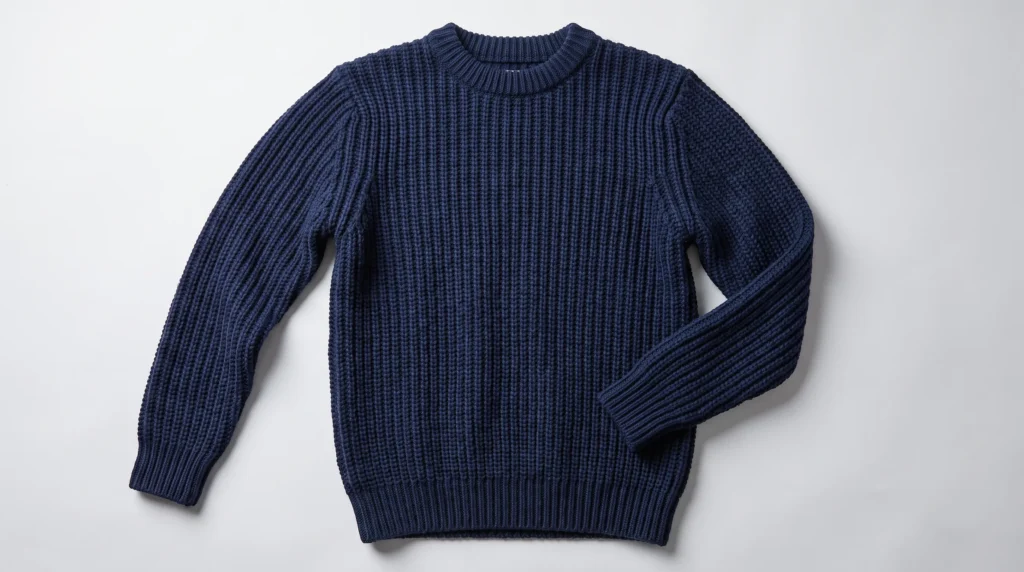
Cardigan vs Sweater: Materials, Closures, Fit & Construction
Understanding cardigan vs sweater differences begins with the front opening, but it should not end there. A cardigan is generally an open-front sweater that may use buttons, a zipper, a tie or no closure. A pullover sweater has a closed front and is normally put on over the head. That structural difference changes the panels, placket, neckline finishing, fit, measurements, trims and quality checks required during product development.
For fashion brands, importers, retailers, wholesalers and private-label buyers, the garment name alone is not a complete specification. Two designs may use similar yarn and gauge while requiring very different construction controls. Buyers can review Asia Sourcing Limited’s women’s cardigan collection while using this guide to define the intended opening, closure, material, fit and finished appearance more clearly.
The useful question is therefore not simply, “Is a cardigan a sweater?” It is, “How should the chosen format be engineered and approved so that the finished product performs as intended?”
Cardigan vs Sweater: The Quick Difference
The word sweater can describe a broad family of knitted upper-body garments. A cardigan belongs to that family, but its open front creates product-development requirements that a closed-front pullover does not have.
| Comparison point | Cardigan | Pullover sweater | Why it matters to a buyer |
| Basic format | Open front | Closed front | Determines the main panel and assembly plan |
| How it is worn | Opened at the front | Pulled over the head | Changes access, layering and neckline requirements |
| Closures | Buttons, zipper, tie, snaps or none | Usually no full front closure | Adds trim, reinforcement and alignment decisions |
| Front construction | Two front panels or an engineered opening | Continuous closed-front panel or joined front | Affects symmetry, balance and measurement control |
| Edge treatment | Placket, band, facing or finished front edge | Neckline finish is the main opening control | Changes stability and finishing requirements |
| Fit focus | Layering ease, front overlap, gapping and hanging balance | Neck opening, body ease and closed-front balance | Requires different measurement and fit checks |
| Common quality risks | Wavy placket, uneven fronts, closure misalignment and stretching | Tight or unstable neck, body twist and rib recovery issues | Directs sample comments and inspection priorities |
The published types of sweaters guide explains how cardigans, jumpers, sweater dresses and vests fit within a wider knitwear range. This article focuses specifically on the construction and product-development consequences of choosing a cardigan rather than a closed-front sweater.
What Is a Cardigan?
A cardigan is a knitted upper-body garment with a front opening. The opening may extend from neckline to hem, and the garment may be designed to close completely, overlap partially or hang open. This defining feature means that the left and right fronts must work together visually and dimensionally.
The Front Opening Is the Defining Construction Feature
In a button-front style, the two sides need controlled placket width, button spacing, buttonhole stability and front overlap. A zip-front product needs a suitable zipper, accurate length, controlled attachment and enough stability to avoid rippling. An open-front style removes the closure but still requires a clean edge that hangs correctly and retains its intended shape.
The front opening also affects neckline design. A V-neck may continue directly into a button band, while a round-neck cardigan may need a separate neck trim coordinated with the front placket. A collar or shawl-style edge introduces another set of shape, weight and attachment decisions.
Cardigans With and Without Closures
A closure should not be selected in isolation. Buttons that are too heavy for a light knitted surface can pull the front edge. Buttonholes can stretch if the yarn, structure or reinforcement does not support them. A zipper can create waviness when its weight, length or application is unsuitable for the knitted panel.
Open-front cardigans avoid those closure issues, but they create other questions. Buyers need to define how the fronts should fall, whether they should meet at centre front, how much drape is intended and whether the edge should remain straight, roll softly or form part of the design.
What Is a Sweater?
Sweater is a broad term commonly used for knitted upper-body garments. Depending on the market, it may include pullovers, jumpers and cardigans. In everyday conversation, some people use sweater to mean a closed-front pullover, while others use it for the wider product family.
Pullover, Jumper and Sweater Terminology
A pullover is generally a closed-front sweater worn over the head. Jumper is often used for a similar garment in the UK and other markets, although regional usage is not identical everywhere. A technical document should therefore avoid relying on one name without a sketch and measurable specification.
If the intended product is a closed-front crew-neck style, the tech pack should say so. If it is an open-front V-neck cardigan with buttons, the opening, placket, closure and neckline should all be defined. Clear drawings and construction notes prevent regional terminology from changing the product.
Why Specifications Matter More Than the Product Name
The label “women’s sweater” does not explain:
- Whether the front is open or closed
- Whether a closure is required
- Which neckline and edge finish are intended
- Which yarn, gauge and knit structure should be used
- Whether the garment is fully fashioned or cut and sewn
- How much layering ease is needed
- Which measurements control fit and balance
- Which finishing and care requirements apply
The product name provides a category. The specification defines the garment.
Cardigan vs Sweater Construction Differences
The most important technical difference is that a cardigan divides or opens the front of the garment. This changes panel engineering, trim application, measurement points and how the product hangs on the body.
Front Panels and Centre-Front Opening
A pullover may use one continuous front panel in a fully fashioned construction or one closed-front pattern piece in a cut-and-sew method. A cardigan commonly needs separate left and right fronts, although the precise engineering depends on design and production method.
Both fronts must remain balanced. Their length, width, neckline shape, hem level and edge construction should agree unless intentional asymmetry is part of the design. If one front stretches more than the other during knitting, linking, washing or finishing, the difference may be visible even when the chest measurement is within tolerance.
Centre front should also be defined. A buttoned cardigan may need an overlap, while an open-front design may be intended to sit apart. Without a clear centre-front reference, sample comments such as “front too open” or “needs more overlap” remain subjective.
Plackets, Buttonholes and Zipper Application
The placket or front band helps control the opening and provides a base for closures. Important decisions may include:
- Finished placket width
- Knit structure and density
- Single- or double-layer construction
- Button size, quantity and spacing
- Buttonhole direction and reinforcement
- Zipper type, weight, length and tape colour
- Top and bottom stopping points
- Alignment across stripes, ribs or patterns
- Attachment and reinforcement method
The sample should be reviewed both open and closed. Buttons need to align without twisting the fronts. The zipper should operate smoothly without forcing the knit to stretch. The hem should remain level, and the placket should not flare, collapse or pull the body out of balance.
Neckline and Front-Edge Finishing
In a pullover, the neckline is the main wearing opening. Its width, depth, stretch and recovery must allow the garment to be put on while returning to the approved shape. In a cardigan, the neck treatment meets or continues into the front edge.
V-neck bands need a controlled point and equal left-to-right shape. Round-neck styles must coordinate the neck rib or trim with both front bands. Shawl collars and extended front edges can add weight, affecting how the garment hangs. The yarn, stitch structure, seam or linking method and finishing process should therefore be approved as a complete system.
Fully Fashioned and Cut-and-Sew Options
In fully fashioned knitwear, panels are shaped during knitting and then linked or joined. A cardigan may use shaped left and right front panels, engineered necklines, knitted plackets and integrated fashioning details.
In cut-and-sew knitwear, the front pieces are cut from knitted fabric and assembled with suitable seams and edge treatments. Stability during cutting, seam bulk, pattern matching and reinforcement require attention.
Neither method is automatically better. The appropriate choice depends on the yarn, structure, silhouette, artwork, seam appearance, measurement requirements and intended commercial result.
Cardigan Materials and Yarn Selection
Cardigan material should be selected for the complete garment rather than for hand feel alone. The yarn needs to support the intended surface, weight, drape, placket, closure, fit, care and seasonal direction. The sweater fabric and yarn guide provides a deeper explanation of fibre, yarn, gauge and knit construction; the considerations below apply them to open-front products.
Wool and Wool Blends
Wool and wool-blend yarns may support warm, elastic or traditional knitwear directions. They can be developed in fine, medium or more textured structures. Buyers should assess softness, surface, pilling expectations, dimensional behaviour, care and how the finished front edge responds to washing and finishing.
The exact blend should be stated. “Wool blend” alone does not define the ratio, yarn quality, surface or performance. A heavier button or extended collar should also be reviewed against the knitted material so that the trim does not distort the front.
Cotton and Cotton Blends
Cotton can support clean surfaces and transitional cardigan styles, but weight, growth and recovery need attention. A long cardigan made in a heavy cotton construction may place more load on the shoulders and front edges than a shorter lightweight style.
Cotton blends may be considered to adjust drape, resilience, softness or care. Buyers should evaluate the actual knitted swatch and garment instead of assuming the blend name guarantees recovery.
Viscose and Other Cellulosic Blends
Viscose and related cellulosic-fibre directions may create smooth surfaces and fluid drape. That can suit refined or fitted cardigans, but excessive growth, weight or weak edge stability can alter the opening and finished length.
Fit should be reviewed after the intended finishing and care process. The front panels, button spacing and hem level should remain consistent with the approved sample.
Acrylic, Polyester, Nylon and Mixed-Fibre Yarns
Acrylic and other synthetic or mixed-fibre yarns can support varied colour, bulk, resilience and commercial directions depending on their construction and quality. Buyers should assess hand feel, pilling, static, recovery, heat response and surface appearance where relevant to the product.
The fibre label does not replace the approval process. Yarn count, ply, twist, blend ratio, gauge and finishing can produce different outcomes within the same broad material group.
What Is the Best Yarn for a Cardigan?
There is no universal best yarn for cardigan development. The right choice is the yarn that produces the required appearance and performance in the intended structure and gauge.
| Product direction | Material or yarn considerations | Important buyer checks |
| Fine, refined layer | Smooth surface, controlled drape and stable edge | Opacity, growth, placket stability and fit after care |
| Everyday button cardigan | Balanced weight, recovery and button support | Buttonhole stability, front alignment and rib recovery |
| Open-front longline style | Drape with sufficient shape control | Hanging length, front balance, shoulder load and edge behaviour |
| Textured or cable cardigan | Stitch definition and controlled garment weight | Pattern scale, bulk, stretch, linking and closure placement |
| Transitional cotton direction | Clean surface and suitable seasonal weight | Growth, recovery, drying behaviour and finished dimensions |
Before approving a yarn, buyers should define the season, silhouette, layering use, desired warmth, hand feel, garment weight, care expectations, closure and target commercial position.
How Gauge and Knit Structure Affect a Cardigan
Gauge works with yarn thickness, stitch structure and density to create the finished knitted surface. It should not be treated as an independent quality grade.
Fine-, Medium- and Chunkier-Gauge Directions
A fine-gauge direction may support smooth, lightweight-looking cardigans, but buyers should review opacity, edge stability, seam or linking quality and closure support. A medium-gauge product may balance surface definition and everyday wear, while a chunkier construction can create more texture and visual depth.
As weight increases, the garment may stretch or hang differently. A long textured cardigan can place additional load on shoulders, seams, front bands and button positions. Gauge should therefore be approved through a relevant swatch and finished sample rather than copied from an unrelated product.
Jersey, Rib, Cable, Jacquard and Textured Knits
Jersey can provide a clean surface, but its edges may need controlled finishing. Rib structures add stretch and may be used for bands, cuffs, hems or the full body; recovery should be checked. Cable and textured structures can change width, thickness and measurement behaviour.
Jacquard, stripes and engineered patterns introduce alignment questions across two fronts. The design should meet or relate intentionally at centre front, especially when the cardigan is closed. Pattern placement should also be reviewed across sizes.
Types of Cardigans and Cardigan Styles
Cardigan types can be classified by closure, length, neckline, fit and knit structure. A useful specification defines several of these attributes together.
Button-Front Cardigans
Button-front styles require controlled overlap, stable buttonholes and consistent spacing. Button size, weight, shape, material and colour should be approved on the garment rather than on a trim card alone. Buyers should check how the fronts align when every button is fastened and when only part of the garment is closed.
Open-Front Cardigans
Open-front cardigans may have a narrow finished edge, wider band, waterfall-like drape or another engineered front treatment. Because there is no closure to control the opening, the front balance and edge behaviour become highly visible.
The tech pack should define whether the fronts meet, overlap or remain apart. Reference images can communicate design direction, but measurements and construction details are still required.
Zip-Front Cardigans
A zip-front cardigan needs a zipper compatible with the garment’s weight and stretch. Length, tape width, teeth, slider, top stop and bottom finish should be specified where relevant.
During sampling, check for zipper waviness, unequal front lengths, misaligned patterns and distortion at the hem or neckline. The zipper should work without excessive force.
Cropped, Classic-Length and Longline Cardigans
Length influences proportion, weight and balance. A cropped cardigan may require careful hem and closure placement, while a longline style needs sufficient shape control to prevent unwanted growth or uneven fronts.
Terms such as cropped, regular or longline should be supported by finished body measurements. Buyers should also define whether length is measured from the high shoulder point, centre back or another agreed point.
Common Cardigan Neckline Types
Cardigan neckline types may include V-neck, round or crew-neck, collared, shawl-style and open-neck directions. The neckline must coordinate with the front band, closure and intended layering.
A deep V-neck changes the number and placement of buttons. A round-neck cardigan may need a top closure and a clean junction between the neckline trim and placket. Shawl or extended collars can affect weight and drape. Each option needs its own drawing, dimensions and construction notes.
How Cardigan Fit Differs From Pullover Fit
Cardigan fit needs to work both open and closed when a closure is provided. It should also accommodate the intended underlayer. A cardigan designed over a blouse may need different chest, armhole and sleeve ease from a close-fitting knit intended over a lightweight top.
Layering Ease and Intended Silhouette
Slim, regular, relaxed, boxy and oversized are design directions, not measurements. The specification should define chest width, shoulder, armhole, sleeve, body length and sweep. The sample should be fitted over the intended underlayer.
Layering principles also apply to sleeveless knits, although their armholes and shoulders require separate controls. The women’s sweater vest guide explains those vest-specific fit considerations without treating them as direct cardigan measurements.
Front Overlap, Gapping and Hanging Balance
Gapping can result from the relationship between body fit, front-panel width, button spacing, placket stability and the wearer’s shape. Adding more buttons does not automatically solve the problem if the underlying fit or construction is wrong.
Open the sample, close it fully and review it in movement. Check whether the fronts hang at the same length, whether the placket rolls or waves, and whether the hem remains level. For open-front styles, confirm the intended distance between the fronts and how it changes over an underlayer.
Important Cardigan Measurements
Relevant points may include:
- Body length
- Chest and waist width
- Shoulder width or raglan dimensions
- Armhole depth
- Sleeve length and width
- Cuff opening and depth
- Bottom opening or sweep
- Left and right front-panel width
- Placket or front-band width
- Front overlap
- Button size, quantity and spacing
- Neck width and depth
- Collar or shawl dimensions where applicable
The measurement method should be shown in the point-of-measure diagram. Left and right fronts should be checked for symmetry as well as total garment width.
Closures, Trims and Reinforcement Details
Closures and trims must suit the yarn, structure, gauge and garment weight. Buttons may need suitable backing or reinforcement. Buttonholes should remain neat and usable after the agreed care process. A zipper requires stable attachment, while snaps need a construction capable of supporting repeated opening.
Labels and decorative trims should not pull, distort or damage the knit. Reinforcement should be purposeful and discreet. Buyers should approve trim appearance, colour, placement and attachment on the actual garment.
What to Include in a Cardigan Tech Pack
A cardigan tech pack should remove ambiguity before yarn sourcing, swatch development and sampling. The wider fashion sourcing guide for women’s clothing brands explains why product definition should happen before supplier and quotation comparison.
A practical cardigan specification may include:
- Style number and precise product description
- Front, back and detail drawings
- Intended customer, market, season and end use
- Size range, base size and grading direction
- Point-of-measure diagram
- Measurement chart and tolerances
- Fibre composition and exact blend ratio
- Yarn count, ply, twist or approved reference where relevant
- Knit structure and gauge direction
- Fully fashioned or cut-and-sew construction
- Left and right front-panel details
- Neckline, collar, placket and front-edge construction
- Closure type, size, material, quantity and spacing
- Shoulder, armhole and sleeve construction
- Cuff and hem details
- Artwork, stripe, cable or jacquard placement
- Linking, seams and reinforcement
- Labels, branding and decorative trims
- Washing and finishing direction
- Testing and care requirements
- Packaging and presentation requirements
- Approved yarn, swatch and garment references
If a yarn, closure, gauge or construction changes after approval, the revised option should be documented and evaluated through an appropriate swatch or sample.
Cardigan Sample and Quality-Control Checklist
Quality control should compare the finished garment with approved materials, measurements, workmanship and performance requirements.
Yarn, Colour and Knitted Surface
- Fibre composition and yarn reference match the approval
- Colour and yarn lot are consistent with the approved standard
- Stitch density and surface are consistent
- Cables, ribs, stripes or patterns are correctly placed
- No unacceptable holes, dropped stitches, pulls or visible repairs are present
Front Opening, Placket and Closures
- Left and right fronts are symmetrical where required
- Placket or front bands have the approved width and structure
- Buttons, buttonholes or zipper align correctly
- Front overlap and closure spacing match the specification
- No unacceptable waviness, flaring, twisting or stretching is visible
- Reinforcement is secure without creating excessive bulk
Fit, Measurements and Balance
- Finished measurements follow the agreed method
- Body, sleeve, neckline, placket and openings meet tolerances
- The cardigan hangs correctly when open and closed
- Fronts remain level and balanced
- Layering ease supports the intended use
- Size progression preserves the design direction
Linking, Seams, Ribs and Finishing
- Linking and seams are secure and appropriate for the material
- Shoulders, armholes and side seams avoid unwanted bulk
- Cuffs and hem recover as required
- Labels and trims are correctly positioned
- Washing, pressing and final finishing match the approved reference
Testing methods, tolerances and acceptance criteria should be agreed for the actual product and target market. Generic phrases such as “good quality” or “export quality” are not measurable approval standards.
Common Cardigan Product-Development Mistakes
Treating a Cardigan as a Pullover With a Front Cut
An open front needs engineered edges, balanced panels and a deliberate closure or no-closure plan. Cutting a front opening without controlling these elements can produce distortion.
Choosing Yarn Without Considering the Placket
A yarn may create an attractive body but an unstable front edge. The material should be reviewed in the proposed placket structure and closure configuration.
Approving Buttons Separately
Buttons that look suitable on a card can feel too heavy, too small or visually unbalanced on the finished cardigan. Approve them on the actual sample.
Ignoring Layering Ease
A cardigan developed on the body without its intended underlayer may feel restrictive in the armhole, sleeve or chest during real use.
Failing to Check the Garment Open and Closed
Closure alignment may look acceptable on a flat table while the fronts gap or pull when worn. Open, closed and movement checks are all useful.
Using Style Names Instead of Measurements
“Longline,” “relaxed” and “oversized” cannot replace a measurement chart, fit reference and grading direction.
How to Choose Between a Cardigan and a Sweater for a Collection
Neither format is universally better. The choice should support the customer, season, styling, fit and product-development requirements.
| Decision factor | Choose a cardigan direction when… | Choose a pullover sweater direction when… |
| Wearing method | Front opening and adjustable wear are important | Closed-front simplicity is preferred |
| Layering | The garment should open easily over another layer | The garment is intended as a complete upper layer |
| Closure | Buttons, zipper, tie or open front support the design | A full front closure is unnecessary |
| Styling | Front edges and layered proportions are part of the concept | The main focus is neckline, body shape or surface |
| Technical priority | Placket, front balance and closures can be controlled | Neck opening and closed-front balance are more relevant |
| Collection role | An adaptable layering piece is needed | A standalone jumper or pullover is needed |
Brands planning knitwear alongside other products can review Asia Sourcing Limited’s women’s clothing categories while keeping a separate technical specification for every silhouette.
Frequently Asked Questions
Is a cardigan a sweater?
Yes. A cardigan is generally considered a type of sweater or knitwear garment. Its defining feature is an open front, with buttons, a zipper, another closure or no closure. A pullover sweater has a closed front and is worn over the head.
What is the main difference between a cardigan and a sweater?
Sweater is the broader category, while cardigan identifies an open-front format. In a practical cardigan vs sweater comparison, the opening changes front panels, plackets, closures, edge finishing, fit measurements and quality-control priorities.
What is the difference between a cardigan and a jumper?
A cardigan has an open front. A jumper commonly refers to a closed-front pullover in several markets, although terminology varies regionally. Technical documents should include drawings and construction details instead of relying on the name alone.
What are the main types of cardigans?
Common cardigan types include button-front, open-front and zip-front styles. They may also be grouped by length, such as cropped, classic or longline, and by neckline, fit, yarn, gauge or knit structure.
What is the best material for a cardigan?
There is no universal best material. Wool, cotton, viscose, acrylic, synthetic fibres and blends can support different product directions. Buyers should evaluate the exact yarn in the intended gauge and structure for weight, drape, recovery, hand feel, closure support, care and commercial position.
What is the best yarn for a cardigan?
The best yarn is the one that produces the intended surface and performance in the approved structure and gauge. A fine open-front layer, button cardigan and chunky cable style may require different yarn characteristics.
Are all cardigans knitted?
Cardigans are generally associated with knitted garments, but construction can vary. Some are fully fashioned from yarn into shaped panels, while others may be cut and sewn from knitted fabric. The intended method should be stated in the tech pack.
How does gauge affect cardigan construction?
Gauge works with yarn thickness, structure and density to influence surface, weight, drape and stability. It can also affect placket behaviour and closure support. Buyers should approve a relevant swatch and finished sample rather than using gauge alone as a quality measure.
Why can cardigan plackets become wavy?
Possible causes include unstable knitted structure, unsuitable yarn or density, incorrect zipper application, excessive stretch during assembly, closure weight or changes during washing and finishing. The cause should be evaluated against the approved construction and sample.
What measurements should buyers include in a cardigan tech pack?
Important measurements may include body length, chest, shoulder, armhole, sleeve, cuff, sweep, front-panel width, placket width, overlap, button spacing and neckline dimensions. The exact list should match the design and use a clear point-of-measure diagram.
Develop a Women’s Cardigan With a Clearer Specification
The key cardigan vs sweater difference is not only whether the front opens. That opening changes the panels, placket, neckline, closure, fit, measurements, trim application and quality checks required for the finished product.
Fashion brands and apparel buyers can explore Asia Sourcing Limited’s women’s knitwear collection when developing a coordinated range. To discuss a women’s cardigan sourcing project, buyers may contact Asia Sourcing Limited with their technical drawings, material direction, measurements, closure details and quality expectations.