Types of Hoodies: Men’s Styles, Fits and Selection Guide
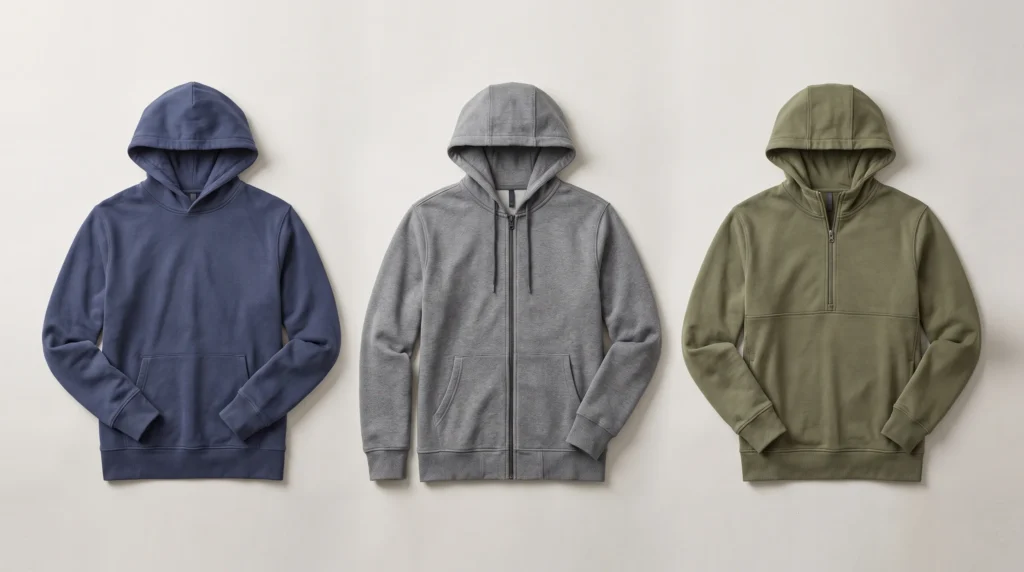
A hoodie is a casual top with an attached hood. Common types of hoodies include pullovers, full-zip designs and partial-zip styles. Regular, oversized and boxy describe fit or shape, while terms such as drop shoulder and kangaroo pocket describe individual features. These descriptions can apply to the same garment.
For a men’s collection, the useful question is how those choices work together. This guide explains the differences, shows what to inspect on a sample and helps buyers turn a style reference into clear garment requirements.
What Are the Main Types of Hoodies?
Different types of hoodies are often grouped by opening, fit and visible details. Separating those categories makes comparisons easier: a zip describes the front opening, while oversized describes the intended room around the body.
| Style or term | What it describes | Main distinction | Buyer check |
| Pullover | Opening | Pulled on over the head | Neck opening and dressing ease |
| Full-zip | Opening | Front opens from neckline to hem | Zip alignment and appearance when closed |
| Half-/quarter-zip | Opening | Zip opens only the upper front | Opening length and hood connection |
| Regular fit | Fit | Room follows the intended standard silhouette | Body and sleeve measurements |
| Oversized fit | Fit | Deliberately generous proportions | Distribution of extra width and length |
| Boxy shape | Proportions | Broad, relatively straight body shape | Width in relation to body length |
| Drop shoulder | Shoulder placement | Sleeve join sits beyond the natural shoulder | Shoulder extension and sleeve reach |
| Kangaroo pocket | Pocket design | Connected front pouch with side openings | Position, access and interaction with artwork |
These labels overlap. AS Colour’s half-zip hoodie specification, for example, combines a partial zip, relaxed fit, dropped shoulders and a kangaroo pocket in one design.
For the wider category context, our guide to men’s clothing categories explains where sweatshirts and hoodies fit within a menswear range.
Hoodie Types by Opening Style
Pullover Hoodies
A pullover hoodie has no full-length front opening. The wearer pulls it over the head, so the neckline and hood opening deserve attention when reviewing a sample. A roomy body does not automatically make a tight neck opening comfortable.
The uninterrupted front can accommodate a large chest design, although pockets, seams and the intended decoration process still affect placement. Check where the hood rests, whether the neckline pulls backward and how easily the garment goes over the planned underlayer. A drawcord is an optional feature, not what defines a pullover.
Full-Zip Hoodies
A full-zip hoodie opens down the front and can be worn open or closed. This makes it useful when a wearer wants to add or remove a layer without pulling the garment over the head.
Inspect the sample in both positions. When closed, look at front alignment, the hem and any waviness alongside the zip. When open, check how the front panels and hood hang. Artwork crossing the center front needs its own layout review because the zipper interrupts the surface. Separate left and right pockets are another detail to specify.
Half-Zip and Quarter-Zip Hoodies
Partial-zip hoodies combine an upper-front opening with a body that remains closed below it. The zip changes the neckline opening without dividing the whole garment into two front panels.
Half-zip and quarter-zip are useful style names, but the actual opening length should be shown in the specification. Check the zip endpoint, the material behind it and how the neckline joins the hood. A partial-zip sweatshirt without a hood belongs to a different garment description; a zip alone does not make it a hoodie.
Hoodie Fits and Shapes for Men’s Collections
When comparing types of hoodies for men, separate the amount of room from the garment’s proportions. A style name provides direction; measurements and a reference sample make that direction usable.
Regular-Fit Hoodies
Regular fit usually describes a brand’s standard silhouette, with room for the intended wearer and underlayers. It does not establish one universal chest width, shoulder position or body length.
For a straightforward casual range, start with a reference garment that represents the desired result. Compare body width, sleeve room and hem position together. Check whether the hoodie remains comfortable when zipped, where applicable, and whether the intended T-shirt sits underneath without bunching. Use the brand’s size chart and sample measurements rather than assuming every medium fits alike.
Relaxed and Oversized Hoodies
Relaxed and oversized descriptions both indicate added room, but brands use them differently. An oversized design may distribute that volume through the body, shoulder area and sleeves while controlling the overall length.
Choosing a larger regular-fit size changes several dimensions at once. It may lengthen the sleeves or body more than the design requires. When comparing oversized versus regular fit, specify where the extra space should sit. Look at the garment from the front, side and back, then check whether the hem and cuffs support the intended shape during movement.
Boxy Hoodies
A boxy hoodie emphasizes a broad, relatively straight body outline. The description concerns the relationship between width and length; it does not automatically mean cropped or extremely oversized.
Compare a boxy sample with the intended waistband and underlayer. Look at where the hem finishes and whether it sits evenly or gathers. A shorter body with long, wide sleeves creates a different balance from a longer rectangular cut. Reference photographs should show the whole garment so that one appealing chest view does not conceal unsuitable length or sleeve proportions.
Design Features That Change a Hoodie’s Style
Shoulder Placement and Sleeve Construction
In a conventional set-in design, the sleeve joins the body around an armhole. A dropped shoulder extends the body beyond the natural shoulder, placing that sleeve join farther down the upper arm. Raglan sleeves extend toward the neckline, with attachment seams running diagonally from the underarm area.
Ann West’s sleeve-construction guide explains these seam distinctions. Follow the actual joins rather than identifying a sleeve from contrasting colors alone.
Drop shoulder describes placement, so it does not guarantee an oversized body. Review the shoulder extension together with sleeve length; moving the join changes where a sleeve measurement starts.
Hood and Pocket Details
The parts of a hoodie also affect its appearance when worn. Check the hood from the front and side, both raised and resting behind the neck. Its depth, opening and attachment should suit the intended design without unwanted pulling.
A kangaroo pocket forms a connected pouch across the front. Other designs use separate pockets or no pockets. Review access, pocket height and the space left for artwork. These choices need to work with the opening style.
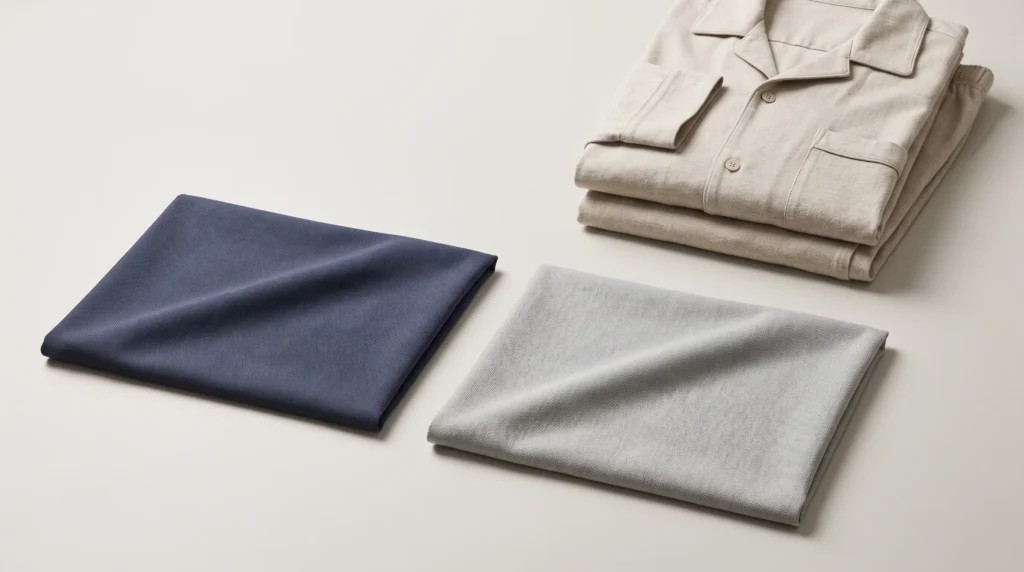
Material decisions are a separate part of development. Our fabric guide for women’s hoodies and sweatshirts explains fabric and GSM considerations in that collection context; use it for material background while keeping this men’s style specification tied to its own fit reference.
How Should a Hoodie Fit?
Body Width, Length and Layering Room
A hoodie should fit the intended silhouette and allow the planned movements and layers. Review it over the underlayer it will normally accompany, rather than judging only a flat photograph.
Check room through the chest and waist, then assess where the hem sits while standing and sitting. On a zip style, close the front before judging the body fit. An oversized design can have intentional volume without uncontrolled length; a regular design still needs enough room for its intended use.
Shoulder Position, Sleeves and Movement
Check sleeves with the arms resting, reaching forward and bending. Note pulling at the upper arm, excessive bunching at the cuff or a hem that shifts more than intended.
Judge shoulder placement against the chosen construction. A deliberately dropped seam should not be treated as a sizing error simply because it sits beyond the shoulder. Likewise, raglan seams need their own reference points. Keep front, side and back photographs with the sample comments so that requests such as shorter sleeves have a clear context.
How to Measure a Hoodie for Comparison
Body measurements describe the wearer; garment measurements describe the finished item. Keep them separate when reading a size chart.
Lay comparable samples flat without stretching them, and use agreed points for chest width, body length and sleeves. State the units and whether a width is measured across the garment or around it. Record the starting point for sleeve length, especially when comparing different shoulder constructions.
Kooga’s hoodie measurement guide notes that sizing can vary with design, fabric and fit. Use the actual style’s measurement instructions rather than treating another product’s chart as a universal standard.
Choosing Hoodie Styles for a Men’s Collection
Comparing different hoodie styles becomes more useful when each choice is recorded in a short, consistent brief. Use these checks before requesting or revising a sample.
- Define the use. State the intended wearing situation and underlayers so the sample can be reviewed in the right context.
- Specify the opening. Choose pullover, full-zip or partial-zip, and mark the required zip position and length where applicable.
- Set the fit direction. Provide a reference garment or clear photographs, with the body proportions and areas of extra room identified.
- Describe shoulders and sleeves. Record the construction and intended seam position. Keep sleeve measurements tied to the same starting points.
- Confirm hood and pockets. Show their shape, position and access requirements, including how they sit when the garment is worn.
- Place the artwork. Check its position against zips, seams and pockets on the actual style before settling the layout.
- Record sample corrections. Keep measurements, photographs and specific fit comments together, identifying the sample version to which they apply.
Asia Sourcing Limited’s men’s sweatshirts and hoodies collection provides a starting point for a product discussion. Confirm the available options for the particular design rather than assuming every style described in this guide is offered.
Frequently Asked Questions
Is a Hoodie a Sweatshirt?
A hoodie is commonly a hooded sweatshirt, although product names vary with construction and market usage. The hood is the key identifying feature. A crew-neck sweatshirt without a hood is not a hoodie, even when it uses similar fabric, ribbed cuffs and a comparable fit.
Is Every Zip-Up Sweatshirt a Hoodie?
No. A zip-up sweatshirt needs a hood to be described as a hoodie. A stand collar, funnel neck or other hoodless neckline gives it a different design. Check the neckline and hood as well as the zipper when naming a garment or preparing its specification.
Is a Boxy Hoodie the Same as an Oversized Hoodie?
Not necessarily. Boxy describes a broad, relatively straight body shape, while oversized describes intentionally generous proportions. A hoodie can be both. Compare width, body length, shoulder placement and sleeve shape to understand the actual design; the label alone will not tell you how it fits.
Are Drop-Shoulder Hoodies Always Oversized?
No. Drop shoulder identifies a sleeve join positioned beyond the wearer’s natural shoulder. The body can still have controlled width and length. Review the full garment measurements and intended silhouette before calling it oversized, and compare sleeve reach from the correct starting point for that construction.
Should You Size Up for an Oversized Hoodie?
There is no single rule. A hoodie already designed with oversized proportions may provide the intended room in the size recommended by its maker. Sizing up a regular cut also changes length and other dimensions. Compare the product’s measurements with a suitable reference garment before deciding.
Which Hoodie Measurements Should Buyers Compare?
Start with chest width, body length and sleeve measurements, then add shoulder, hem, hood or pocket dimensions that matter to the design. Use the same units and clearly defined measuring points. Keep wearer measurements separate from garment measurements, and assess the sample on the body as well.
Plan Your Men’s Hoodie Collection
Choosing types of hoodies becomes easier when the opening, fit and features are described separately, then assessed together on a sample. Clear references and consistent measurements help buyers explain what should stay and what needs adjustment.
To discuss your men’s hoodie requirements, share style references, target measurements, intended quantities and delivery objectives with Asia Sourcing Limited. Include any design decisions that are still open so the enquiry can focus on the options that need review.