What Are Slacks? Meaning, Fit and Comparisons for Men
Slacks are trousers commonly worn for smart-casual or dressier occasions, although the word also has broader casual uses. They often have a neat, tailored appearance and may be worn without a matching jacket. The name overlaps with dress pants; it does not specify one fabric, fit or level of formality.
Understanding that flexibility makes it easier to choose a pair or describe a style to a supplier. This guide compares slacks with dress pants, chinos, khakis and suit trousers, then explains practical fit checks and the details buyers need for a men’s collection.
What Are Slacks?
Slacks is a garment name rather than a complete construction specification. Merriam-Webster’s definition of slacks associates the term with trousers, particularly casual wear. In retail use, it also appears in dressier trouser categories. Context matters when interpreting the label.
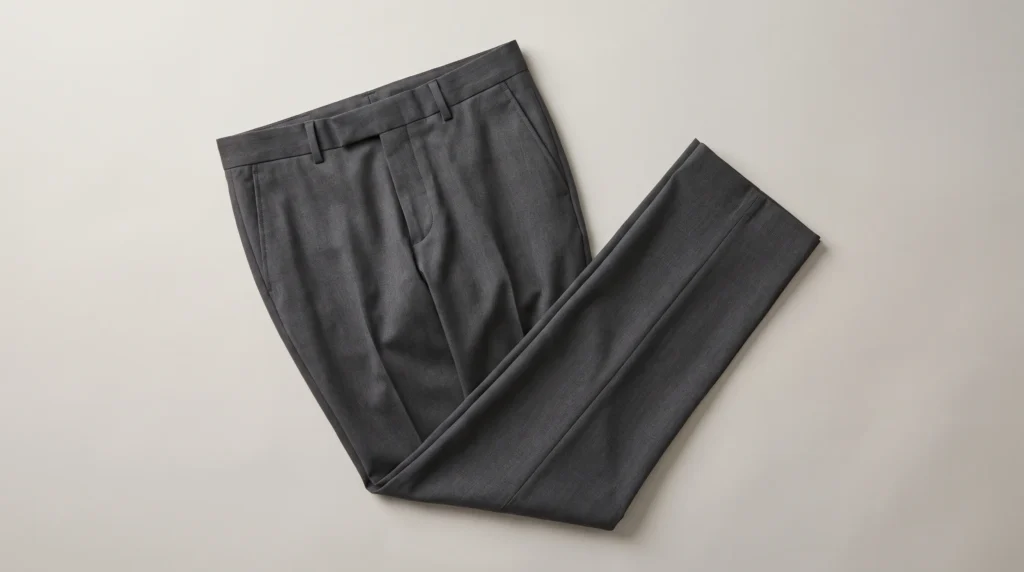
Men’s slacks may have a flat front or pleats, a narrow or generous leg, and different waistband treatments. A center crease can contribute to a tailored appearance, but it is not a universal requirement. Neither the name nor a photograph tells you the exact fiber content or care method.
For a purchase, check the garment description and measurements. For product development, pair the style name with a fabric specification and fit reference. If you are mapping trousers into a wider range, our guide to men’s clothing categories explains their place alongside shirts, knitwear, jackets and other menswear products.
Slacks vs Dress Pants, Chinos and Khakis
These labels are useful starting points, but their boundaries overlap. Compare the actual garment before deciding whether it suits your wardrobe or collection.
| Term | Typical characteristics | Common use | Where the terms overlap |
| Slacks | Broad trouser label; often a neat, tailored appearance | Smart casual, office and dressier outfits | Frequently used for dress pants; sometimes applied more broadly |
| Dress pants | Trousers selected for a more polished outfit | Office and occasions requiring smarter clothing | May be sold as slacks; can include suit trousers |
| Chinos | Usually cotton or blended twill trousers | Everyday and smart-casual outfits | Dressier versions may fall within a broad use of slacks |
| Khakis | A garment label often associated with casual twill pants; khaki also names a color | Casual and business-casual outfits | Often overlaps with chinos; color alone does not define construction |
| Suit trousers | Trousers designed to coordinate with a matching suit jacket | Wearing a suit | May also be described as dress pants or slacks |
Slacks vs Dress Pants
There is no reliable rule that makes slacks casual and dress pants formal in every setting. Bonobos, for example, treats the names as interchangeable in its dress pants explanation. That illustrates one retailer’s terminology rather than a universal garment standard.
If a dress code requests slacks, look for trousers appropriate to the occasion. Check the surface texture, fit, condition and styling. A product name alone cannot tell you whether the host expects a jacket, a complete suit or a more relaxed outfit.
Slacks vs Chinos
Chinos usually point toward twill trousers made from cotton or a blend. Slacks is a broader label and can describe trousers with different materials and finishes. A smooth, neatly finished chino may suit a similar outfit to some slacks, while a heavily washed version can look more casual.
For buying decisions, compare cloth, pocket design, stitching, waistband and silhouette. Keep the exact chino description when it accurately identifies the product; there is no need to relabel every chino as slacks.
Slacks vs Khakis
Khaki can describe a light yellowish-brown color. Khakis can also name garments, including pants. Merriam-Webster’s khaki entry records both color and clothing uses, which helps explain the confusion.
In everyday shopping, khakis and chinos often overlap. However, a khaki-colored pair of trousers could have a dressy finish or a casual one. Specify the color separately from fabric, construction and intended use when comparing products or writing a collection brief.
Dress Pants vs Suit Pants
Suit pants are designed as part of a coordinated suit, with a matching jacket. Dress pants is a broader description that can include trousers chosen to wear with a separate jacket or without one.
Some suit trousers work as separates, depending on their cloth and styling. If you need a complete suit, check the matching jacket reference. Two garments described as navy are not necessarily a match in shade, weave or finish.
What Affects the Look and Feel of Slacks?
Fabric, Weight and Drape
Composition is only part of the decision. Wool, cotton, linen, synthetic fibers and blends can produce different trouser fabrics, but weave, weight and finishing also influence the result. Two fabrics with similar fiber percentages can feel and hang differently.
Drape describes how the cloth hangs and moves. Assess it on the garment: does the leg fall smoothly, hold a firmer shape or cling in places? Compare samples in similar lighting and with the same intended fit before deciding which effect suits the collection.
For warmer conditions, evaluate the complete garment, including lining and coverage. A lightweight description alone does not establish comfort. Likewise, do not assume wrinkle resistance, breathability or easy care from the word slacks.
Stretch, Pleats and Finishing
Stretch may help movement, but it cannot compensate for an unsuitable size or pattern. Check both flexibility and how the garment returns to shape after wear; a fiber percentage alone does not demonstrate recovery.
Pleats introduce folds below the waistband and influence front volume. Flat-front trousers create a different visual line, but either treatment can be fitted or roomy. Compare them while standing and sitting.
Pressing, stitching, pocket shape and hem treatment also affect appearance. Denim has its own fit and finishing considerations; our guide to men’s jeans fits and washes covers that category in more detail.
How Should Slacks Fit?
How should trousers fit? They should allow the intended movement while maintaining the chosen silhouette. Slim, straight, athletic and roomier shapes serve different bodies and preferences. Proper Cloth’s trouser fit guide illustrates how seat, thigh and leg-opening dimensions vary between fits.
Try the garment with the shirt and shoes you expect to wear. Check the front, side and back, then sit down and walk. A still photograph cannot show every restriction.
Waistband and Rise
The waistband should feel secure at its intended position without uncomfortable pressure. Repeated slipping can indicate excess room or an unsuitable waist-to-seat balance. If tightening a belt creates heavy bunching, compare another size or fit.
Rise affects the relationship between the crotch seam and waistband. A low-rise and a higher-rise design will sit differently. Judge each at its intended position rather than pulling both to the same height.
Sit normally and check for digging, pulling or a waistband that folds awkwardly. Treat these as reasons to inspect the fit, not proof that one measurement alone is responsible.
Seat and Thigh Room
You should be able to sit and take a comfortable step without strong restriction through the seat or thighs. Look for pockets pulling open, strained fabric and a crotch seam that feels tight during movement.
Some folds are normal, especially when seated. Persistent pulling while standing deserves closer inspection. Compare the next size or a cut with more upper-leg room instead of assuming every slim silhouette will work for the same body.
Leg Shape, Length and Trouser Break
Trouser break is the fold created where the hem meets the shoe. A shorter finish can produce little or no break; more length generally creates a deeper fold. Shoe shape and leg opening also affect the result.
Choose the finish that suits the silhouette and occasion. Excessive bunching or a hem dragging underfoot suggests the length needs review. Assess both legs with the intended footwear before hemming, and agree the preferred break rather than treating one length as ideal for everyone.
When Can Men Wear Slacks?
These three combinations offer starting points. Check the actual workplace or event dress code before choosing.
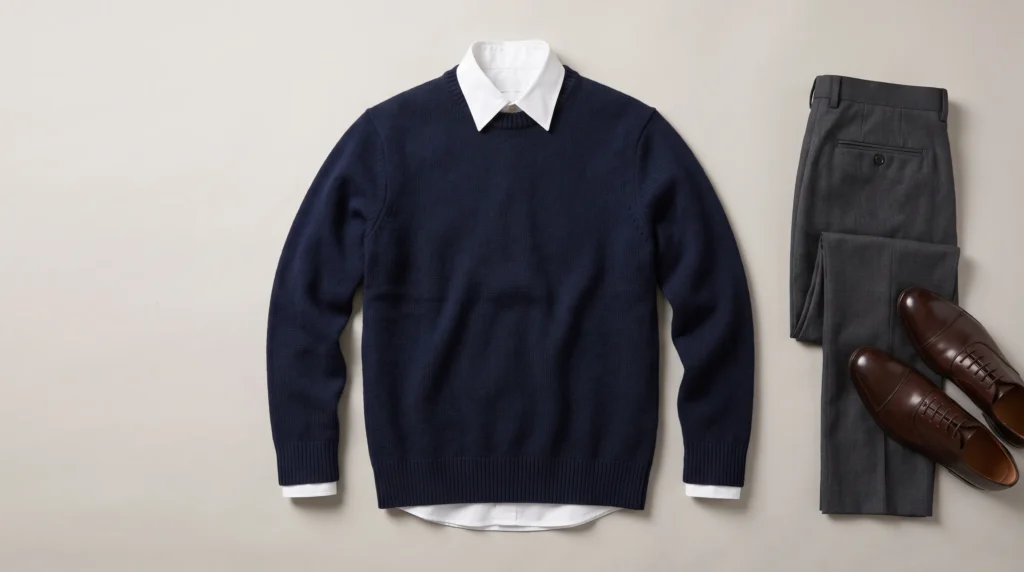
For an office: Pair charcoal or navy trousers with a tucked-in shirt and suitable leather shoes. A smooth finish and controlled trouser break can create a tidy appearance. Add a jacket when the workplace expects one.
For a smart-casual outing: Try a softly draping pair with a polo or fine-knit sweater. Loafers or clean, simple sneakers may work in a relaxed setting. Check that the hem sits comfortably over the chosen shoe.
For a dressier occasion: Combine polished trousers with a dress shirt and an appropriate jacket. If the invitation specifies a suit or black tie, follow that requirement; wearing slacks alone does not satisfy every formal dress code.
Choosing Trousers for a Men’s Collection
A useful brief turns a broad style name into details that can be discussed and checked. Start with the intended wearer and occasion, then use the same criteria when reviewing quotations and samples.
For category context, explore Asia Sourcing Limited’s men’s chinos and trousers. Use the listed product descriptions to identify relevant directions, then confirm specifications for the particular style you want to develop.
Include these points in the brief:
- Intended use: Define office, smart-casual or dressier wear, the selling season and any dress-code expectations.
- Fabric specification: State composition, construction, target weight, color and finish. Record required performance separately and agree how it will be checked.
- Fit reference: Supply a reference garment or clear images, plus waist, rise, seat, thigh, knee, leg opening and inseam measurements with measurement methods.
- Size range: Define target sizes and how measurements should change between them. Do not assume one approved sample demonstrates every size.
- Construction details: Identify pleats or flat front, pockets, closure, belt loops, lining where used and hem treatment.
- Sample checks: Review appearance, movement, pocket behavior, seam alignment and measurements. Record comments against the same reference points for each revision.
- Care requirements: Specify the intended care route, then confirm suitable instructions for the finished garment. Assess dimensional and appearance changes under the agreed care conditions.
Keep an approved reference and a clear record of changes. This makes discussions about fit and appearance more specific than requesting a pair of “good-quality slacks.”
Frequently Asked Questions
Are Slacks Always Formal?
No. The term can cover casual, smart-casual and dressier trousers. Fabric, finishing, fit and the complete outfit influence their suitability. Follow the occasion’s dress code rather than relying on the label.
Do Slacks Have to Be Loose-Fitting?
No. Men’s slacks can be slim, straight, tapered or roomy. Choose a shape that allows comfortable movement and gives the intended appearance; the name does not prescribe a single fit.
Can Slacks Have Pleats?
Yes. Slacks can have pleats or a flat front. Check how the front sits at the waistband and how the garment behaves when seated, rather than assuming either option automatically fits better.
Can You Wear Slacks Without a Matching Jacket?
Yes, when the dress code allows. Slacks can be worn with a shirt, polo or knitwear, and some work with a separate jacket. A requirement to wear a suit calls for a coordinated outfit.
Can You Wear Sneakers with Slacks?
Yes, in suitable casual or smart-casual settings. Simple, clean sneakers can work with the trouser shape. Check the hem and occasion; this pairing may be unsuitable where dress shoes are expected.
Can Slacks Be Machine Washed?
Some can. Follow the finished garment’s care label for washing, drying and ironing. Similar-looking trousers may have different instructions because of their fabric, lining, trims and construction. Ask the seller when the label is unclear.
Turn the Style Name into a Clear Trouser Brief
Slacks is a useful starting point, but the actual fabric, shape and finish determine what you are choosing. Compare the garment, test movement and match it to the intended occasion.
For a men’s collection enquiry, contact Asia Sourcing with your intended style, fabric preference, fit reference, size range and order requirements. Include sample priorities and care expectations so the discussion starts with a clear product brief.